Here’s a detailed distinction between pharyngitis and nasopharyngeal cancer based on clinical features, investigations, and risk factors:
1. Pharyngitis (Sore Throat)
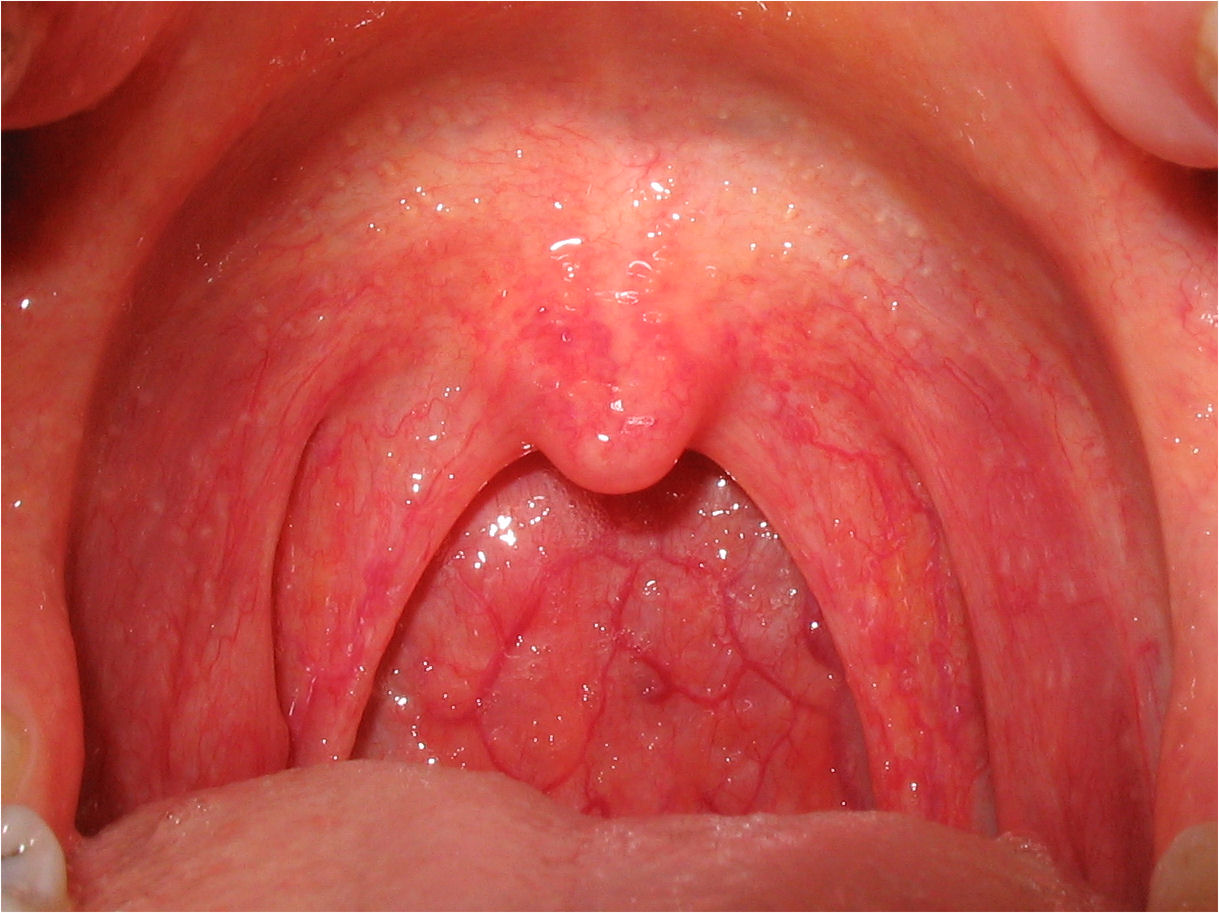
Definition:
Inflammation of the pharynx, usually caused by viral or bacterial infections.
Causes:
-
Viral: Rhinovirus, adenovirus, influenza, Epstein-Barr virus
-
Bacterial: Streptococcus pyogenes, Haemophilus influenzae
Symptoms:
-
Sudden onset sore throat
-
Painful swallowing (odynophagia)
-
Fever (more common in bacterial cases)
-
Red, swollen pharyngeal mucosa; sometimes exudates
-
Swollen cervical lymph nodes
-
Runny nose, cough, hoarseness (usually viral)
Duration:
-
Acute; usually resolves within 5–10 days with symptomatic treatment
Red Flags / Complications:
-
Severe sore throat with difficulty swallowing
-
Drooling, muffled voice, or respiratory distress → consider peritonsillar abscess
-
Persistent symptoms >2 weeks are unusual for simple pharyngitis
Investigations:
-
Rapid antigen detection test or throat culture (for bacterial pharyngitis)
-
Usually no imaging required
Treatment:
-
Symptomatic for viral causes
-
Antibiotics if bacterial infection is confirmed
2. Nasopharyngeal Cancer (NPC)
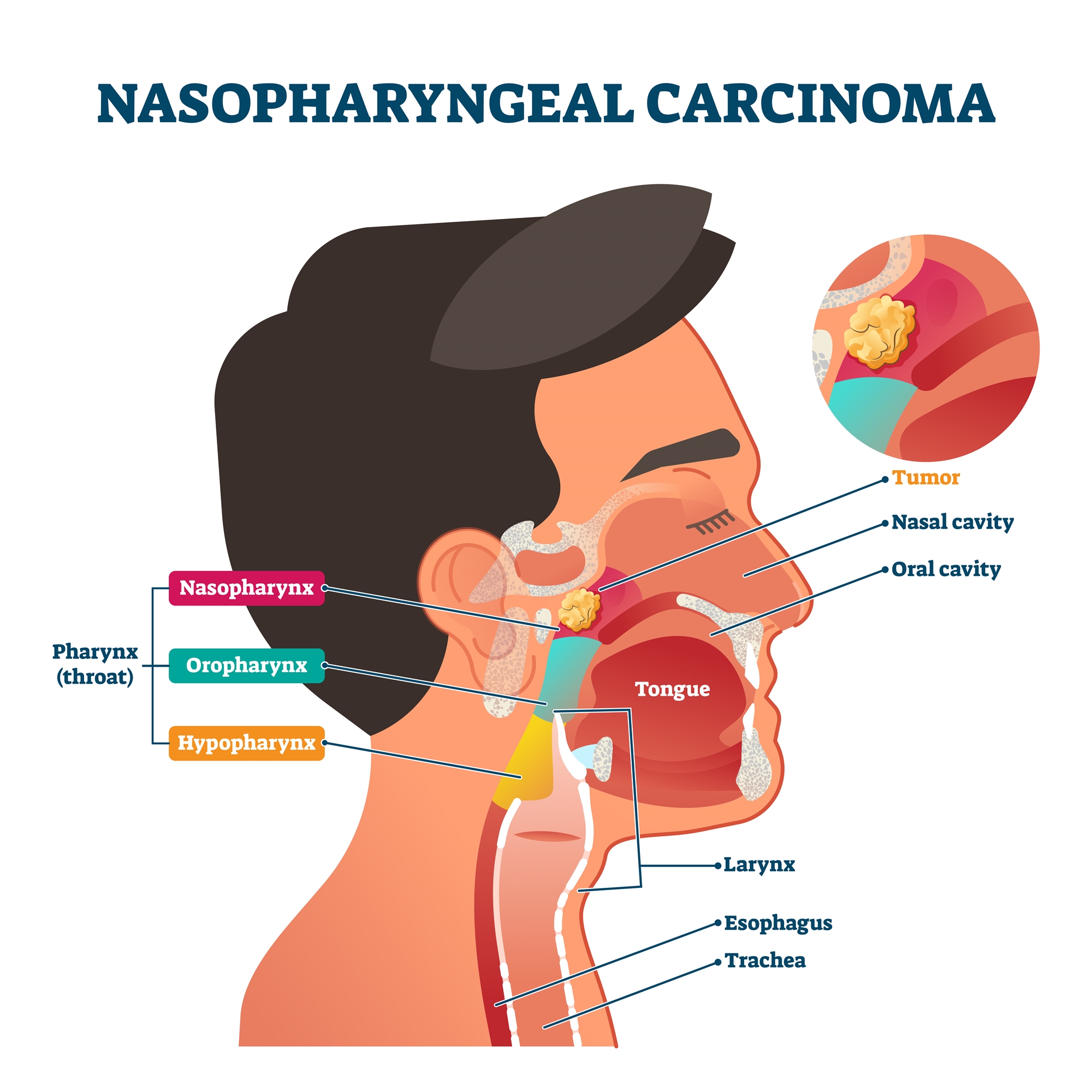
Definition:
Malignant tumor originating in the nasopharynx, often associated with Epstein-Barr virus (EBV) infection.
Risk Factors:
-
EBV infection
-
Genetic susceptibility
-
Consumption of salted fish and preserved foods
-
Male gender, age 40–60 (most common)
Symptoms:
-
Early-stage NPC: Often asymptomatic
-
Nasal obstruction or persistent congestion
-
Nosebleeds (epistaxis)
-
Hearing loss or ear fullness (due to eustachian tube obstruction)
-
Neck mass (cervical lymphadenopathy, often painless)
-
Chronic sore throat or sensation of something stuck in the throat
-
Headache, facial numbness if advanced
Duration:
-
Persistent and progressive; does not resolve spontaneously
Red Flags / Complications:
-
Unilateral neck mass >2–3 weeks
-
Persistent nosebleeds
-
Cranial nerve involvement (double vision, facial paralysis)
-
Recurrent or unexplained ear symptoms
Investigations:
-
Nasopharyngoscopy with biopsy (definitive diagnosis)
-
MRI/CT of nasopharynx for local extension
-
EBV serology or DNA PCR (supportive)
-
Chest X-ray or PET-CT for metastasis assessment
Treatment:
-
Radiotherapy (primary treatment)
-
Chemotherapy for advanced stages
Key Distinguishing Points
Feature Pharyngitis Nasopharyngeal Cancer (NPC) Onset Sudden Insidious, gradual Duration Short, <2 weeks Persistent, progressive Pain Throat pain prominent Sore throat mild or absent Fever Common in bacterial/viral cases Rare Cervical lymph nodes Tender, often small Painless, firm, unilateral/bilateral Nasal/ear symptoms Usually absent Nasal obstruction, epistaxis, ear fullness Response to treatment Improves with antibiotics/symptomatic Does not improve with usual treatments Red flag signs Difficulty breathing/swallowing Persistent neck mass, cranial nerve palsySummary:
-
Pharyngitis is usually acute, self-limited, and associated with pain and systemic symptoms.
-
Nasopharyngeal cancer is insidious, often painless, may present with a neck mass, nasal obstruction, or ear symptoms, and does not resolve spontaneously.
-
Any persistent unilateral neck mass or unexplained ENT symptoms warrants nasopharyngoscopy and biopsy to rule out NPC.