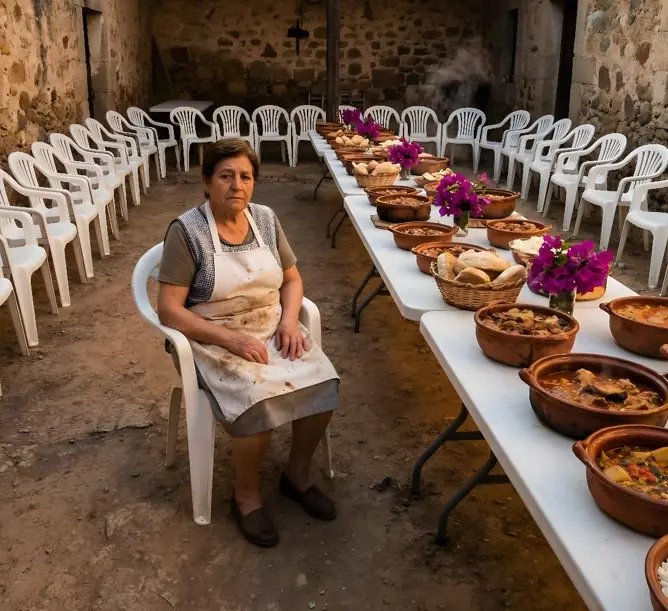
I paused for a moment and wiped the sweat from my forehead with the back of my wrist. Then I looked at what I’d set up: eighty white chairs.
They weren’t imported designer pieces—just sturdy plastic seats meant for real gatherings. But they were spotless. That morning I’d scrubbed each one until it caught the last light of the setting sun. Arranged in a perfect half-circle, they didn’t look cheap to me. They looked like a promise—of family, of pride, of a day worth remembering.
Those chairs weren’t “just” patio furniture. Each one held an expectation. A shared memory. A laugh that hadn’t happened yet. A hug I’d been waiting to give. They stood quietly in my yard, ready for relatives traveling from far away, for old friends who’d known my son since he was small, and for my granddaughter Mariana’s university classmates—the bright, accomplished young people she’d worked so hard alongside.
- 80 chairs, cleaned by hand
- A backyard turned into a celebration space
- A family milestone worth doing right
My name is Amparo Valdez. I’m sixty-eight, and I’ve earned every one of those years. My life has been measured in the rhythm of simmering pots, the heat of industrial stoves, and the cheerful noise that rises from long tables when people feel welcome.
For more than four decades, I ran a small but well-respected banquet business here in the city. It wasn’t “luxury catering” of the kind that places a single olive on a huge plate and calls it art. What I made was straightforward and generous: real meals, built from ingredients I chose myself at dawn in the market, bargaining with vendors who eventually became as familiar as family.
People used to say—some teasing, some completely serious—that my cooking worked small miracles.
They claimed my beef stew could soften even the stiffest wedding tensions. They swore my desserts had helped stubborn businesspeople finally shake hands after hours of disagreement. I never called it magic. I simply believed in what happens when food is made with care and served with respect.
To me, food was never only fuel. It was my way of saying: “I love you,” “I’m here,” and “You’re not alone.”
When words got stuck in my throat, I cooked. When life hit hard, I cooked. When someone needed comfort, I cooked. At funerals, my dishes quietly said what no one knew how to express. At baptisms, they spoke joy. Every plate that left my kitchen carried something personal—something that couldn’t be measured in grams or teaspoons.
These days, I’m retired—at least on paper. Time collects its payment. My knees creak like old hinges when I climb stairs, and my hands, once unstoppable, tire faster than they used to. Weather changes settle into my joints like uninvited guests.
But this wasn’t just any event.
This was Mariana’s graduation—my beloved granddaughter, the light of my eyes. She’d finished her degree in architecture with honors. The first in our family to earn a university title with that kind of weight. Her achievement didn’t belong to her alone; it belonged to all of us who had cheered her on, sacrificed, and believed.
- She graduated as an architect
- She did it with honors
- She became a family first
So I stepped out of retirement. I decided I would do it myself—no assistants, no shortcuts. Some moments are too important to hand off. Some celebrations need a grandmother’s hands and heart, and that quiet “secret ingredient” no school can teach.
And that’s why I stood there, looking at those eighty chairs, feeling proud and tired at the same time—believing that by nightfall, my yard would be full of voices, stories, and gratitude.
Conclusion: For me, this graduation party wasn’t about appearances. It was about honoring a young woman’s hard work the way our family always has—through presence, generosity, and a table that says, without needing to explain, “You matter.”