Why Do Japanese People Sleep on the Floor? The Cultural Reasons Behind This Practice
Sleeping on the floor is a common practice in Japan, and it may seem unusual to people from cultures where elevated beds dominate. However, this tradition has deep cultural, historical, and practical roots.
1. Historical Context
Historically, Japanese homes were built with tatami mats, which are thick straw mats that provide comfort and insulation. Raised beds were uncommon, and sleeping directly on tatami mats became the standard. Using futons (thin, foldable mattresses) on the floor allowed families to maximize space during the day, as futons could be stored in closets, freeing rooms for other activities.
2. Minimalism and Space Efficiency
Japanese culture values simplicity and efficiency, reflected in the traditional Japanese home. Many Japanese homes are compact, especially in cities. Sleeping on the floor with futons allows for flexible use of space, adhering to the cultural principle of minimalism while keeping the home tidy.
3. Health and Comfort Beliefs
Some Japanese people believe that sleeping on a firm surface is better for posture and spinal alignment. A futon on the floor provides gentle support and can promote better circulation. In addition, tatami mats are naturally breathable and help regulate temperature and humidity, which can improve comfort during sleep.
4. Cultural Philosophy and Lifestyle
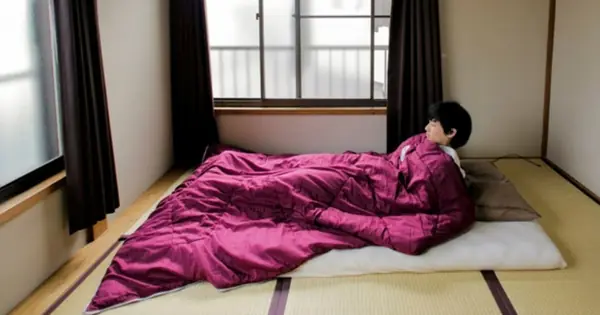
The practice aligns with broader Japanese values such as harmony, simplicity, and connection with natural materials. Sleeping close to the floor and on natural tatami mats fosters a sense of grounding and balance. This approach reflects a lifestyle that emphasizes mindfulness and respect for the living space.
5. Modern Adaptations
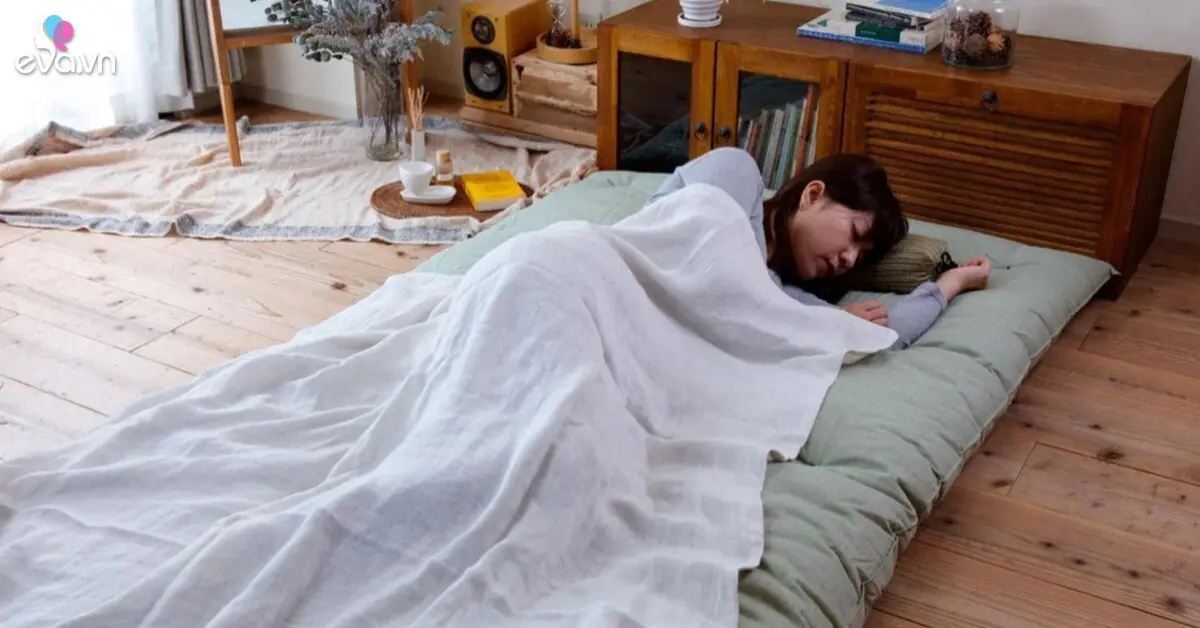
Today, many Japanese homes still use floor sleeping arrangements, although Western-style beds are increasingly popular. Some families combine both approaches, using low beds or futons placed directly on tatami mats. Despite modernization, the cultural preference for floor sleeping continues in many households.
Conclusion
Sleeping on the floor in Japan is more than a habit—it is a reflection of historical living conditions, space-conscious design, health considerations, and cultural philosophy. The practice highlights the Japanese focus on minimalism, natural materials, and adaptability in daily life.