10 Simple Ways to Protect Your Teeth and Keep Your Smile Healthy

Healthy teeth are essential for eating, speaking, and maintaining overall well-being. Good oral hygiene doesn't just help prevent cavities—it can also reduce the risk of gum disease, tooth loss, and even certain health problems linked to poor oral health. Fortunately, protecting your teeth starts with a few simple daily habits.
Here are 10 effective ways to keep your teeth strong and your smile healthy.
1. Brush Your Teeth Twice a Day
Brushing your teeth every morning and before bed is one of the most important steps in preventing tooth decay and gum disease.
For the best results:
-
Brush for at least 2 minutes.
-
Use a soft-bristled toothbrush.
-
Hold the brush at a 45-degree angle toward the gums.
-
Replace your toothbrush every 3–4 months, or sooner if the bristles become worn.
2. Use Fluoride Toothpaste
Fluoride helps strengthen tooth enamel and makes teeth more resistant to acid attacks from bacteria and sugary foods.
Regular use of fluoride toothpaste can:
-
Reduce the risk of cavities.
-
Remineralize early enamel damage.
-
Protect both children and adults.
Use only the recommended amount of toothpaste for young children and supervise brushing when appropriate.
3. Clean Between Your Teeth Every Day

Brushing alone cannot remove all plaque from between the teeth.
Use one of the following daily:
-
Dental floss.
-
Interdental brushes.
-
Water flossers (for some people).
Cleaning between the teeth helps prevent cavities and gum disease in areas your toothbrush cannot reach.
4. Limit Sugary Foods and Drinks
Sugar feeds bacteria in the mouth, which produce acids that erode tooth enamel.
Try to reduce:
-
Candy.
-
Soft drinks.
-
Sweetened coffee or tea.
-
Sticky desserts.
-
Frequent sugary snacks.
If you do consume sugary foods, it's best to have them with meals rather than sipping or snacking on them throughout the day.
5. Drink Plenty of Water
Water helps rinse away food particles and bacteria.
Fluoridated drinking water, where available, also provides additional protection against tooth decay.
Drinking water after meals can be especially helpful when brushing isn't possible.
6. Eat Tooth-Friendly Foods
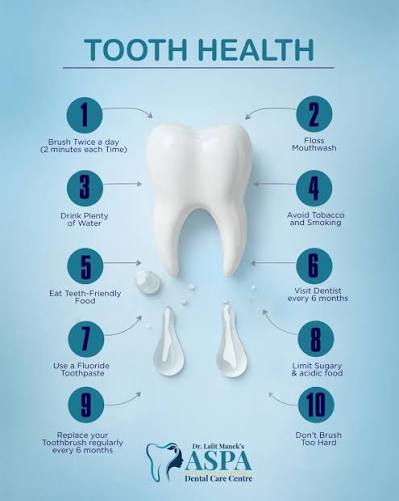
A balanced diet supports healthy teeth and gums.
Foods that promote oral health include:
-
Dairy products rich in calcium.
-
Leafy green vegetables.
-
Nuts.
-
Fish.
-
Eggs.
-
Fresh fruits and vegetables.
Crunchy fruits and vegetables, such as apples and carrots, can also stimulate saliva production, which helps protect teeth.
7. Avoid Smoking and Tobacco Products
Smoking significantly increases the risk of:
-
Gum disease.
-
Tooth loss.
-
Bad breath.
-
Oral cancer.
-
Tooth staining.
Quitting tobacco is one of the best things you can do for both your oral and overall health.
8. Wear a Mouthguard When Needed
If you play contact sports or grind your teeth while sleeping, a mouthguard can help protect your teeth from injury and excessive wear.
A dentist can recommend or custom-fit the most appropriate type.
9. Visit Your Dentist Regularly
Routine dental checkups allow dentists to detect problems early—often before they become painful or expensive to treat.
Most adults benefit from regular dental examinations and professional cleanings, although the recommended schedule may vary depending on individual oral health needs.
10. Don't Ignore Early Warning Signs
See a dentist if you notice:
-
Tooth sensitivity.
-
Persistent toothache.
-
Bleeding gums.
-
Loose teeth.
-
Swollen gums.
-
Mouth sores that don't heal.
Early treatment can prevent more serious dental problems.
Habits That Can Damage Your Teeth
Try to avoid these common habits:
-
Using your teeth to open packages.
-
Chewing ice.
-
Biting fingernails.
-
Grinding your teeth.
-
Frequent snacking on sugary foods.
-
Drinking acidic beverages throughout the day.
These behaviors can weaken enamel or increase the risk of tooth fractures.
When Should You See a Dentist Immediately?
Seek prompt dental care if you experience:
-
Severe tooth pain.
-
A knocked-out or broken tooth.
-
Facial swelling.
-
Signs of a dental abscess, such as pus or fever.
-
Bleeding that doesn't stop after dental trauma.
These situations require timely evaluation and treatment.
The Bottom Line
Protecting your teeth starts with consistent daily habits. Brushing twice a day with fluoride toothpaste, cleaning between your teeth, eating a balanced diet, limiting sugar, staying hydrated, and visiting your dentist regularly can greatly reduce the risk of cavities and gum disease.
Healthy teeth are a lifelong investment. With proper care and regular dental checkups, you can keep your smile strong, functional, and healthy for years to come.