vImagine opening your windows on a warm evening without immediately being surrounded by mosquitoes. Or keeping a few fragrant plants near the kitchen and patio that make your home less inviting to certain insects.
It's an appealing idea and some plants really do contain aromatic compounds that insects may find unpleasant.
However, there's an important distinction between plants that contain insect-repelling compounds and plants that can actually protect an entire home from pests. Simply placing a pot of basil or lavender by the window is unlikely to eliminate mosquitoes, flies, or cockroaches. The effectiveness of plant-based repellents can vary considerably depending on the insect species, concentration of the active compounds, weather, and how the plant is used. The CDC specifically notes that the effectiveness of many non-registered "natural" mosquito repellents is uncertain.
Still, these compact plants can be useful additions to a broader pest-management strategy—and many smell wonderful or are useful in cooking.
Here are 10 options worth considering.
1. Lavender
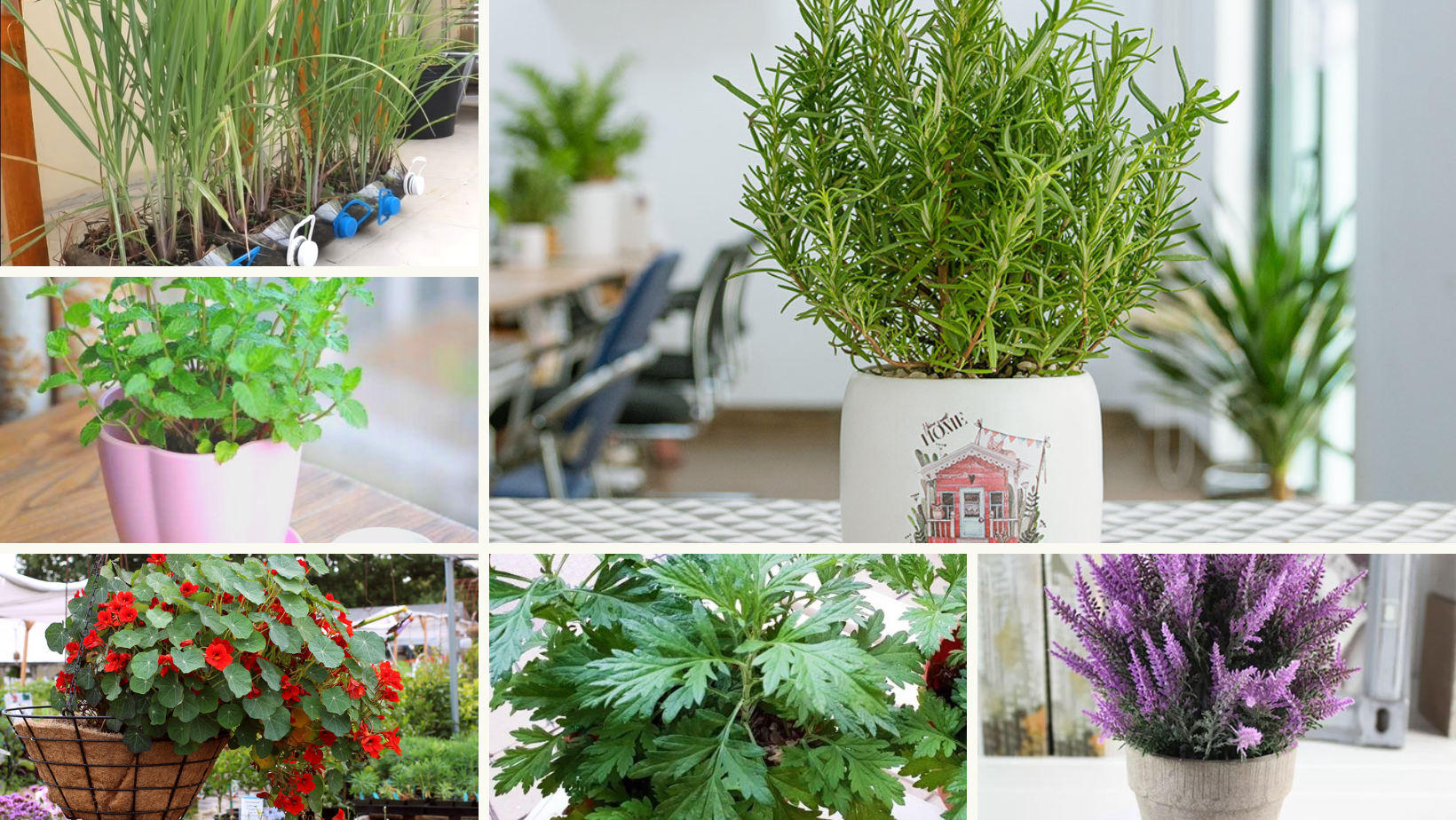
Lavender is one of the most popular plants associated with natural insect deterrence.
Its strong fragrance comes largely from aromatic compounds in its essential oil. Some laboratory research has found mosquito-repellent activity from lavender oil, although simply growing a lavender plant is not equivalent to applying a tested repellent.
Why Grow It?
Lavender is:
-
Compact
-
Fragrant
-
Attractive to pollinators
-
Suitable for containers
-
Relatively easy to maintain in appropriate conditions
Where to Put It
Try placing lavender near:
-
Sunny windows
-
Balconies
-
Patios
-
Entryways
It works especially well as a decorative plant because you don't need to sacrifice aesthetics for pest-conscious gardening.
2. Basil
Basil is an excellent choice if you want a plant that is both practical and potentially useful around insects.
Its leaves contain aromatic compounds that contribute to its distinctive smell.
Different basil varieties can have different chemical profiles, so their insect-deterring effects aren't necessarily identical.
Bonus Benefit
You can harvest basil for:
-
Pasta
-
Salads
-
Pesto
-
Soups
-
Sandwiches
Place several small pots around a sunny kitchen window or balcony.
3. Rosemary
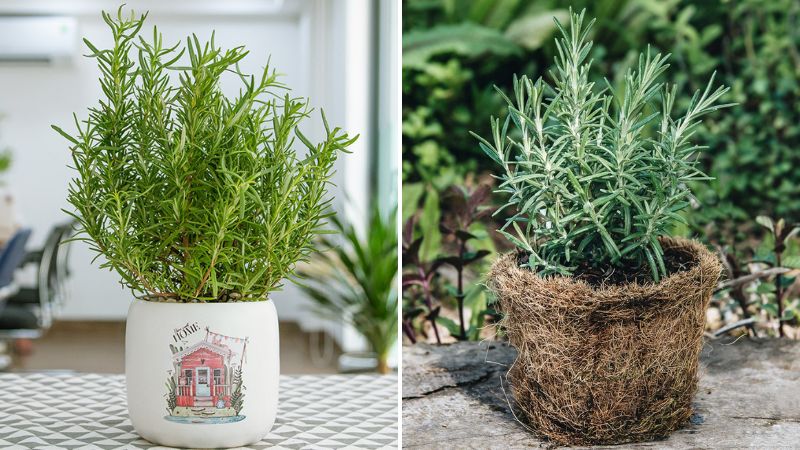
Rosemary is another compact herb with a strong aroma.
Its essential oil contains compounds such as 1,8-cineole, camphor, and alpha-pinene, which contribute to its characteristic fragrance.
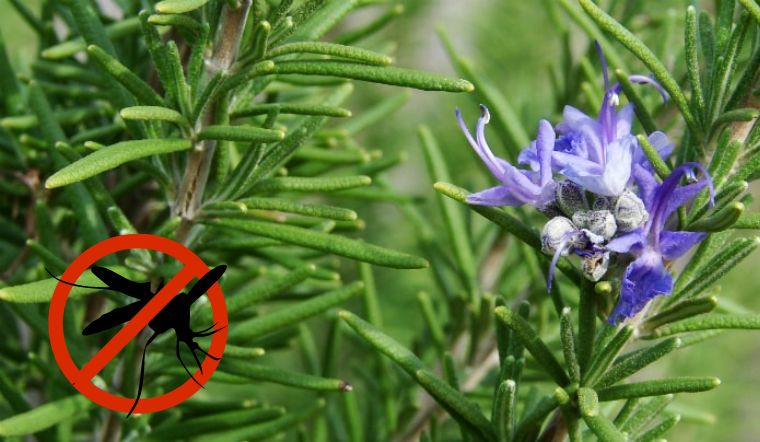
Some plant-derived oils, including rosemary oil, have demonstrated insect-repellent activity in laboratory studies, but this should not be interpreted as proof that a living rosemary plant will keep an entire room mosquito-free.
Growing Tip
Rosemary prefers:
-
Plenty of sunlight
-
Well-drained soil
-
Moderate watering
Avoid keeping the soil constantly wet.
4. Mint
Mint is extremely aromatic, and its strong scent makes it a popular choice for natural pest-management gardens.
Peppermint and other mint species contain menthol and related aromatic compounds.
Research has investigated peppermint and other plant oils for mosquito-repellent effects, although results vary depending on the formulation and insect species.
One Important Warning
Mint spreads aggressively.
Instead of planting it directly in the garden, consider keeping it in a container.
A single pot can provide plenty of fresh leaves for:
-
Tea
-
Desserts
-
Salads
-
Drinks
5. Lemongrass
Lemongrass is particularly popular among people looking for mosquito-conscious landscaping.
Its citrus-like aroma comes from compounds including citral.
However, there's an important distinction between lemongrass and citronella grass. They are related but are not identical plants.
Citronella-derived products have been studied for mosquito repellency, but the presence of a fragrant plant in a garden should not be assumed to provide the same protection as a formulated repellent.
Best Location
Lemongrass can work well in:
-
Containers
-
Patios
-
Balconies
-
Sunny outdoor spaces
6. Catnip
Catnip may look like an ordinary ornamental herb, but its chemistry has attracted significant scientific interest.
Catnip contains nepetalactone, a compound that has demonstrated insect-repellent activity in laboratory research.
Some studies have found catnip-related compounds to be effective against certain mosquito species.
However, growing catnip doesn't mean your patio will become a mosquito-free zone.
Pet Owners Take Note
Cats are famously attracted to catnip.
If your cat reacts strongly to it, you may find your carefully arranged plant becoming a favorite feline playground.
7. Lemon Balm
Lemon balm is another compact herb with a pleasant citrus-like aroma.
It belongs to the mint family and can be grown successfully in containers.
Its leaves contain aromatic compounds that have been studied for insect-related applications.
Why It's Useful
Lemon balm is:
-
Easy to grow
-
Pleasantly fragrant
-
Suitable for containers
-
Useful for herbal teas
-
Attractive to gardeners who want multifunctional plants
Keep it contained because, like other members of the mint family, it can spread quickly.
8. Marigolds
Marigolds are among the most commonly recommended garden plants for natural pest control.
Their distinctive scent and plant chemistry have led to considerable interest in their potential insect-deterring properties.
Some marigold species contain compounds such as thiophenes, which have been studied for activity against certain insects and nematodes.
But again, there's a major difference between laboratory activity and practical pest control.
Planting a few marigolds around your patio shouldn't be expected to eliminate mosquitoes or cockroaches.
Why Plant Them Anyway?
They're:
-
Colorful
-
Compact
-
Easy to grow
-
Suitable for containers
-
Attractive to many gardeners
9. Geraniums
Some scented geraniums are popular in gardens because their leaves release strong fragrances when touched.
Certain varieties have citrus-like or mint-like aromas.
The term "mosquito plant" is sometimes used in marketing for particular scented geraniums, but the name itself should not be taken as evidence that the plant provides reliable mosquito protection.
If you like geraniums, grow them for their appearance and fragrance—and consider any insect-deterring effect a possible bonus rather than a guarantee.
10. Lemon-Scented Eucalyptus
Lemon-scented eucalyptus is another plant frequently associated with mosquito deterrence.
Its leaves contain aromatic compounds, and eucalyptus-derived ingredients have been studied for insect-repellent activity.
However, this is where an important safety distinction matters.
Oil of lemon eucalyptus (OLE) and lemon eucalyptus essential oil are not necessarily the same thing. CDC guidance specifically distinguishes EPA-registered OLE products from pure essential oil and recommends using tested, registered formulations when reliable mosquito protection is needed.
So growing the plant is not equivalent to applying an EPA-registered repellent.
Why Do These Plants Sometimes Repel Insects?
Many aromatic plants produce secondary plant compounds that help the plant interact with its environment.
These compounds can include:
-
Terpenes
-
Phenolics
-
Aldehydes
-
Alcohols
-
Other volatile organic compounds
Some may interfere with insects' ability to locate hosts or may be unpleasant to certain species.
This is why plants such as mint, lavender, rosemary, lemongrass, and eucalyptus have attracted so much attention.
But insects are incredibly diverse.
A compound that affects one mosquito species may have little effect on another insect.
That's why there's no universal "bug-repelling plant."
Can These Plants Actually Eliminate Mosquitoes?
Probably not.
This is one of the biggest misconceptions surrounding natural pest control.
A potted plant produces relatively low concentrations of volatile compounds compared with a concentrated essential oil or formulated insect repellent.
The fragrance may be noticeable to humans without reaching a concentration sufficient to repel insects across an entire room or yard.
The CDC therefore recommends proven EPA-registered insect repellents when protection from mosquito bites is important.
The Most Important Step: Remove Standing Water
If mosquitoes are your main problem, plants should not be your first line of defense.
Standing water is far more important.
Mosquitoes lay eggs in or near water, including water collected in:
-
Plant saucers
-
Buckets
-
Tires
-
Birdbaths
-
Gutters
-
Toys
-
Containers
-
Uncovered water-storage vessels
The CDC recommends emptying and scrubbing, turning over, covering, or disposing of items that hold water at least once a week.
This can have a much greater impact than adding another pot of lavender to your patio.
Keep Mosquitoes Out of Your Home
You can also make your home less accessible.
Check Window Screens
Repair holes and gaps in screens.
Keep Doors Closed
Don't leave doors open unnecessarily.
Use Air Conditioning
When practical, air conditioning can reduce mosquito entry.
Eliminate Indoor Water Sources
Check:
-
Plant saucers
-
Vases
-
Buckets
-
Bathrooms
-
Other containers holding stagnant water
These measures are specifically recommended by the CDC for mosquito control.
What About Cockroaches and Flies?
This is where expectations should be especially realistic.
A fragrant plant isn't a substitute for proper pest control.
Cockroaches are attracted to:
-
Food
-
Moisture
-
Warmth
-
Shelter
-
Crumbs and waste
Flies are commonly attracted to:
-
Food
-
Garbage
-
Organic material
-
Pet waste
-
Fermenting foods
If you're dealing with these pests, sanitation and exclusion are much more important than simply placing plants around the room.
Make Your Kitchen Less Attractive to Pests
If you want fewer flies and cockroaches, focus on the basics:
Clean Food Spills Immediately
Even small amounts of food can attract insects.
Store Food Properly
Use sealed containers for:
-
Cereals
-
Flour
-
Sugar
-
Pet food
-
Snacks
Take Out Garbage Regularly
Don't allow food waste to accumulate.
Fix Leaks
Moisture can attract cockroaches and other pests.
Clean Under Appliances
Crumbs and grease often accumulate in hidden areas.
How to Create a Small Natural Pest-Management Garden
You don't need a huge backyard.
A balcony, windowsill, patio, or small container garden can work.
Consider combining:
Lavender + rosemary + basil + mint + marigolds
Place the plants around areas where you spend time outdoors.
The combination gives you:
-
Fragrance
-
Herbs for cooking
-
Decorative flowers
-
Pollinator-friendly plants
-
A pleasant outdoor environment
Just don't expect the plants alone to create an invisible barrier against insects.
Can You Crush the Leaves to Make a Repellent?
This is where caution is important.
Crushing aromatic leaves may release more volatile compounds temporarily, but that doesn't automatically make them a safe or effective skin repellent.
Do not rub essential oils or concentrated plant extracts directly onto your skin without understanding their safety and appropriate dilution.
If you need reliable protection from mosquito bites, use a tested repellent according to its label. CDC recommends EPA-registered products containing ingredients such as DEET, picaridin, IR3535, OLE/PMD, or 2-undecanone.
A Simple Plant Placement Strategy
Near Windows
Try:
-
Lavender
-
Basil
-
Rosemary
On the Balcony
Try:
-
Lemongrass
-
Marigolds
-
Mint
Near the Patio
Try:
-
Rosemary
-
Lavender
-
Lemon balm
In the Kitchen
Try:
-
Basil
-
Mint
-
Rosemary
This gives you useful herbs while adding fragrance and greenery.
Common Mistakes to Avoid
Mistake #1: Expecting One Plant to Solve a Pest Problem
No single plant can guarantee a pest-free home.
Mistake #2: Leaving Water in Plant Saucers
Ironically, plants can sometimes create mosquito breeding sites if their saucers collect stagnant water.
Empty them regularly. The CDC specifically identifies flowerpot saucers among household items that can hold mosquito-breeding water.
Mistake #3: Assuming "Natural" Means "Guaranteed Safe"
Natural essential oils can still cause skin irritation, allergies, or other problems when used improperly.
Mistake #4: Ignoring an Infestation
If you have a serious cockroach or fly infestation, plants won't solve the underlying problem.
You may need sanitation improvements, exclusion, traps, targeted pest-control products, or professional pest management.
The Bottom Line
Small aromatic plants such as lavender, basil, rosemary, mint, lemongrass, catnip, lemon balm, marigolds, scented geraniums, and lemon-scented eucalyptus can be attractive additions to a home or garden and may have some insect-deterring properties. Research has identified insect-repellent activity from various plant oils and compounds, but the effectiveness of simply growing these plants around your home is much less certain.
Think of these plants as one small part of a broader pest-management strategy, not a replacement for proven insect repellents or sanitation measures.
For mosquitoes, removing standing water, repairing screens, and using effective repellents are much more reliable strategies. For cockroaches and flies, keeping food sealed, removing garbage, eliminating moisture, and maintaining a clean environment are essential.
The best approach is therefore simple: grow the plants you enjoy, use them for their fragrance and culinary or ornamental value, and combine them with evidence-based pest-control practices. That way, your home can be greener, fresher, and less welcoming to unwanted insects—without relying on exaggerated claims about what a single plant can do.