-
Muscle cramps
-
Muscle weakness
-
Restlessness
-
Tingling
-
Changes in muscle function
However, cramps are extremely common and can occur after exercise, dehydration, prolonged sitting, certain medications, or mineral disturbances unrelated to kidney disease.
If cramps become frequent, severe, or occur together with weakness or other unexplained symptoms, they should be discussed with a healthcare professional.
8. Difficulty Concentrating or Feeling Mentally Foggy
People with significant kidney dysfunction may experience difficulty concentrating or changes in mental clarity.
This can occur as waste products accumulate and metabolic disturbances develop.
You might notice:
-
Difficulty focusing
-
Slower thinking
-
Forgetfulness
-
Trouble completing familiar tasks
-
Unusual sleepiness
-
A general feeling of mental "fog"
Again, this symptom is not specific to kidney disease.
Sleep deprivation, anxiety, depression, medication effects, menopause, thyroid disorders, nutritional deficiencies, and many other conditions can affect concentration.
If cognitive changes are persistent or progressively worsening, they deserve proper evaluation.
9. Shortness of Breath
Breathing difficulties can sometimes be associated with advanced kidney disease.
There are several possible mechanisms.
Fluid accumulation can contribute to congestion in the lungs. Kidney disease can also contribute to anemia, which reduces the blood's oxygen-carrying capacity.
As a result, a person may experience:
-
Shortness of breath during activity
-
Reduced exercise tolerance
-
Difficulty breathing when lying down
-
Unusual fatigue
But shortness of breath has many potential causes, including asthma, respiratory infections, heart disease, anemia, lung conditions, and anxiety.
Sudden or severe breathing difficulty should never be assumed to be a kidney problem.
Seek urgent medical attention if shortness of breath is severe, sudden, or accompanied by chest pain, fainting, blue lips, or severe weakness.
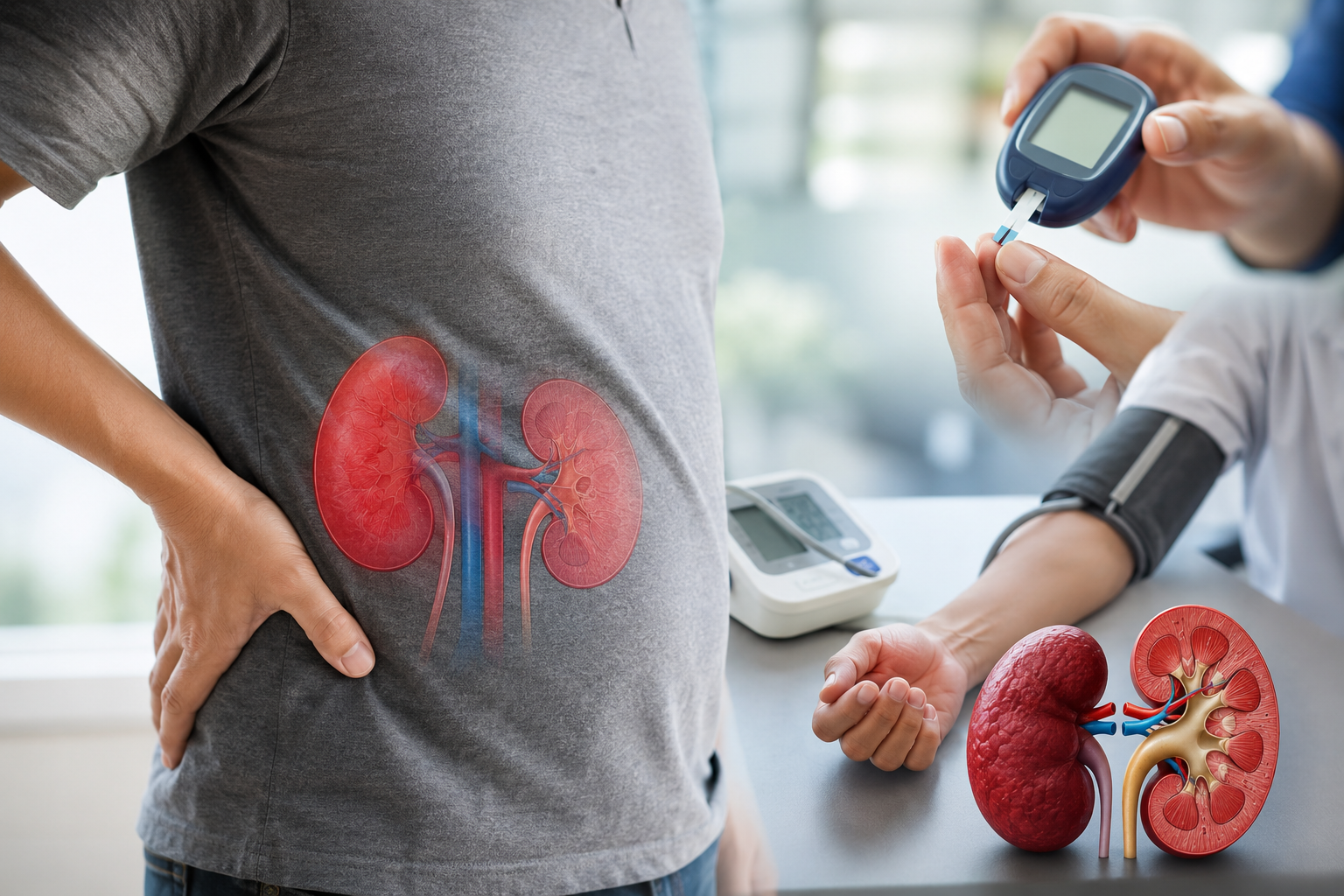
10. High Blood Pressure—or Blood Pressure That's Becoming Harder to Control
The relationship between kidney disease and blood pressure goes in both directions.
The kidneys help regulate blood pressure through fluid balance and hormonal mechanisms.
When the kidneys are damaged, blood pressure can rise.
At the same time, long-term uncontrolled high blood pressure can damage the blood vessels and filtering structures within the kidneys.
This can create a cycle:
High blood pressure → kidney damage → worsening blood pressure → further kidney damage.
One reason this is important is that high blood pressure often produces no noticeable symptoms.
You can have significantly elevated blood pressure and feel completely normal.
That's why regular blood-pressure checks are important, particularly for people at higher risk of kidney disease.
Why Kidney Disease Can Be Difficult to Notice
The kidneys have a considerable functional reserve.
That means a person can lose a substantial amount of kidney function before obvious symptoms become apparent.
This is why relying only on how you feel isn't a reliable way to assess kidney health.
Someone can have early chronic kidney disease without:
-
Pain
-
Swelling
-
Fatigue
-
Changes in urination
-
Nausea
In other words, feeling healthy doesn't necessarily mean your kidneys have normal function.
Testing becomes particularly important when risk factors are present.
Who Is More Likely to Develop Kidney Disease?
Certain conditions significantly increase the risk of chronic kidney disease.
Important risk factors include:
Diabetes
High blood glucose over time can damage the tiny blood vessels and filtering structures in the kidneys.
High blood pressure
Persistent hypertension can damage kidney blood vessels and filtration structures.
Cardiovascular disease
Heart and kidney health are closely interconnected.
Family history
Having close relatives with kidney disease can increase risk depending on the underlying cause.
Older age
Kidney function and the risk of chronic kidney disease generally increase with age.
Obesity
Excess body weight is associated with higher risk of conditions such as diabetes and hypertension that can affect the kidneys.
Smoking
Smoking can damage blood vessels and contribute to cardiovascular and kidney health problems.
Certain medications
Some medications can affect kidney function, particularly when used incorrectly, at high doses, or in people who already have kidney problems.
Why Diabetes Deserves Special Attention
Diabetes is one of the major causes of chronic kidney disease.
Persistently elevated blood glucose can damage the small blood vessels that form the kidney's filtration system.
Early diabetic kidney disease may produce no symptoms at all.
That is why people with diabetes are often monitored with blood and urine tests even when they feel completely well.
Two important measures commonly used to assess kidney health are: