Chapter 1: Six Months of Stomach Pain – A Medical Mystery That Nobody Expected
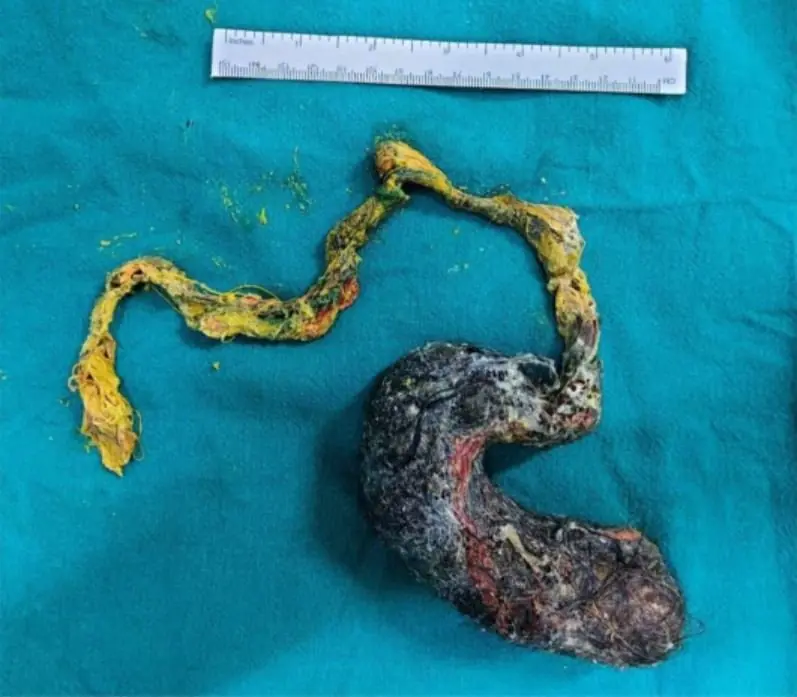
For six months, a 14-year-old girl struggled with persistent abdominal discomfort. What initially appeared to be an ordinary digestive problem gradually became a source of increasing concern.
The pain did not simply disappear after a few days. Instead, it continued returning, affecting her daily routine and raising questions about what might be happening inside her body.
For a teenager, experiencing repeated stomach pain can be particularly difficult. School activities, meals, social interactions, and even ordinary movement may become uncomfortable when abdominal symptoms continue for weeks or months.
At first, the symptoms might appear similar to common digestive complaints.
Constipation, indigestion, stomach inflammation, food intolerance, and gastrointestinal infections can all cause abdominal discomfort. Many of these conditions are relatively common, particularly among young people.
However, persistent symptoms deserve closer attention.
When abdominal pain continues without a clear explanation, doctors may need to investigate less common conditions that are not immediately obvious during an ordinary examination.
In some unusual cases, the cause is a mass formed from material that the human digestive system cannot properly break down.
One such condition is called a trichobezoar.
A trichobezoar is an accumulation of swallowed hair that gradually collects inside the stomach. Unlike ordinary food, human hair is not digested effectively. Instead, individual strands can become trapped together, forming a dense mass.
Over time, additional strands may accumulate, making the mass larger and more difficult for the stomach to move through the digestive tract.
The condition is uncommon, but medical literature has documented cases involving children and adolescents, particularly girls.
Some patients experience vague abdominal pain for months before the underlying problem is recognized.
A published medical case involving a 13-year-old girl described approximately five to six months of abdominal pain, nausea, vomiting, and other digestive symptoms. Investigations eventually revealed a large accumulation of hair causing gastrointestinal obstruction.
Another published report described a 14-year-old girl who experienced abdominal pain over several months before doctors identified a large gastric trichobezoar.
These cases demonstrate why persistent digestive symptoms in young people should never be dismissed simply because they initially appear mild.
How can hair remain inside the stomach?
The stomach is designed to process food using muscular contractions, digestive juices, and enzymes.
Most foods are gradually broken down into smaller substances that can pass into the small intestine.
Human hair behaves differently.
It contains keratin, a strong structural protein that makes hair resistant to ordinary digestive processes.
When someone repeatedly swallows hair, the strands can become entangled and remain inside the stomach.
The stomach's movements may gradually compress them into a compact mass.
As more hair accumulates, the mass can become large enough to interfere with normal digestion.
Initially, a person might not notice anything unusual.
However, as the mass grows, it may occupy an increasing amount of space inside the stomach.
This can lead to early fullness, reduced appetite, nausea, vomiting, and abdominal discomfort.
In more advanced situations, the mass may extend beyond the stomach and interfere with the movement of food through the intestines.
Why might a teenager swallow hair?
One important medical association is a condition called trichophagia, which refers to the repeated ingestion of hair.
Trichophagia can occur alongside trichotillomania, a disorder involving recurrent urges to pull out one's own hair.
Some people pull hair from their scalp, eyebrows, or other areas and may subsequently chew or swallow the strands.
These behaviors can be associated with emotional distress, anxiety, tension, or other psychological difficulties.
However, it is important not to assume that every teenager with a trichobezoar has the same psychological background.
The reasons behind these behaviors can vary, and each patient deserves an individual assessment.
For some young people, the behavior may be difficult to discuss because of embarrassment or fear of being judged.
That is why a compassionate medical approach matters.
Doctors need to understand not only the physical symptoms but also the patient's experiences and behavioral patterns.
In the case of a teenager experiencing unexplained abdominal pain for months, identifying an unusual digestive mass can become the turning point in the medical investigation.
What initially seemed like an ordinary stomach problem may actually involve a rare condition requiring specialist treatment.
And sometimes, the most important discovery is not simply what doctors find inside the stomach, but understanding how it got there in the first place.
Chapter 2: The Shocking Discovery – Doctors Find a Large Mass Made of Human Hair
As the investigation continued, doctors needed to determine why the girl's abdominal symptoms had persisted for so long.
A physical examination can provide important clues, but it does not always reveal the full picture.
In patients with suspected trichobezoars, doctors may look for several findings, including abdominal tenderness, unusual fullness, a palpable mass in the upper abdomen, weight loss, and signs of nutritional deficiencies.
Some patients may also have thinning hair or noticeable areas of hair loss if they have been repeatedly pulling out their hair.
However, these signs are not present in every case.
A teenager may have a significant accumulation of swallowed hair without displaying obvious changes to the scalp.
This makes the condition particularly challenging to recognize.
The role of medical imaging
When doctors suspect that something unusual may be occupying the stomach, imaging examinations can help identify the problem.
An abdominal ultrasound may reveal an unusual mass inside the stomach.
However, ultrasound findings can sometimes be difficult to interpret because the air trapped within a hairball creates characteristic acoustic shadows.
Computed tomography, commonly known as a CT scan, can provide more detailed information.
A trichobezoar may appear as a mass containing trapped air bubbles and mixed densities within the stomach.
The examination can also help doctors determine whether the mass remains inside the stomach or extends into the small intestine.
This distinction is important because a larger mass may cause complications beyond ordinary abdominal discomfort.
In some cases, doctors may also recommend an upper gastrointestinal endoscopy.
During this procedure, a thin flexible instrument equipped with a camera is passed through the mouth and into the upper digestive tract.
It allows specialists to examine the stomach directly and identify unusual material.
When a trichobezoar is present, doctors may see a dense, tangled accumulation of dark hair occupying part of the stomach.
For families, learning that their child has swallowed enough hair to create a large internal mass can be deeply upsetting.
The discovery may raise questions that nobody previously considered.
How long had the hair been accumulating?