Chapter 1: Six Months of Stomach Pain and an Unexpected Discovery
Imagine being a teenager who wakes up every morning with abdominal discomfort. At first, the pain may seem relatively minor. It might appear after eating, disappear for several hours, and return unexpectedly. A young person may assume that the problem is caused by something they ate, stress at school, or an ordinary digestive disturbance.
But when the discomfort continues for weeks and eventually months, the situation becomes much more concerning.
The viral image accompanying this story describes a 14-year-old girl who reportedly experienced stomach pain for approximately six months. According to the headline, her mother was shocked when doctors discovered an unusual mass inside her stomach during surgery.
The image appears to show a tangled collection of hair removed during a medical procedure. Although the identity and precise medical history of the girl have not been verified, the object resembles something doctors recognize as a gastric trichobezoar.
A trichobezoar is an accumulation of swallowed hair that forms a compact mass inside the stomach.
It is an unusual condition, particularly among children and teenagers, but it is documented in medical literature.
One published medical case describes a 13-year-old girl who experienced intermittent abdominal pain for six months, followed by nausea, vomiting, early fullness, and weight loss. Doctors eventually identified a large mass of hair inside her stomach and removed it surgically.
PubMed Central (PMC)+1
The condition can be difficult to recognize because its early symptoms resemble many more common digestive problems.
A teenager might complain of stomach discomfort without being able to explain exactly where it hurts. Parents may initially suspect constipation, food intolerance, gastritis, or an infection.
In some cases, the child may continue attending school and participating in ordinary activities, even while the underlying problem gradually becomes more serious.
This is one reason persistent abdominal symptoms should not be dismissed.
What exactly did doctors discover?
The unusual mass is generally made up of hair that has been swallowed over time.
Unlike food, hair is not effectively broken down by the human digestive system. Its structure makes it resistant to normal digestion.
When hair repeatedly enters the stomach, individual strands can become trapped together with mucus and food particles.
The stomach's movements gradually compress this material into a dense mass.
Over time, the mass may become large enough to occupy a significant portion of the stomach.
In particularly serious cases, it can interfere with the movement of food from the stomach into the small intestine.
This can cause early fullness, nausea, vomiting, abdominal discomfort, and nutritional problems.
The discovery can be surprising for families because swallowing hair is not necessarily something a child openly discusses.
Some children may pull their hair without realizing how frequently they do it. Others may swallow individual strands or small amounts of hair as part of a repetitive behavior.
These actions can be associated with two recognized conditions: trichotillomania and trichophagia.
Trichotillomania involves recurrent hair pulling that can result in noticeable hair loss.
Trichophagia refers to eating hair.
Not everyone who pulls their hair swallows it, and not everyone who swallows hair necessarily has the same underlying psychological circumstances.
Understanding the distinction is important when evaluating a child.
Why can the condition remain unnoticed?
One difficulty is that the stomach can accommodate a growing mass for some time before obvious obstruction develops.
Early symptoms may be intermittent rather than constant.
A child might experience discomfort after meals, occasional nausea, or a reduced appetite. Parents may notice that the child eats less than before or becomes unusually selective about food.
Other warning signs can include unexplained weight loss, vomiting, constipation, and a feeling of fullness after eating only a small amount.
Because these symptoms can have many different causes, doctors need to consider the complete medical history rather than immediately assuming that a hair mass is responsible.
The possibility of a trichobezoar becomes particularly relevant when there are additional clues, such as unexplained hair thinning, bald patches, or a history of repetitive hair pulling.
However, these signs are not always present.
A child may feel embarrassed and avoid discussing personal habits, making a sensitive and nonjudgmental conversation especially important.
For parents, the central lesson is simple: persistent abdominal pain deserves proper medical attention, even when a child initially appears otherwise healthy.
An unusual diagnosis may be rare, but identifying it early can help prevent serious complications.
Chapter 2: What Is a Trichobezoar and How Does It Form?
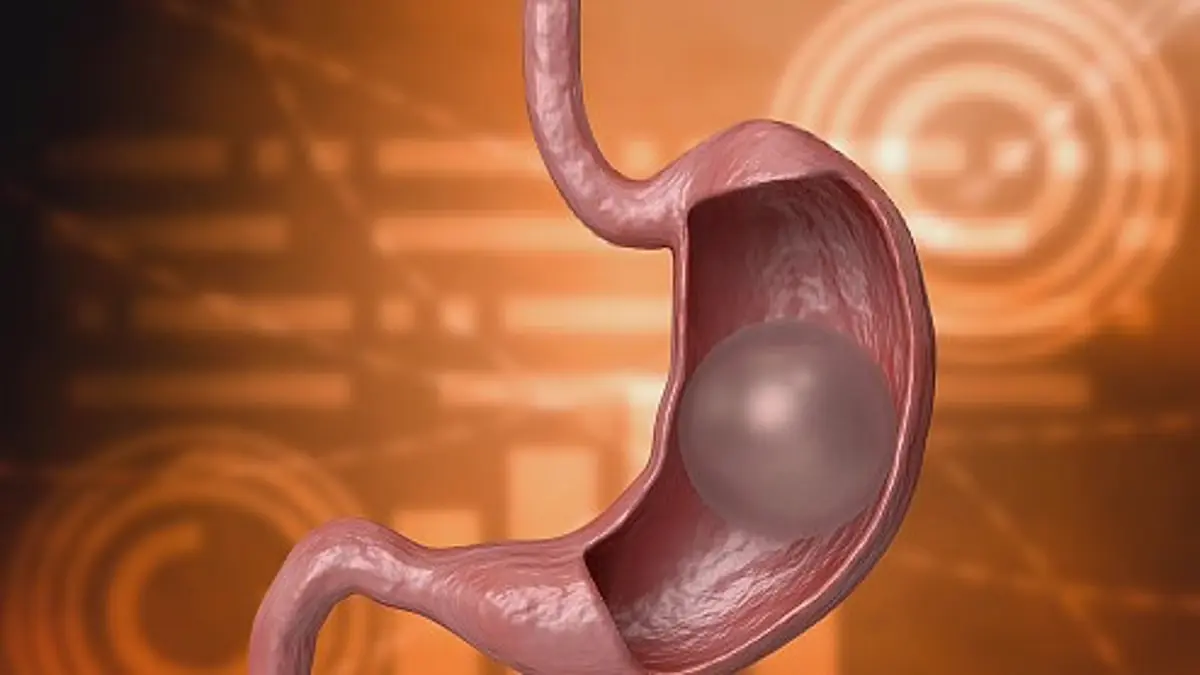
[Insert Image 1: A clean medical illustration showing a hair mass inside the stomach, without labels, text, or logos.]
The human digestive system is designed to process a remarkable variety of foods. It can break down carbohydrates, proteins, and fats, absorb essential nutrients, and move waste through the intestines.
However, not everything that enters the mouth can be digested.
Hair is one example.
Human hair consists primarily of keratin, a tough structural protein that is also found in nails and the outer layers of skin. Keratin gives hair its strength and makes it resistant to the digestive processes that normally break down food.
When someone repeatedly swallows hair, the strands may remain inside the stomach rather than passing through the digestive tract normally.
Over time, they can become tangled together.
The stomach naturally produces mucus, digestive fluids, and partially digested food. These substances can become trapped between strands of hair, helping the material form a dense, compact mass.
Doctors call this condition a trichobezoar.
The connection between hair pulling and hair eating
Two behavioral conditions are particularly relevant when discussing gastric trichobezoars.
The first is trichotillomania, a condition involving repeated urges to pull out one's own hair.
People affected may pull hair from their scalp, eyebrows, eyelashes, or other parts of the body. The behavior can occur during periods of stress, boredom, emotional discomfort, or even while someone is concentrating on another activity.
Some individuals experience temporary relief after pulling their hair. Others describe a growing tension before the behavior and difficulty resisting the urge.