Chapter 1: Why an Ordinary Sore Throat Should Sometimes Be Taken Seriously
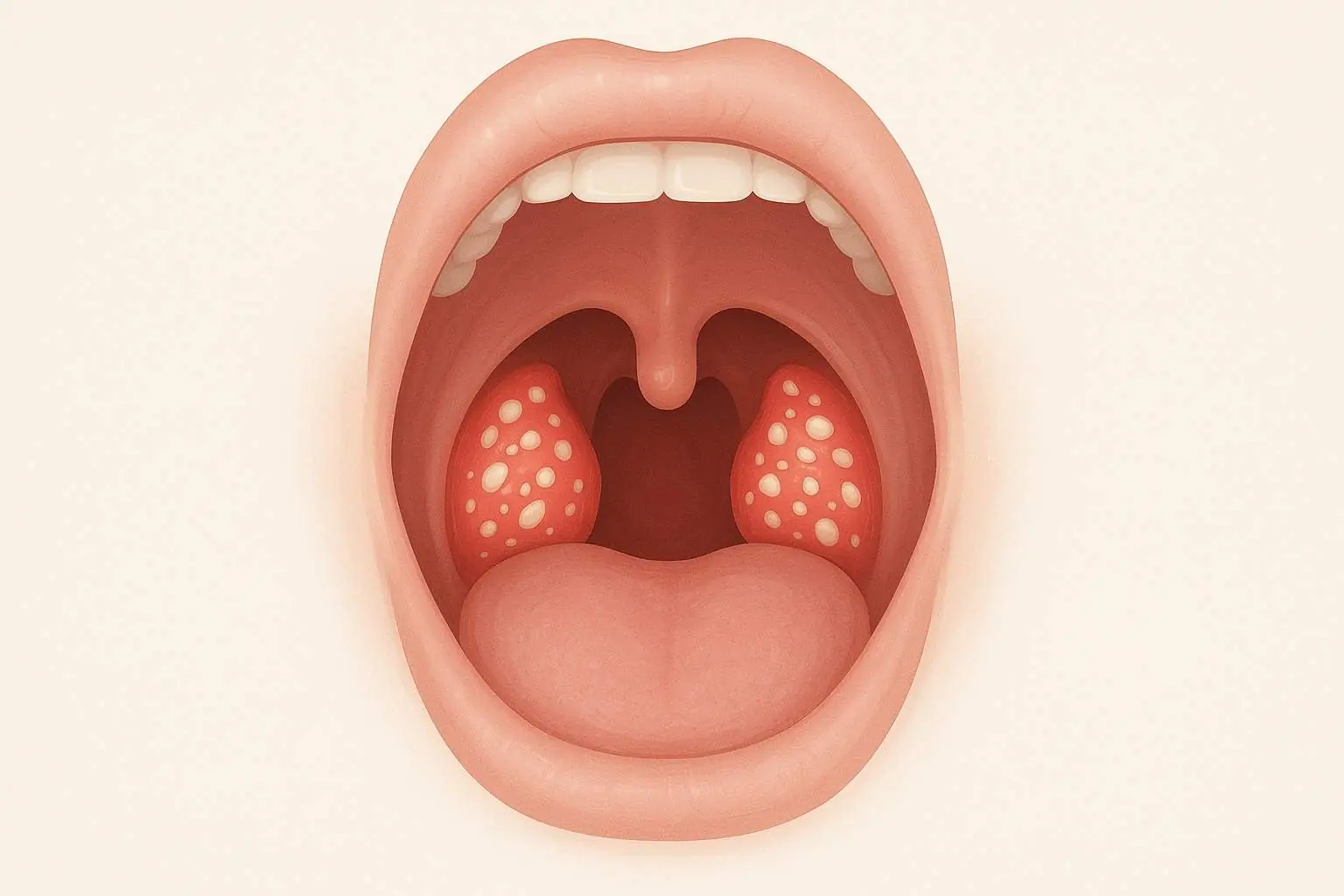
A sore throat is something almost everyone experiences at some point. It can appear after a common cold, a night of sleeping with the mouth open, exposure to dry air, or an infection affecting the tonsils and surrounding tissues.
For most people, the discomfort gradually improves without causing serious problems. However, not every sore throat has the same cause, and certain symptoms deserve much closer attention.
The image accompanying this story shows an inflamed throat and a patient receiving breathing support. These images illustrate medical situations, but they do not establish what happened to the woman mentioned in the headline.
The important question is not whether every sore throat is dangerous. It is how to recognize the uncommon situations in which an apparently simple infection may be developing into something more serious.
Understanding what causes a sore throat
The throat contains several structures that work together to help people breathe, swallow, and speak. These include the pharynx, tonsils, surrounding lymphatic tissues, and the entrance to the airway.
When an infection affects these structures, inflammation can develop.
Viruses are responsible for most sore throats. Common causes include cold viruses, influenza, and other respiratory infections.
Bacterial infections can also cause throat pain. One important example is group A Streptococcus, the bacterium responsible for strep throat.
According to the US Centers for Disease Control and Prevention (CDC), only approximately one in ten adults who visit a healthcare provider with a sore throat has strep throat. The proportion is higher among children.
CDC+1
This distinction matters because viral and bacterial infections do not always require the same treatment.
A person with a viral infection generally does not benefit from antibiotics. However, confirmed bacterial strep infections may require prescribed antibiotics to reduce the risk of complications and help prevent transmission.
Why some infections become more serious
Most throat infections remain limited to the throat and improve with time.
In rare circumstances, however, bacteria can spread into surrounding tissues.
One possible complication is a peritonsillar abscess, sometimes called quinsy. This occurs when a collection of pus develops near one of the tonsils.
As the collection grows, it can cause significant pain, swelling, difficulty swallowing, and changes in the voice.
Another uncommon complication is a deeper infection in the tissues of the neck. Such infections can become dangerous if swelling interferes with breathing or if the infection spreads beyond its original location.
The CDC identifies abscesses around the tonsils or within the neck among the possible complications of group A strep infection. It also notes that sepsis and other invasive infections are much less common.
CDC+1
These complications are not the expected outcome of an ordinary sore throat. They are reasons to take unusual or rapidly worsening symptoms seriously.
Why the first few days matter
People sometimes delay seeking medical advice because they assume throat discomfort will disappear on its own.
That assumption is often correct, but the overall pattern of symptoms matters.
A mild sore throat accompanied by a runny nose and cough may be consistent with a common viral illness.
By contrast, a sudden severe sore throat accompanied by fever, swollen tonsils, tender lymph nodes, or white patches may warrant an assessment for strep throat.
The presence of white spots alone does not establish a bacterial infection. A healthcare professional may need to examine the throat and perform a rapid antigen test or throat culture.
People should also pay attention to whether they are getting better or worse.
A condition that begins mildly but progresses rapidly deserves more attention than one that remains stable and gradually improves.
Image 1: A routine throat examination can help healthcare professionals assess inflammation and possible infection.
The most important message is simple: a sore throat is usually not an emergency, but difficulty breathing, inability to swallow saliva, or rapidly increasing swelling should never be treated as an ordinary cold.
Chapter 2: The First Warning Sign – Difficulty Breathing or Unusual Breathing Sounds
Of all the symptoms associated with a severe throat infection, difficulty breathing is among the most urgent.
The throat is closely connected to the airway. Significant swelling in the tissues surrounding the airway can reduce the space available for air to pass through.
When this happens, the body may struggle to receive enough oxygen.
This is not a situation in which someone should wait overnight to see whether the symptoms improve.
Warning sign number one: Difficulty breathing.
What does breathing difficulty look like?
Breathing problems do not always begin with dramatic choking or complete inability to breathe.
Some people initially notice that breathing requires more effort than usual.
They may feel as though their throat is becoming narrow or that air is not passing comfortably.
Other possible symptoms include:
-
Shortness of breath while resting.
-
A sensation of tightness in the throat.
-
Difficulty taking a full breath.
-
Unusual noises when breathing.
-
Rapid or visibly labored breathing.
-
Difficulty speaking because of breathlessness.
A particularly important sound is called stridor.
Stridor is a harsh, high-pitched breathing noise that usually occurs when air passes through a narrowed upper airway.
It can indicate an obstruction or significant narrowing that requires urgent medical assessment.
The NHS identifies difficulty breathing and high-pitched breathing sounds among the reasons to seek emergency assistance when experiencing a sore throat.
NHS+1
How can an infection affect the airway?
Several conditions can cause swelling around the upper airway.
One is epiglottitis, an uncommon but potentially serious inflammation of the epiglottis.
The epiglottis is a small structure located above the entrance to the windpipe. It helps direct food and liquid away from the airway during swallowing.
When it becomes severely inflamed, swelling can interfere with normal breathing.
Another possible cause is a deep infection around the tonsils or in the neck.
A large abscess may produce pressure and swelling that make swallowing and breathing increasingly difficult.
These conditions require professional assessment rather than home treatment.
Why waiting can be dangerous
The airway is essential for life. If swelling becomes severe, the situation can deteriorate quickly.
A person who is struggling to breathe should not be encouraged to drink large amounts of water, swallow tablets, or attempt to inspect the back of the throat at home.
These actions may delay emergency treatment.
Instead, emergency medical services should be contacted immediately.
If someone has severe breathing difficulty, they should be kept as comfortable and calm as possible while help is on the way. They should not be forced to lie flat if that makes breathing harder.
What about mild breathing discomfort?
Not every sensation of throat tightness means the airway is closing.
Anxiety, nasal congestion, acid reflux, and other conditions can also create uncomfortable sensations.
Nevertheless, it is important not to assume that genuine breathing difficulty is caused by anxiety or an ordinary infection.
If breathing is noticeably difficult, medical assessment is necessary.
If the person is gasping, making high-pitched breathing sounds, becoming confused, or showing signs of severe distress, emergency assistance is essential.
What families should remember
When someone develops a sore throat, relatives often focus on fever and pain.
However, breathing deserves special attention.
A person may be able to describe throat pain clearly while still experiencing an evolving airway problem.
Watch for changes in breathing, voice, posture, and the ability to speak.
If the person cannot breathe normally, do not wait for another symptom to appear.
Breathing difficulty is an emergency, not a symptom to monitor casually at home.
Chapter 3: The Second and Third Warning Signs – Inability to Swallow and Rapidly Increasing Swelling
A sore throat naturally makes swallowing uncomfortable. Even a mild infection can cause irritation when a person eats, drinks, or swallows saliva.
However, there is an important difference between painful swallowing and being physically unable to swallow.
That difference can help identify a potentially serious condition.
Warning sign number two: Difficulty swallowing saliva or excessive drooling
When the throat becomes severely inflamed, swallowing may become extremely painful.
Some people begin avoiding food and drinks because every attempt causes discomfort.
In more serious situations, a person may be unable to swallow even their own saliva.
As saliva accumulates, it may begin running out of the mouth. This is known as drooling.
In an adult who does not normally drool, new drooling combined with severe throat pain can be a particularly concerning symptom.
It may indicate significant swelling, an abscess, or a condition affecting the upper airway.
The NHS lists drooling and inability to swallow as emergency warning signs associated with a sore throat.
NHS+1
Why is this dangerous?
Swallowing is not simply a matter of moving food into the stomach.
It requires several muscles and structures to coordinate properly while protecting the airway.
When inflammation becomes severe, this coordination may be affected.
A person who cannot swallow saliva may also be unable to drink enough fluids.
This creates another potential problem: dehydration.
Signs of dehydration include:
-
Passing urine less frequently.
-
Dark or unusually strong-smelling urine.
-
Dry mouth and lips.
-
Dizziness when standing.
-
Unusual weakness.
-
Feeling extremely thirsty.
Dehydration can become more serious when someone has a fever because the body may lose additional fluid through sweating and increased breathing.
If someone cannot swallow saliva, is drooling, or has difficulty breathing, emergency medical attention is needed.
Do not force food, water, or tablets into the mouth of someone who cannot swallow safely.
Warning sign number three: Rapidly increasing throat or neck swelling
The third warning sign is swelling that becomes noticeably worse over a short period.
Some swelling of the tonsils and nearby lymph nodes is common during an infection.
The body uses immune responses to fight invading organisms, and inflammation can be part of that process.
However, rapidly increasing swelling is different.
It may indicate that infection is spreading into surrounding tissues or that an abscess is developing.
Understanding a peritonsillar abscess
A peritonsillar abscess is a pocket of pus that develops near a tonsil.
It can occur as a complication of tonsillitis or bacterial throat infection.
People with this condition may experience:
-
Severe pain, often worse on one side.
-
Increasing difficulty swallowing.
-
Swelling around one tonsil.
-
A muffled or unusual voice.
-
Difficulty opening the mouth.
-
Fever.
-
Pain that may extend toward the ear.
One characteristic finding can be displacement of the uvula, the small structure hanging at the back of the throat.
However, people should never attempt to diagnose an abscess by examining their own throat.
A healthcare professional must assess the symptoms and determine whether further testing or treatment is necessary.
Some abscesses require drainage as well as appropriate medication.
The CDC recognizes peritonsillar and retropharyngeal abscesses as possible complications of group A strep infections.
CDC+1
When neck swelling becomes particularly concerning
Swelling that extends into the neck deserves special attention.
A deep neck infection can involve tissues that are not easily visible when looking inside the mouth.
The person may experience neck pain, stiffness, difficulty turning the head, or increasing discomfort when swallowing.
If swelling is accompanied by difficulty breathing, drooling, or a rapidly changing voice, emergency evaluation is essential.
The NHS also advises immediate assessment when severe throat pain worsens quickly, the mouth or throat becomes swollen, or someone cannot open their mouth normally.
NHS+1
Why early assessment matters
An infection that is identified early may be easier to treat before complications develop.