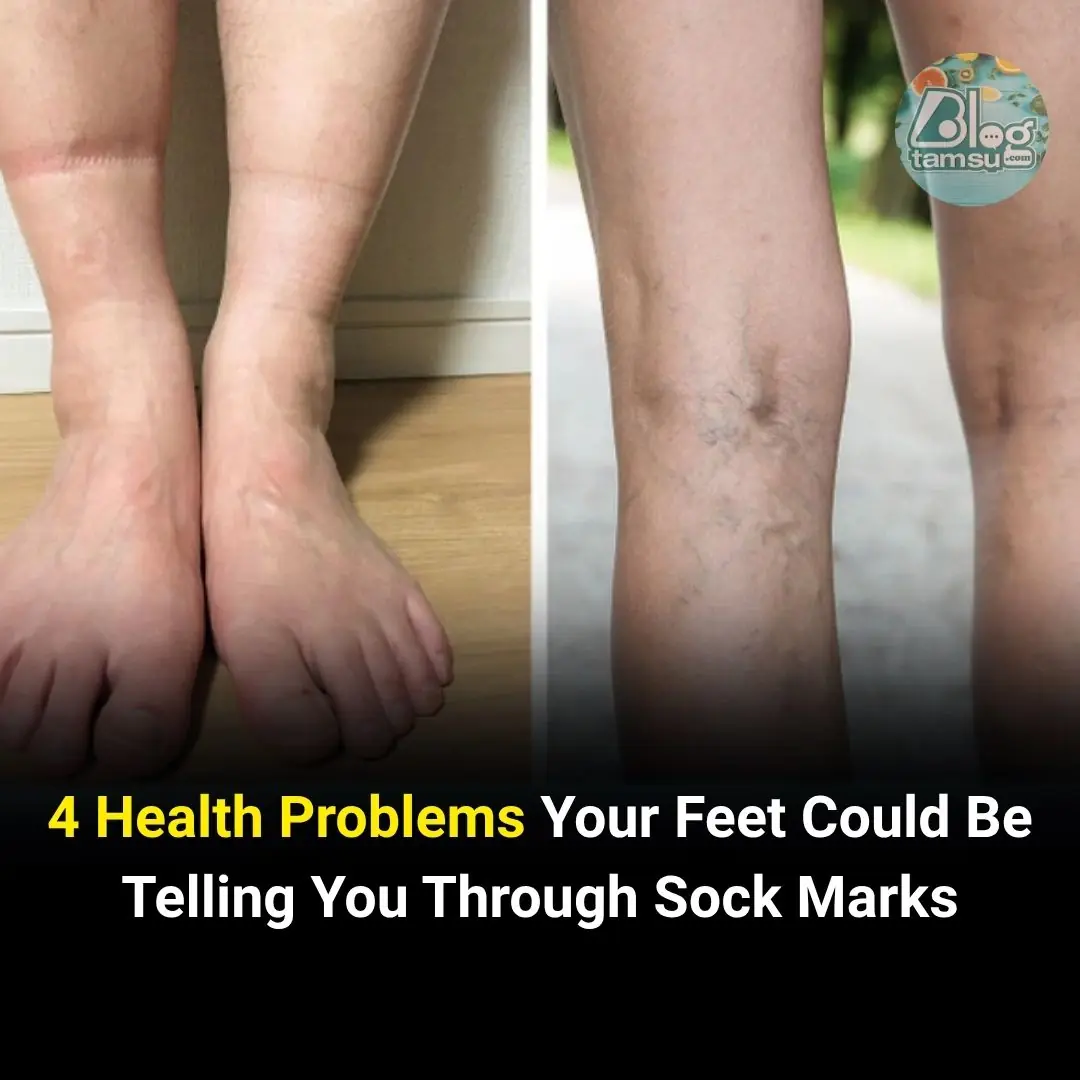
You may have noticed that your socks sometimes leave reddish marks around your ankles. If it happens only once or twice, the culprit is likely just a tight elastic band. But if sock marks appear regularly, it could be your body’s way of signaling that something’s wrong. We’ve researched the possible health issues these marks can indicate — and at the end of the article, you’ll find extra tips on how to prevent them.
CONTENT IS PROVIDED FOR INFORMATIONAL PURPOSES ONLY AND IS NOT INTENDED AS A SUBSTITUTE OF MEDICAL ADVICE. SEEK GUIDANCE OF YOUR DOCTOR REGARDING YOUR HEALTH AND MEDICAL CONDITIONS.
1. Varicose veins

2. Dehydration
3. Side effects from medication

Certain medications can also cause lower leg swelling. Some kinds of antidepressants and blood pressure medications may lead to the unpleasant feeling of swollen feet. Certain types of contraception (especially birth control pills that contain estrogen) can change hormone levels in a woman’s body and cause water retention and leg swelling.
4. Lymphedema

Lymphedema most often affects an arm or leg, causing swelling, a feeling of heaviness or tightness, limited range of motion, recurring skin infections, and thickening or hardening of the skin, she adds.
Bonus: what to do if you get sock marks regularly

- Reduce salt in your diet.
- Maintain a healthy weight.
- Wear compression socks and stockings.
- Change positions frequently and avoid sitting and standing for long periods of time.
- Wear comfortable shoes with low heels.
Not every symptom signals a serious problem, but some subtle signs from our bodies can hint at underlying health issues — and they’re easy to overlook.