Seeing these changes can be frightening.
Family members may think their loved one is suffocating.
But an altered breathing pattern does not necessarily mean the person is experiencing severe distress.
Near the end of life, changes in circulation, brain function, and respiratory control can alter the normal breathing rhythm.
What can help?
If the person appears uncomfortable or distressed, contact the healthcare team.
Depending on the situation, clinicians may use medications or positioning to relieve symptoms such as breathlessness or anxiety.
Simple environmental measures can also help.
For example:
-
Raise the head of the bed
-
Position the person comfortably
-
Keep the room cool and quiet
-
Use a gentle fan if appropriate
-
Avoid unnecessary movement
The goal is not necessarily to restore normal breathing.
The goal is comfort.
4. Changes in Circulation, Skin Color, and Body Temperature
As the body approaches death, circulation may gradually become less effective.
Blood flow is increasingly directed toward vital organs.
As a result, the hands and feet may become:
-
Cool
-
Pale
-
Bluish
-
Mottled
-
Discolored
The skin may develop an irregular, purplish or blotchy appearance, particularly on the legs, feet, arms, or hands.
This can look alarming, especially when family members aren't expecting it.
The person may also experience changes in body temperature.
They may feel unusually cold in their hands and feet, or they may alternate between feeling hot and cold.
These changes can occur as circulation slows.
What should you do?
Keep the person comfortable.
Light blankets can help if they feel cold.
However, avoid piling on heavy blankets if the person is uncomfortable or feels overheated.
You don't need to aggressively warm cold hands and feet.
The important question is:
Does the person appear comfortable?
If you're uncertain, ask the healthcare team.
5. Changes in Consciousness, Communication, and Responsiveness
As death approaches, an older adult may gradually become less responsive.
They may spend much of their time sleeping and have increasingly limited interaction with others.
Some people may:
-
Speak very little
-
Respond only briefly
-
Seem confused
-
Drift in and out of consciousness
-
Have difficulty recognizing people
-
Appear to be looking at something others cannot see
-
Become restless or agitated
-
Have unusual or fragmented speech
These changes can be emotionally difficult for family members.
It can feel as though the person is slowly disappearing.
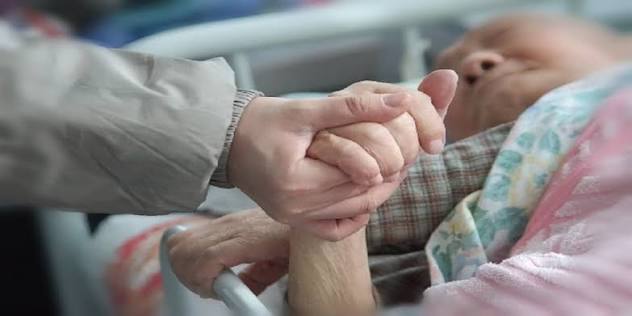
But reduced responsiveness doesn't necessarily mean the person no longer benefits from human connection.
A calm voice, familiar music, gentle touch, and a reassuring presence can still be meaningful.
Instead of repeatedly asking questions that require an answer, you might simply say:
“I'm here with you.”
“You are safe.”
“We love you.”
Sometimes those simple words are more important than having a conversation.
Other Changes That May Occur
Although the five changes above are commonly discussed, the dying process can involve many other physical changes.
These may include: