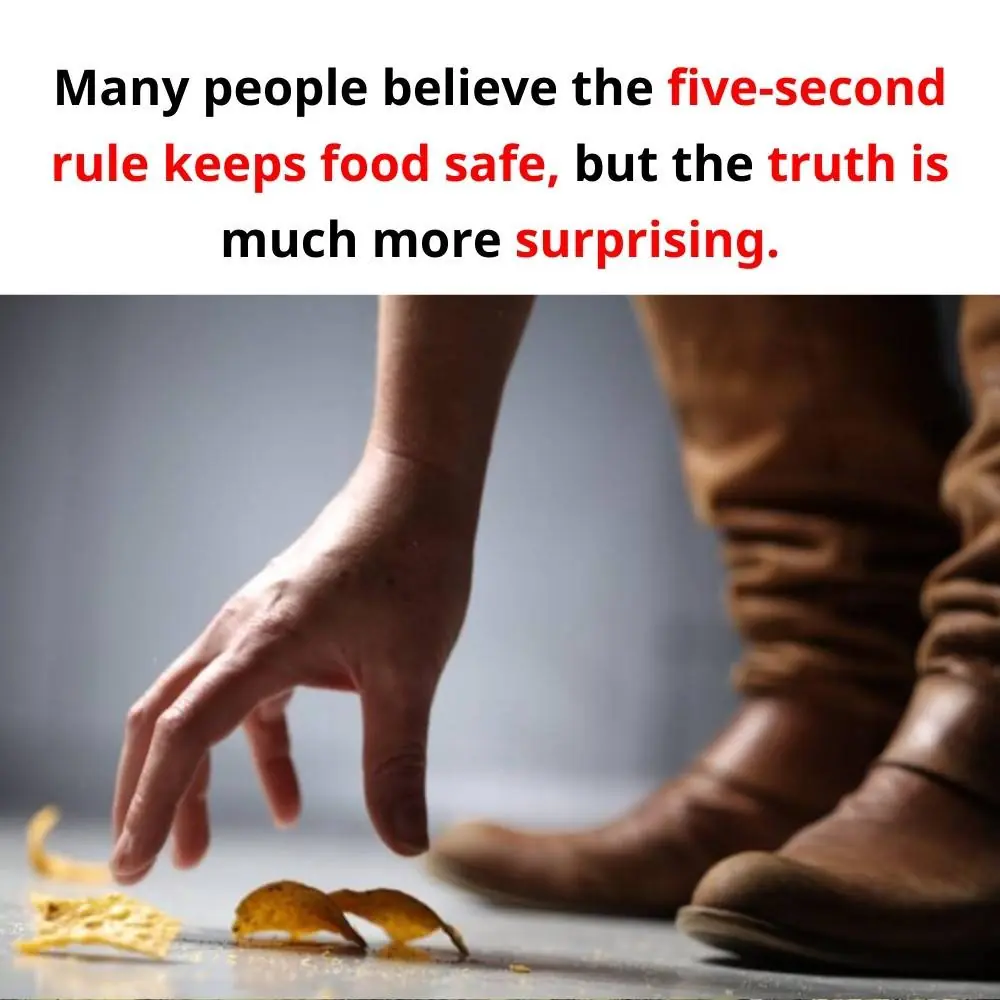
The "Five-Second Rule" is the popular belief that if food drops on the floor and you pick it up within five seconds, it’s still safe to eat. While this rule is often joked about or used to justify eating dropped food, it's not scientifically accurate. Here's why:
1. Bacteria Transfer Happens Instantly: The transfer of bacteria to food can happen almost immediately upon contact with a contaminated surface. Even if you pick the food up within a second, it can still be contaminated, depending on the cleanliness of the surface and the type of food. Factors like moisture, texture, and the surface the food falls on play a role in how much bacteria transfer occurs.
2. Surface Type Matters: The type of surface the food falls on can significantly affect how much bacteria it picks up. Carpeted floors might harbor fewer germs than tile or kitchen counters, which are typically covered with bacteria from food preparation. However, no surface is completely free from bacteria, so it’s not safe to assume that the food is fine just because it’s been on the floor for a brief period.
3. Type of Food Matters: Some foods are more likely to pick up bacteria because of their moisture content or texture. For example, wet or sticky foods like fruits, meats, or moist sandwiches can attract more bacteria than dry foods like crackers or chips.
4. Increased Risk in Public Places: Dropping food in public spaces, such as on sidewalks or in bathrooms, is particularly risky. Public areas tend to have higher levels of bacteria and pathogens due to the number of people and their various activities. The risk of picking up harmful germs increases significantly in these environments.
5. Pathogens are Everywhere: Bacteria and pathogens exist everywhere, not just on the floor. Kitchen surfaces, hands, and even the air can harbor harmful bacteria that could contaminate food. Therefore, even if food doesn’t hit the floor, it could still be unsafe to eat if it’s exposed to unsanitary conditions.