5 Signs of Late-Stage Thyroid Can.cer: The First Warning Is Often Overlooked
A recent health article highlights several warning signs of late-stage thyroid cancer, emphasizing that early detection is crucial for effective treatment and better outcomes.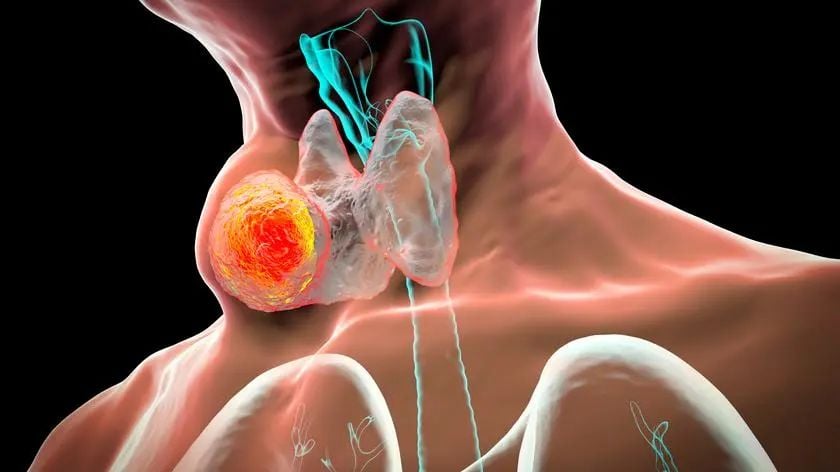
1. Rapidly Growing Neck Lump That Feels Hard and Immobile
In advanced stages, malignant thyroid tumors often grow quickly and become visible to the naked eye. Patients may notice an unusual swelling in the neck that enlarges rapidly over a short period.
When touched, the lump typically feels hard and does not move easily. It may also cause discomfort or a feeling of pressure. This is a strong indication that the tumor has grown significantly and may be invading surrounding tissues.
2. Difficulty Swallowing and Persistent Throat Discomfort
As the tumor increases in size, it can press against the esophagus, making swallowing difficult—especially with solid foods. Patients may experience a constant sensation of something stuck in the throat.
Over time, this can lead to reduced appetite, prolonged eating difficulties, and weight loss. Many people initially mistake this symptom for common throat issues, delaying proper diagnosis.
3. Persistent Hoarseness or Noticeable Voice Changes
One of the most recognizable symptoms is a change in voice. When the tumor affects the laryngeal nerves or vocal cords, patients may develop hoarseness, weak speech, or even lose their voice.
If hoarseness lasts for several weeks and does not improve with standard treatments—especially without respiratory illness—it should not be ignored.
4. Breathing Difficulties and Chest Pressure
A growing tumor can compress the trachea, making breathing more difficult, particularly when lying down. Some patients may need to sit upright to breathe more comfortably.
This condition may also be accompanied by chest tightness, shallow breathing, or shortness of breath, significantly affecting daily life.
5. Rapid Weight Loss and Physical Weakness
In the late stages, thyroid cancer can affect the entire body. Patients often experience unexplained weight loss, persistent fatigue, poor appetite, and a general decline in physical condition.
These symptoms may indicate that the cancer has progressed significantly or spread to other organs.
Expert Advice
Thyroid cancer is highly treatable if detected early. However, once it reaches an advanced stage, treatment becomes more complex.
If you notice unusual symptoms such as a neck lump, persistent hoarseness, or difficulty swallowing, it is important to seek medical attention promptly. Regular health check-ups remain the most effective way to detect the disease early and prevent serious complications.