6 Types of Eyelid Bumps and How to Treat Them, According to Dermatologists
Eyelid bumps are a common concern that can cause discomfort, irritation, or even cosmetic worries. While most eyelid bumps are harmless, some may require medical attention. Here’s a guide to the six most common types of eyelid bumps and how dermatologists recommend managing them.
1. Stye (Hordeolum)

What it is: A stye is a red, tender bump caused by a bacterial infection of an eyelash follicle or oil gland.
Symptoms: Pain, swelling, redness, and sometimes a small white or yellow center.
Treatment:
- Apply warm compresses 3–4 times a day to reduce swelling.
- Avoid squeezing or popping the stye.
- In persistent cases, a doctor may prescribe antibiotic ointments or drainage.
Source: American Academy of Ophthalmology
2. Chalazion
What it is: A chalazion is a firm, painless lump caused by blocked oil glands in the eyelid. Unlike a stye, it is usually not infected.
Symptoms: Hard, painless lump that may grow slowly; can sometimes press on the eye and blur vision.
Treatment:
- Warm compresses for 10–15 minutes, several times a day.
- Gentle massage of the eyelid can help drainage.
- If large or persistent, a minor surgical procedure may be performed by a doctor.
Source: Mayo Clinic
3. Milia
What it is: Milia are tiny, white cysts that occur when keratin becomes trapped under the skin.
Symptoms: Small, white, painless bumps, often on the upper eyelid or under the eye.
Treatment:
- Usually harmless and often disappear on their own.
- Dermatologists may remove them with a sterile needle or laser if desired for cosmetic reasons.
Source: American Academy of Dermatology
4. Xanthelasma
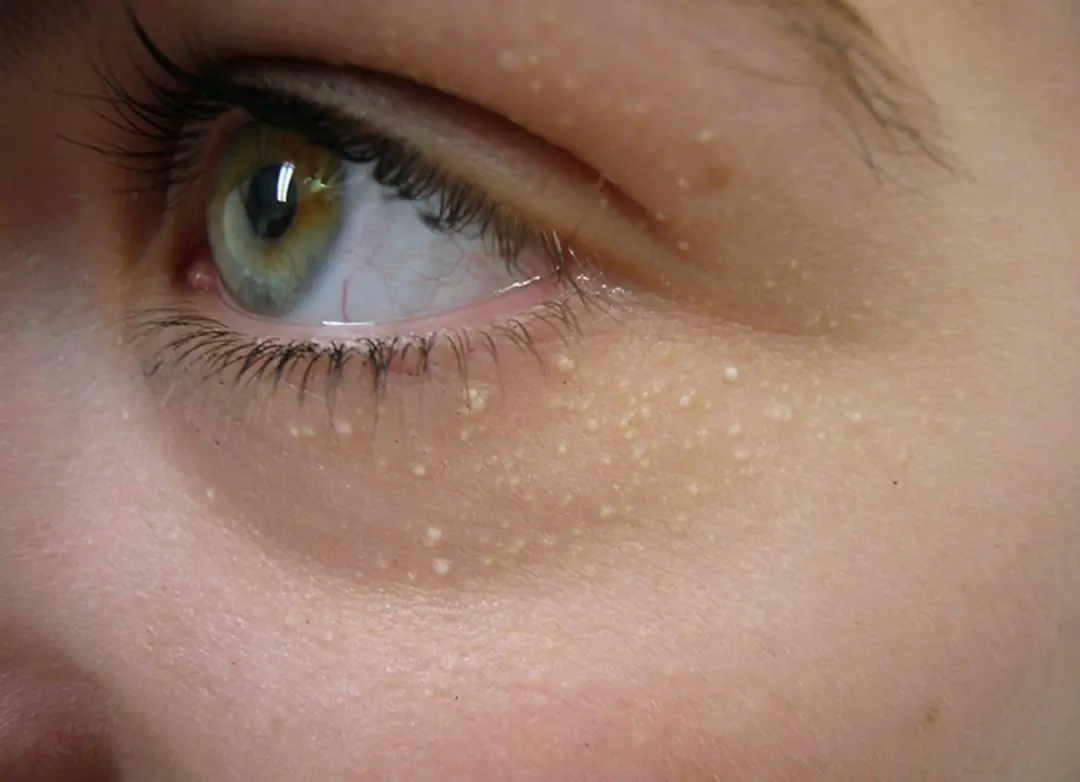
What it is: Yellowish, soft bumps on the eyelids caused by cholesterol deposits.
Symptoms: Flat or slightly raised yellow patches, usually near the inner corners of the eyelids.
Treatment:
- Medical evaluation for cholesterol levels is recommended.
- Removal options include laser therapy, chemical peels, or minor surgery.
Source: Mayo Clinic
5. Papilloma
What it is: Benign skin growths caused by a viral infection (HPV).
Symptoms: Flesh-colored, soft, or slightly raised bumps; usually painless.
Treatment:
- Most are harmless and can be left untreated.
- For cosmetic reasons or irritation, dermatologists may remove them using cryotherapy, laser, or excision.
Source: American Academy of Dermatology
6. Cysts
What it is: Fluid-filled sacs that form from blocked glands or injury.
Symptoms: Smooth, round lumps that can be small or large; may sometimes become tender if infected.
Treatment:
- Warm compresses can help reduce size and discomfort.
- If persistent, a doctor may drain or surgically remove the cyst.
Source: Mayo Clinic
Final Tips

- Avoid squeezing or picking at eyelid bumps — this can worsen infection or scarring.
- Maintain eyelid hygiene — gently cleanse eyelids with mild soap or ophthalmic wipes.
- Monitor changes — any rapid growth, persistent redness, pain, or vision changes should be evaluated by a healthcare professional.
- Regular check-ups — especially if you have a history of eyelid bumps or skin conditions.
Most eyelid bumps are harmless, but proper care and early treatment can prevent complications and improve comfort. If you are unsure about a bump, it’s always best to consult a dermatologist or ophthalmologist.