Chapter 1: Why Some Fish Can Contain More Mercury Than Others
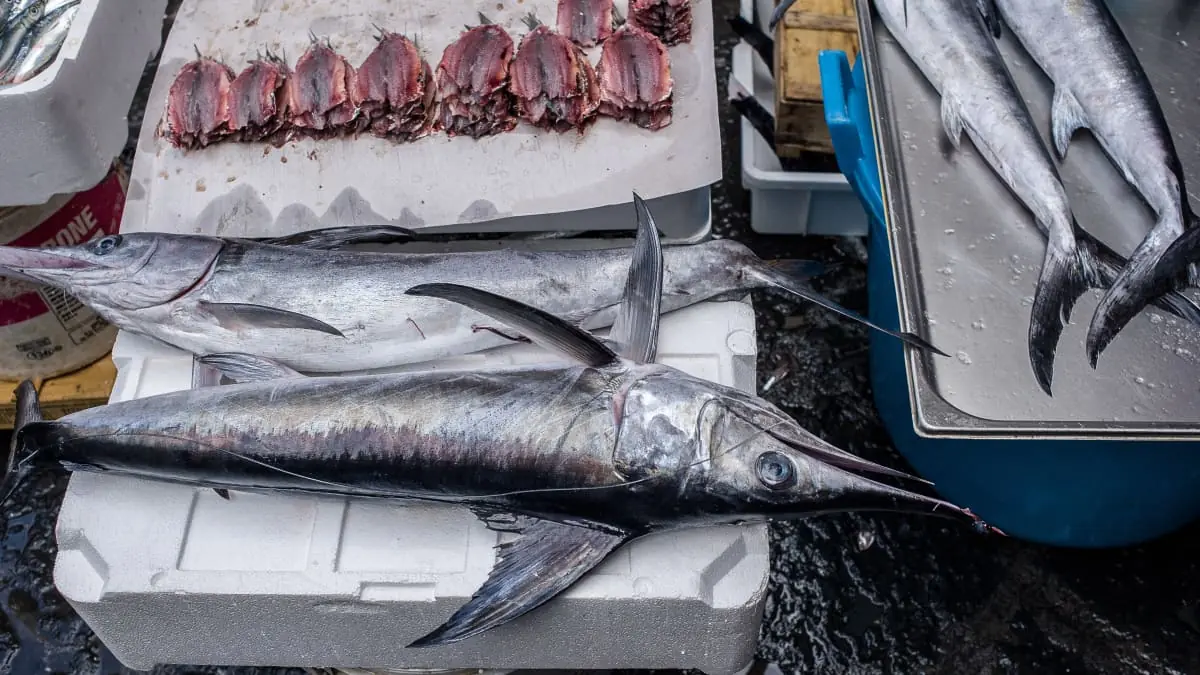
Fish has long been considered an important part of a balanced diet. It provides high-quality protein, omega-3 fatty acids, vitamin D, vitamin B12, iodine, and other nutrients that support normal body functions.
For many families, fish is also an affordable and convenient alternative to red meat.
However, there is something consumers should understand before choosing seafood for their families: not all fish contain the same amount of mercury.
Some species naturally accumulate more mercury than others. This difference is largely related to their size, lifespan, diet, and position in the aquatic food chain.
Mercury occurs naturally in the environment, but industrial activities, mining, and the burning of fossil fuels can also release it into the atmosphere and water.
Once mercury enters aquatic environments, microorganisms can convert some of it into methylmercury, a form that accumulates in living organisms.
Small aquatic organisms absorb methylmercury from their surroundings. Small fish consume these organisms, and larger fish then eat the smaller fish.
As this process continues, mercury concentrations can increase higher up the food chain.
This phenomenon is known as biomagnification.
Why large predatory fish deserve attention
A large predatory fish may eat thousands of smaller fish throughout its lifetime.
If those smaller fish contain mercury, the larger predator can accumulate the contaminant in its tissues.
Long-lived species may accumulate even more because they have more time to absorb mercury through their diet.
This explains why some large ocean predators have significantly higher mercury concentrations than smaller fish.
It is also why two fish sold at the same market can have very different mercury levels, even if they look equally fresh.
Mercury cannot be identified reliably through appearance, smell, or taste.
A fish with bright eyes and shiny scales may still contain relatively high levels of methylmercury.
Likewise, a less expensive fish is not necessarily more contaminated.
The species matters much more than the price.
What happens when mercury enters the human body?
Methylmercury can be absorbed through the digestive system after contaminated fish is eaten.
Over time, repeated exposure can lead to accumulation in the body.
The nervous system is particularly vulnerable.
According to the FDA and EPA, excessive methylmercury exposure can harm the developing brain and nervous system. This is especially important during pregnancy and childhood, when the brain is undergoing rapid development.
Potential effects of significant exposure include problems involving:
-
Memory and learning.
-
Attention and concentration.
-
Coordination and movement.
-
Vision and hearing.
-
Nervous system development.
The level of risk depends on several factors, including the amount of mercury consumed, the frequency of exposure, and the individual's age and developmental stage.
A single meal containing a higher-mercury fish does not automatically mean someone will become ill.
The greater concern is repeated exposure over time.
Why pregnant women and children need extra attention
Pregnancy is a particularly important period for mercury awareness.
Methylmercury can cross the placenta and reach the developing fetus.
Because the fetal nervous system is still developing, exposure to excessive amounts may interfere with normal brain development.
Young children also deserve special consideration.
Their bodies are smaller, and their nervous systems continue developing throughout childhood.
This does not mean children should stop eating fish.
In fact, fish provides nutrients that support healthy growth and development.
The better approach is choosing species with lower mercury concentrations and following appropriate serving recommendations.
The important difference between healthy fish and high-mercury fish
The FDA does not recommend avoiding all seafood.
Instead, its guidance divides fish into three categories:
-
Best Choices: Fish with lower mercury levels.
-
Good Choices: Fish with moderate mercury levels that should be eaten less frequently.
-
Choices to Avoid: Fish with the highest mercury levels.
This system helps families enjoy the nutritional benefits of seafood while reducing unnecessary exposure.
The central lesson is that choosing fish carefully is more useful than eliminating it entirely.
Chapter 2: Six Types of Fish That Families Should Avoid or Limit
Not every fish sold in supermarkets or seafood markets is equally suitable for frequent consumption.
The FDA and EPA identify six particularly important categories of fish that pregnant women, breastfeeding mothers, and children should avoid because they contain some of the highest mercury levels.
These are not necessarily poisonous after a single meal. The concern is regular consumption and the potential accumulation of methylmercury.
Here are six species worth recognizing.
1. Shark
Shark meat is consumed in different parts of the world, sometimes as steaks, fillets, or traditional seafood dishes.
However, sharks are among the fish that consumers should be particularly cautious about.
Many shark species are large predators that feed on other fish and marine animals.
Some also live for many years, giving them more time to accumulate mercury.
Because of their position near the top of the marine food chain, certain shark species can contain substantial methylmercury concentrations.
The FDA places shark in its highest-mercury category.
Pregnant women, breastfeeding mothers, and children should avoid eating shark according to the FDA's advice.
2. Swordfish
Swordfish is popular in many restaurants because its firm flesh can be grilled, baked, or cooked as a steak.
Its mild flavor makes it appealing to people who do not particularly enjoy the taste of smaller fish.
However, swordfish is also a large predatory species.
It feeds on other fish and squid and can accumulate mercury throughout its life.
The FDA classifies swordfish as a fish to avoid because of its high mercury levels.
This is particularly important for pregnant women and families preparing meals for young children.
Swordfish may look like an attractive seafood option, but its mercury content makes it unsuitable for frequent consumption by vulnerable groups.