Chapter 1: A Mild Fever Became a Medical Emergency in Just One Day
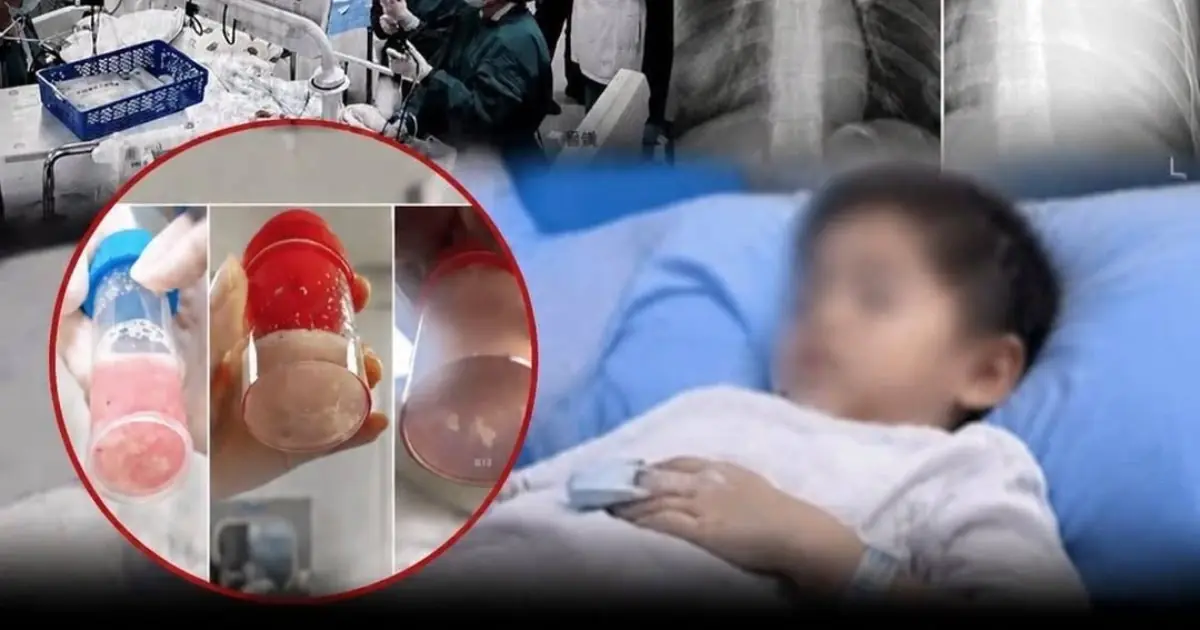
At first, there seemed to be little reason for alarm.
A 12-year-old girl in Zhejiang Province, China, identified in local reporting by the pseudonym Xiaoxiao, initially experienced a mild cough. Her symptoms did not immediately suggest the frightening respiratory emergency that would soon develop.
Then she developed a fever.
What happened next would become a serious warning about an uncommon childhood respiratory condition that can progress rapidly and obstruct the airways.
According to a report published by China News Service on November 11, 2025, the girl developed a dramatic deterioration after just one day of fever. Her condition became increasingly concerning, and she was eventually transferred to the pediatric department of the Fourth Affiliated Hospital of Zhejiang University School of Medicine.
The early examination had already suggested pneumonia and atelectasis, a condition in which part of the lung loses its normal air volume and collapses. By the time she reached the specialist hospital, the situation was considerably more serious.
She was breathing rapidly and experiencing chest tightness and chest pain. Her oxygen saturation was reportedly hovering around 90 percent, indicating that her body was struggling to maintain adequate oxygen levels.
A chest X-ray revealed an alarming finding: the left lung appeared almost completely white.
For doctors, this was not simply an ordinary respiratory infection that could be dismissed as a seasonal cold.
The medical team had to determine what was preventing the lung from functioning properly and why the girl's condition had deteriorated so quickly.
Why Did Her Lung Appear White?
To understand the seriousness of the situation, it is important to know what a normal chest X-ray looks like.
Healthy lungs contain large amounts of air. On a conventional chest radiograph, air-filled lung tissue generally appears relatively dark because X-rays pass through air more easily than through denser materials.
When parts of the lungs become filled with fluid, inflammatory material, or other substances, those areas may appear lighter or whiter.
A white appearance can also occur when a lung or part of a lung collapses and loses its normal air content.
However, a white lung is not a diagnosis by itself. It is an imaging finding that requires doctors to investigate the underlying cause.
In Xiaoxiao's case, the medical team eventually discovered that the problem involved extensive blockage inside the respiratory passages.
The girl's left main bronchus and the openings leading to several lung segments were obstructed by thick mucus plugs.
These obstructions prevented air from moving normally into the affected areas.
Imagine trying to breathe through a drinking straw that has become blocked by a thick substance. Even though the lungs themselves are still present, air cannot move freely through the passage.
That is the basic problem doctors were facing.
A Race Against Time
The medical team suspected a rare condition known as plastic bronchitis.
Rather than relying on observation alone, doctors from different specialties worked together to determine the safest way to restore airflow.
They ultimately decided that an emergency bronchoscopy was necessary.
A bronchoscopy is a medical procedure that allows doctors to examine the inside of the airways using a thin instrument equipped with a camera.
It can also allow specialists to remove material blocking the respiratory passages.
For this young patient, the procedure was particularly important because the obstruction was extensive.
The doctors needed to reach the affected airways, identify the thick material, and remove it without causing additional injury to already inflamed respiratory tissue.
The case illustrates why rapid deterioration in a child should never be ignored simply because the first symptoms appeared relatively mild.
A cough and fever can occur in many ordinary childhood illnesses. Most children with these symptoms do not develop a life-threatening complication.
But when breathing becomes difficult, chest pain develops, or the child's condition worsens rapidly, the situation changes completely.
The most important detail in Xiaoxiao's story is not simply that her X-ray appeared white.
It is that a serious airway obstruction was developing while her respiratory function was deteriorating.
And doctors still needed to discover exactly how much material was blocking her lungs.
Chapter 2: The Rare Condition That Filled Her Airways With Thick Mucus
The diagnosis that doctors suspected was plastic bronchitis, an uncommon respiratory disorder that can become extremely dangerous when thick material accumulates inside the bronchial passages.
Unlike an ordinary cough, in which mucus is usually expelled through coughing, plastic bronchitis can involve the formation of unusually thick, organized casts inside the airways.
These casts may resemble the branching structure of the bronchial tree.
In other words, the material can take the shape of the passages it occupies.
This is one reason the condition has attracted considerable medical attention. When these casts become large enough, they can obstruct airflow and prevent parts of the lungs from receiving sufficient ventilation.
What Exactly Happens Inside the Airways?
The respiratory system is made up of a network of passages that carry air from the nose and mouth toward the lungs.
After entering the windpipe, air travels through the right and left main bronchi. These divide into smaller branches, eventually reaching tiny structures called alveoli.
The alveoli are small air sacs where oxygen enters the bloodstream and carbon dioxide leaves it.
Under normal circumstances, mucus helps protect the respiratory tract. It traps dust, microorganisms, and other particles, while tiny hair-like structures called cilia help move mucus toward the throat.
This system is an important part of the body's natural defense mechanisms.
However, certain infections and inflammatory processes can disturb the normal balance.
In plastic bronchitis, thick mucus and inflammatory material can form casts that become lodged within the bronchial passages.
When this happens, the affected airways may become partially or completely blocked.