Finding a bird inside your home can be a surprisingly emotional experience. One moment you're going about your normal routine, and the next, a bird is fluttering around the room, searching desperately for a way back outside.
For some people, it's simply an accident. The bird may have followed light through an open window or door and become confused once indoors.
For others, however, a bird entering the home carries a deeper meaning. Across different cultures and traditions, birds have long been associated with freedom, change, messages, hope, protection, and new beginnings.
So what should you actually make of it?
The answer depends on whether you're looking at the event from a practical perspective, a cultural perspective, or simply as a personal symbol.
The Most Likely Explanation Is Usually a Simple One
Before searching for a hidden meaning, remember that birds can accidentally enter houses for completely ordinary reasons.
An open door, window, balcony, chimney, or damaged screen can create an easy entrance.
Birds may also be attracted by:
-
Bright indoor lights
-
Reflections in windows
-
Food
-
Plants
-
Shelter
-
Warmth
-
Sounds from other birds
-
An open path that looks like an exit
Once inside, the bird may become disoriented.
Windows are particularly confusing because a bird may see the reflection of the sky or trees and mistake the glass for an open space.
So a bird flying into your home does not automatically mean something supernatural or unusual is happening.
Still, the symbolism surrounding birds is fascinating.
Birds Have Long Been Associated With Messages
Throughout history, birds have captured the human imagination.
They can fly above the ground, travel great distances, migrate across continents, and appear suddenly in places where people don't expect them.
Because of this unusual relationship with the sky, many cultures have associated birds with communication between different worlds or with messages from beyond everyday life.
A bird appearing unexpectedly may therefore be interpreted symbolically as a message, reminder, or moment of change.
This is a cultural belief rather than a scientifically established fact, but it remains meaningful to many people.
A Bird May Symbolize Freedom
Perhaps the most universal symbolism associated with birds is freedom.
Birds aren't bound to roads or walls in the same way humans are.
They can rise into the air, cross mountains, travel over oceans, and move wherever conditions allow.
Because of that, seeing a bird enter your home can inspire thoughts about freedom and independence.
Some people interpret the event as a reminder to:
Let go of what is holding you back.
Give yourself permission to change.
Stop being afraid of a new direction.
Make room for greater independence.
Whether or not the bird carries an actual message, the symbolism can encourage useful self-reflection.
It Could Represent a New Beginning
Birds are also commonly connected with renewal and fresh starts.
A bird entering your home may be viewed symbolically as a sign that something new could be beginning in your life.
That doesn't necessarily mean a dramatic event is about to happen.
It could simply represent a transition such as:
-
Starting a new job
-
Moving to a new home
-
Beginning a relationship
-
Ending an unhealthy habit
-
Starting a personal project
-
Recovering from a difficult period
In this interpretation, the bird isn't predicting the future.
Instead, its arrival becomes a symbol of transition.
Some Traditions See Birds as Positive Signs
In many cultures, birds are viewed positively.
Their ability to fly upward has historically been associated with hope, spiritual elevation, and good fortune.
Certain birds have developed especially strong symbolic associations.
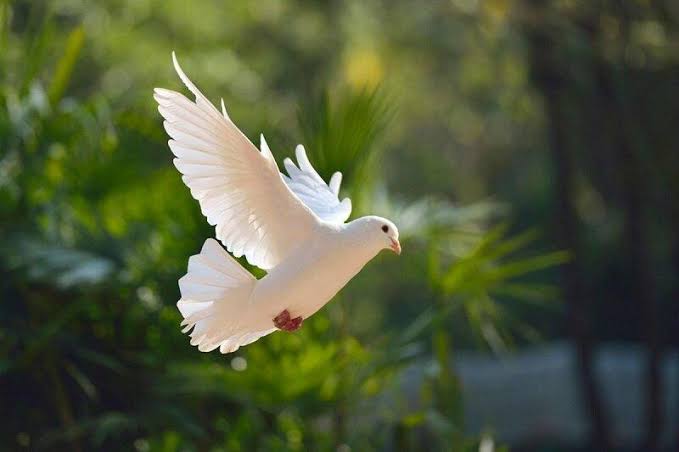
For example, doves are commonly associated with peace.
Swallows can represent return, hope, or good fortune in various traditions.
Owls are often connected with wisdom, although their symbolism varies considerably between cultures.
Eagles can symbolize strength, vision, and freedom.
Because symbolism differs from place to place, there isn't one universal interpretation of a bird appearing inside a home.

Does the Type of Bird Matter?
For people who enjoy symbolic interpretations, the species can make the event feel even more interesting.
A small songbird may be interpreted differently from a crow, owl, dove, or pigeon.
But it's important not to treat these interpretations as universal rules.
For example, one culture may regard a particular bird as lucky, while another may associate the same bird with something entirely different.
Even the color of the bird can become part of folklore.
A white bird may be associated with peace or purity.
A dark bird may be interpreted as mysterious or protective.
Again, these are cultural and personal interpretations, not scientific predictions.
What If the Bird Keeps Coming Back?
If the same bird repeatedly appears around your house, there may be a practical reason.
Perhaps it has discovered a food source.
Maybe there is a nest nearby.
It could have identified your roof, balcony, attic, or garden as a safe place.
Birds are observant creatures and can become familiar with environments that provide food and shelter.
So before assuming repeated visits are a supernatural sign, check your surroundings.
Look for:
-
Bird nests
-
Accessible food
-
Bird feeders
-
Fruit trees
-
Open vents
-
Gaps beneath roofing
-
Broken screens
-
Water sources
Sometimes the explanation is sitting right outside your window.
What Does It Mean If a Bird Flies Around the House?
A bird trapped indoors will often behave erratically.
It may fly from wall to wall, repeatedly approach windows, land on furniture, or circle the room.
This usually means the bird is confused and trying to escape.
It doesn't necessarily indicate aggression or unusual behavior.
The best response is to reduce stress and give the bird a clear path outdoors.
Turn off unnecessary indoor lights.
Close doors leading to other rooms.
Open a large exterior window or door.
If possible, close curtains or blinds on other windows so the bird doesn't repeatedly fly into glass.
Then give it some space.
What You Should Do If a Bird Enters Your Home
The most important thing is to remain calm.
A frightened bird may injure itself if people chase it around the room.
Instead, try these steps.
1. Keep children and pets away
Dogs and cats may instinctively try to chase the bird.
Move them to another room.
2. Open one obvious exit
Choose the largest available door or window leading directly outside.
3. Reduce competing light sources
If it's safe to do so, make the room darker while leaving the outdoor exit brighter.
This can help the bird identify the way out.
4. Give the bird time
Don't immediately try to catch it.
Once the room is quiet, it may find the exit on its own.
5. Avoid handling it unnecessarily
Wild birds can become extremely stressed when restrained.
If the bird appears injured or cannot fly, contact a local wildlife rehabilitator or appropriate animal-care service for guidance.
Never Assume a Bird Is Trying to Attack You
A bird flying toward you can look frightening.
But most birds entering homes are trying to escape, not attack.
Rapid wing movements, repeated flight toward windows, and frantic behavior usually indicate fear and disorientation.
Give the bird room to move.
Standing directly underneath it, waving your arms, or attempting to grab it can make the situation worse.
A calm environment is usually the safest approach.
What If the Bird Hits a Window?
This situation requires extra care.
A bird that strikes glass may appear stunned.
It may sit quietly on the ground, close its eyes, or seem unable to fly.
Don't immediately assume it is fine simply because there is no visible wound.
If a bird has suffered a significant collision, contacting a wildlife rehabilitator is often the safest option.
While waiting for professional advice, avoid unnecessary handling and keep pets away.
If the bird is clearly injured, professional wildlife care is preferable to trying to treat it yourself.
Birds Can Also Remind Us to Pay Attention to Nature
Modern life can make us surprisingly disconnected from the natural world.
We spend much of our time indoors, looking at screens, commuting, working, and following busy schedules.
Then suddenly, a wild bird appears in the middle of the living room.
For a few minutes, everything stops.
You watch it search for an exit.
You notice its feathers.
Its movements.
Its breathing.
And perhaps you become aware of something you normally overlook: nature is much closer to us than we realize.
In that sense, the bird can be meaningful without needing to represent anything supernatural.
It can simply be a reminder to slow down and observe the world around you.
Could It Be a Sign of Change?
If you're currently going through a major transition, you may naturally connect the bird's appearance with what's happening in your life.
Perhaps you're considering leaving a job.
Maybe you're moving.
Maybe you're recovering from a difficult relationship.
Maybe you're starting over after a challenging period.
In such moments, the image of a bird finding its way from an enclosed space back into the open air can feel particularly powerful.
It can symbolize the idea of moving forward rather than staying trapped in the past.
Again, that's personal symbolism - not a prediction.
But personal symbols can still have emotional value.
Don't Let Superstition Create Unnecessary Fear
Some folklore gives birds negative meanings.
You may have heard claims that certain birds entering a home predict death, bad luck, financial problems, or other unfortunate events.
There is no reliable scientific evidence that a bird entering your house predicts future events.
These beliefs come from cultural traditions, folklore, and historical interpretations.
If a bird flies into your home, there's no reason to assume something terrible is about to happen.
In most cases, the bird simply got lost.
Understanding that can help you appreciate the moment without becoming frightened by it.
A More Balanced Way to Look at the Experience
There are really two different questions you can ask when a bird enters your home.
The first is:
“Why did this happen?”
The practical answer may involve an open window, food, shelter, reflections, or simple disorientation.
The second question is:
“What does this moment mean to me?”
That answer is personal.
Maybe it reminds you to seek freedom.
Maybe it encourages you to embrace change.
Maybe it makes you think about someone you miss.
Maybe it simply gives you a funny story to tell your family.
You don't have to choose between science and symbolism.
You can understand the practical explanation while still appreciating the emotional meaning you attach to the experience.
The Bird May Not Be a Message—But the Moment Can Still Matter
A bird flying into your home is rarely something to fear.
Most of the time, it is simply a wild animal that accidentally entered an unfamiliar environment and is trying to find its way back outside.
But throughout history, birds have represented freedom, hope, transformation, peace, wisdom, and new beginnings.
That's why such a simple event can feel strangely significant.
Perhaps the most useful interpretation isn't that the bird is predicting something that will happen.
Perhaps it's that the unexpected visitor gives you a reason to pause.
To look around.
To notice nature.
To think about where you are in life.
And, perhaps, to ask yourself whether there is something you need to let go of—or somewhere new you are ready to fly toward.
So if a bird suddenly flies into your house, don't panic. Help it find its way outside, make sure it isn't injured, and then take a moment to appreciate the strange little encounter.
Sometimes, an unexpected visitor doesn't need to predict the future to make you stop and think about it.