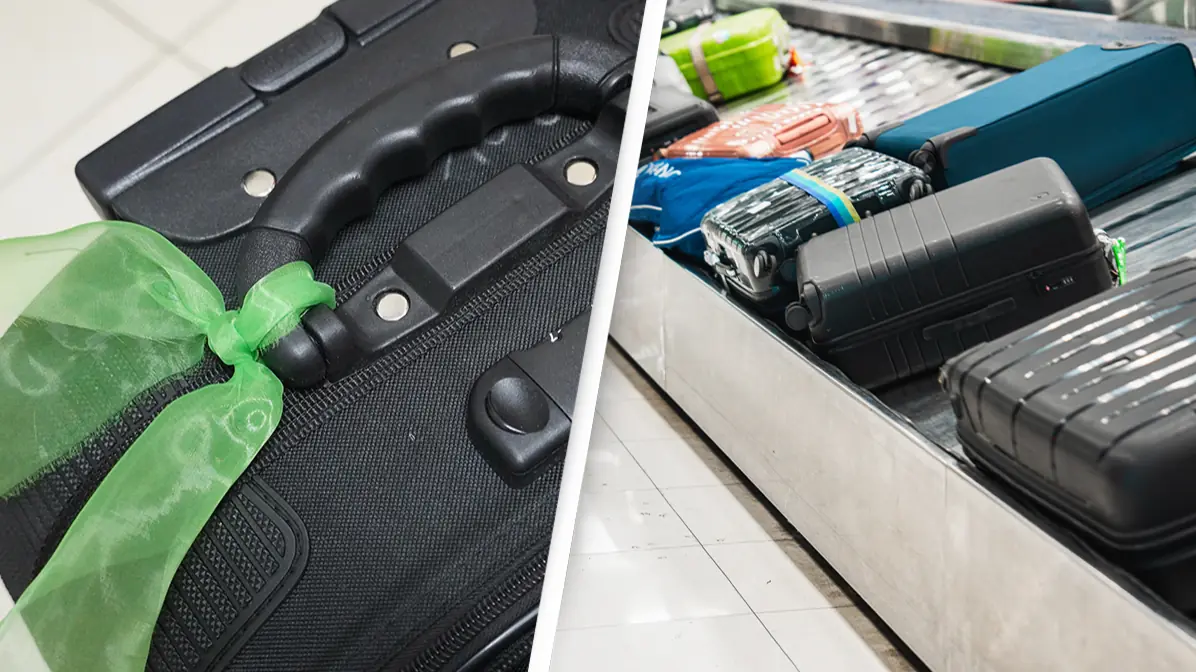
Airport Experts Explain Why You Should Stop Attaching Ribbons to Your Suitcase
The Hidden Reason Airport Staff Dislike Decorative Suitcase Ribbons
Tips 25/06/2026 03:18
When it's time to visit family across the country or take an extended trip overseas, you can't imagine leaving your best furry friend at home. Our pets are part of our family, and if we could, we would bring them nearly everywhere we go. If you plan on boarding a flight with your favorite feline, it's essential to plan ahead.
Though you are allowed to fly with a cat in most cases, you want to ensure you're following airline regulations and that your kitty is as comfortable as possible. Plus: if you're traveling internationally, you need to understand the local requirements for bringing a live animal onto foreign soil. We spoke with veterinarians to get their best advice. Consider this your guide to flying with a cat safely.
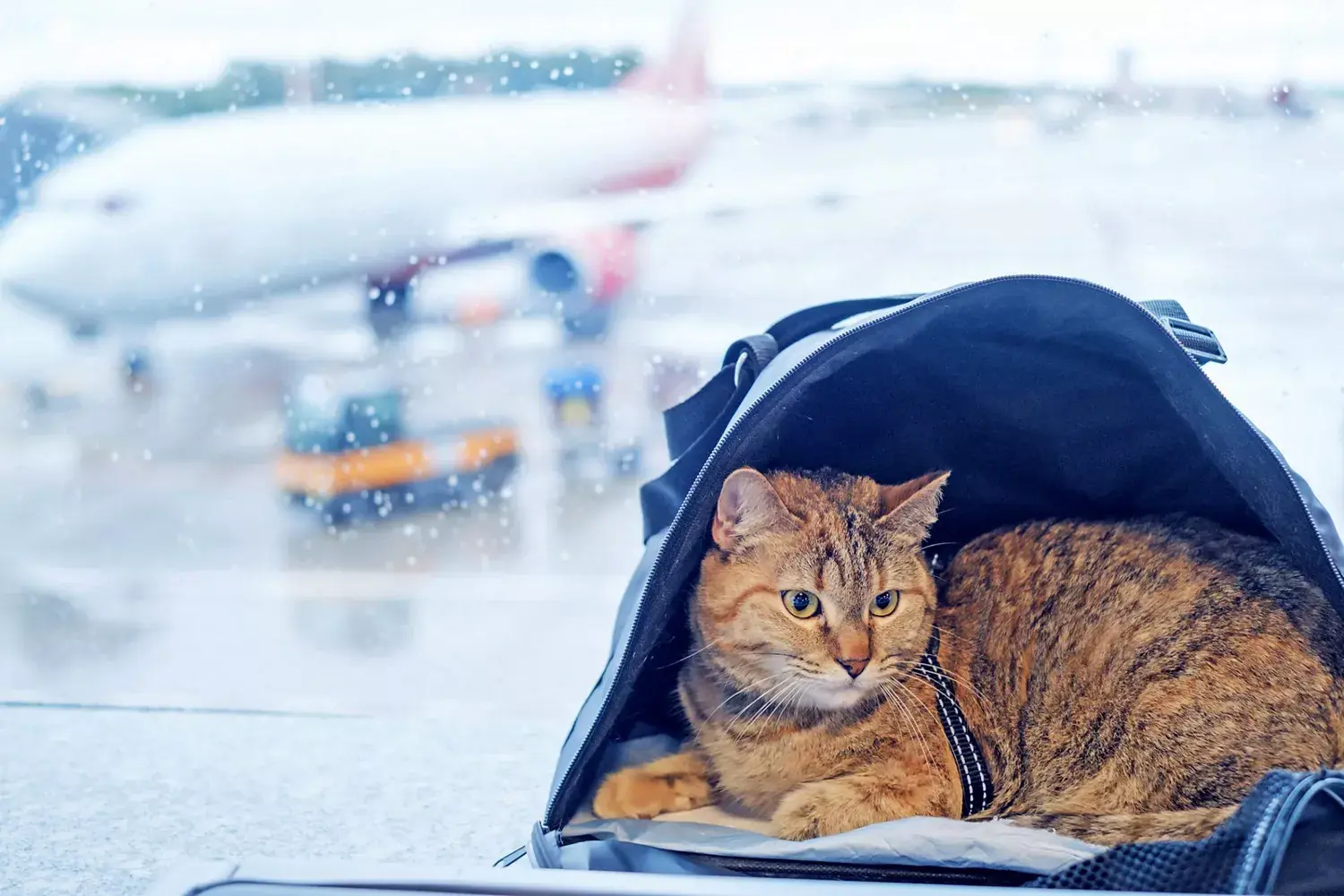
Yes, you sure can! But, you'll need to do your homework before packing them up and heading to the airport. First and foremost, a health certificate is typically required for domestic travel, usually within 10 days of travel, explains Stephanie Sheen, DVM, a veterinarian for pet health care app Fuzzy. This health certificate will ensure your cat is at least eight weeks old, up to date on their vaccinations, and they are free of any signs of an infectious disease.
Any while you can fly with your cat on a plane, it's not always the best option for all cats, Haylee Bergeland, KPA-CTP, CPDT-KA, CBCC-KA, says. "If the cat is OK to travel, doesn't mind being in a travel crate or bag, and does fine being in new places, then it's OK," she says. "But if the cat doesn't like those things, which is going to be most cats, then a pet sitter is better."
If your cat is exhibiting signs of stress or anxiety such as excessive vocalization, excessive grooming, or drooling, it may be best to leave your kitty home with a trusted family member, friend, or pet sitter.
If you are heading internationally, there will be more hurdles to jump through. As Sheen explains, while rules are similar, some destinations will require different vaccines for parasite prevention and other health concerns. "These documents can be multiple pages in length and typically need to be completed by a veterinarian who is certified through the USDA," she continues. "Some locations may require rabies titers be completed before travel, which can take months to process."
It's also important to note these requirements also are subject to change, so it's vital to check the USDA website for Pet Travel for the latest information regarding your destination. "Allow plenty of time to negotiate this process. There may be companies in your area which offer a fee-based service to help you navigate this system, as well," she adds.
What about the airlines? Nearly all airlines allow cats to be onboard with their humans. However, many restrict how many pets can travel on a flight, so you should book ahead to ensure there will be no trouble at check-in. Usually, this requires a call to the airlines, since booking online isn't always an option.
Each airline also has different dimensions for pet carriers and weight limits, so you will need to make sure your baggage meets the requirement. In most cases, your cat must be able to comfortably be in their carrier in front of your seat for the duration of the flight.
Sheen recommends scheduling non-stop flights to reduce overall travel time—and thus, stress—for your kitty. It's also worth noting that your pet counts as your carry-on, so you'll need to check an extra bag for your belongings. Also, be aware that you will not be able to sit in an exit row with your cat in tow.
Here are some examples of popular airlines and their pet carrier requirements:
Being a cat parent is a 15- to 20-year commitment. Not only does this include caring for your feline and giving them lots of love, but it comes with financial responsibilities, too. Flying with a cat isn't free, as airlines charge a fee per flight. Also, as we mentioned, because your kitty counts as your carry-on, you'll also likely have to pay for a checked bag, which can run from $20 to $40, dependent on the airline.
Here's a rundown of the cost to fly with your cat from five top airlines (these are subject to change, so double check before you book):
Getting from point A to point B with your favorite little feline should be as easy and comfortable as possible. Though, of course, you may deal with many meows and some anxieties, there are some tactics you can do to prepare for the adventure. These top tips from vets can help make the experience seamless.
In a perfect world, you would never need to take your cat out of their carrier until you've arrived safely at your destination. Sadly, that's not a possibility since security screenings require you to take your animal out of their bag so the carrier can be scanned in the X-ray. Thus, you'll need to carry your feline with you through the metal detectors. To ensure your kitty doesn't get away, Sheen recommends putting your cat in a well-fitting harness with a leash.
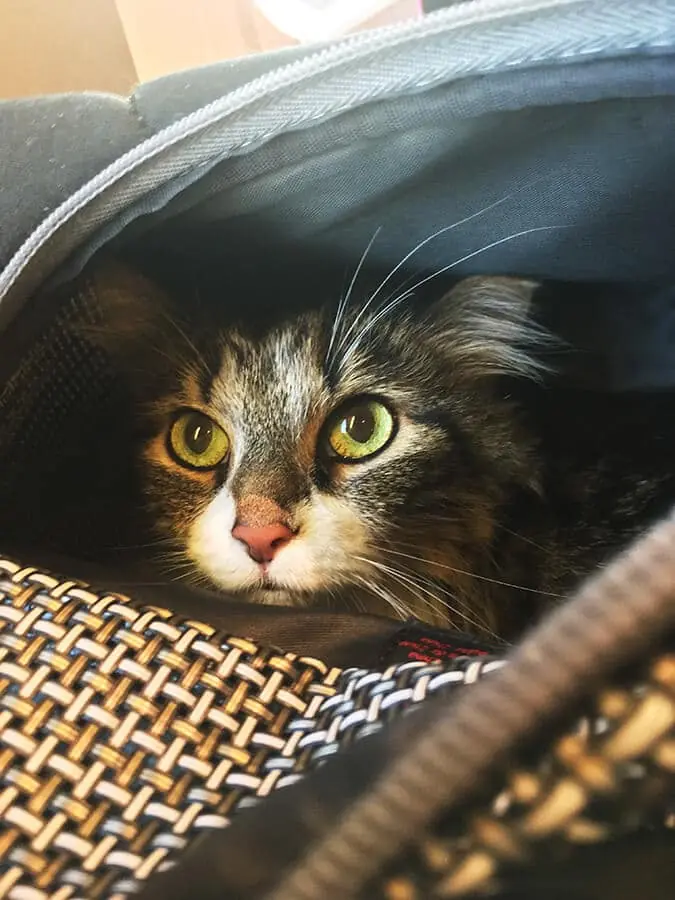
Many airlines allow either a soft-sided or a hard-sided carrier for cabin travel. However, the soft-sided carrier can be more forgiving and give your kitty a bit more room to turn around and get cozy, according to Sheen. So if you're having a difficult time choosing, consider which one will make your pet feel most at ease.
Since almost all of your feline companion's travel time will be spent in the carrier, it's crucial to make it as comfortable as possible, suggests Katy Nelson, DVM, a senior veterinarian at Chewy. She says to throw in items that remind them of home, whether it's their favorite toy or an old T-shirt or blanket they like to snuggle up to. You can also use a feline pheromone spray like Feliway to make them feel calmer in their carrier.
Also, make sure to purchase your carrier at least a few weeks before your trip so you can slowly introduce it to your kitty. This allows them to get familiar with it, and thus, not be fearful. "Leave it out and allow them to sniff around, explore and potentially nap inside it," Nelson recommends. "As they gradually warm-up, start taking them on walks in the carrier and eventually short drives. Keep those same familiar items in their carrier when it's time to head out for your flight."
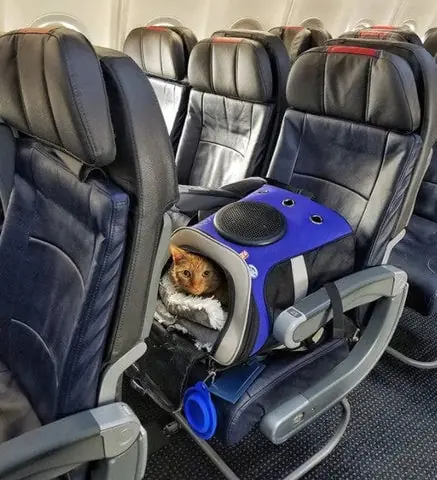
As Nelson puts it, it's best to be over prepared when traveling with cats in case of any accidents or emergencies. You should pack the leash, harness, a collapsible bowl, wipes, and treats. "Most carriers will include a spot to store these items but keep food and water separate to avoid any spills," she continues. "It's also important to properly label your carrier with your name, phone number, and destination address."
Though it may seem mean, it could be better to not feed your kitty the morning before take-off. How come? Sheen says some cats will experience nausea and vomiting, so it's better to have less in their stomach. Of course, you should still ensure they are well-hydrated! "Line the carrier with an absorbent pad, such as a puppy potty pad, to absorb any accidents if they do happen," she adds.
While most cats do not need medication, it may be advisable if your cat experiences severe anxiety. Sheen suggests talking to your vet, and he or she can advise on whether prescription sedatives will be necessary for your trip. Since they do carry health risks, you want to ensure your kitty is going to be safe before using them.
The Hidden Reason Airport Staff Dislike Decorative Suitcase Ribbons

Doctors reveal why eating boiled bananas before meals may improve digestion, appetite control, and overall health.

A Small Hole With a Surprisingly Important Job
Frequent bruises without injury may be more than a cosmetic issue—they could signal an underlying health problem that deserves attention.

Your First Choice Says More About You Than You Think

Simple Morning Changes That May Help Protect Your Heart

😳 Doctors Say These 6 Body Changes Become More Important to Monitor After 40

🥜 Thinking of Adding Cashews to Your Diet? Here's What Experts Say 👇

🚨 Don't Overlook Itchy Skin and Unusual Bumps—They Could Be Important Clues

❤️ Healthy Arteries Start in the Kitchen: Foods That May Support Better Circulation

⚠️ Your Body Could Be Sending These 9 Early Diabetes Alerts Right Now

Nighttime itching may sometimes signal deeper health issues to investigate.

If you've noticed unusual changes in your fingers, your body may be trying to tell you something important 👀

Early kidney problems often show subtle signs many people overlook.

A simple mistake when eating eggs may pose serious health risks.

Waking up at 3 or 4 a.m. may reveal more about your sleep habits.

Food safety mistakes can lead to serious health risks and emergencies.

Funeral traditions often assign special meanings to clothing colors.

Clean dusty fan blades quickly with this easy no-disassembly method.

Many women overlook these natural sources of phytoestrogens.