Federal health officials are investigating a Cyclospora outbreak linked to iceberg lettuce, but the source is not confirmed. Although washing produce can’t guarantee you’ll remove the parasite, proper cleaning can help reduce your risk of exposure to germs and other contaminants.
We asked food safety expert Janet Buffer, MPH, RD, senior institute manager of the Institute for Food Safety and Nutrition Security at George Washington University, how best to clean produce to reduce the risk of cyclosporiasis.
*This interview has been edited and condensed for clarity.
Q: What is the #1 thing I should do to clean my produce if I want to avoid cyclosporiasis?
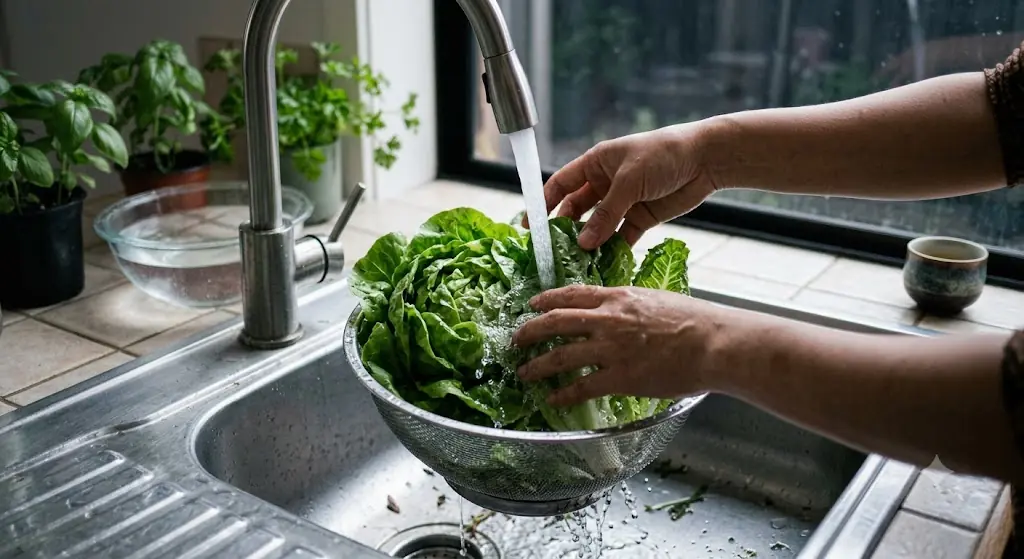
Buffer: You should always wash your fresh produce under cold running water — and this brings light to why. Put it in a colander and agitate it with your hands. Use a produce brush for melons or other produce with a solid surface. Unfortunately, there’s no guarantee that Cyclospora will come off, but surface agitation would certainly reduce the amount. I equate it to washing your hands. When you wash your hands, it’s the agitation from rubbing them together that’s really going to get the dirt and bacteria off your hands. It’s the same with produce.
Warm water won’t do anything for your produce. If there is any bacteria on the surface, cold water with agitation will wash that away. You should rinse produce thoroughly to ensure the entire item is exposed to water, but there is no prescribed amount of time to rinse.
Cyclospora is excreted in human fecal matter and may spread via contaminated water. So make sure to remove the outer two or three layers of a head of lettuce or cabbage before washing, since those may have been sprayed with contaminated water.
Q: Is it better to rinse the produce under running water or to put it in a water bath?
Buffer: Really, cold running water is the best thing to use. I would not use a water bath. Water baths can actually transfer bacteria from one item to another. If you put multiple things in there and something’s contaminated, you’ve loosened it, it’s in the water, and now you’re contaminating something else. If you’re submerging produce for any reason, you definitely need to take it out and wash it off.
Q: Should I use a vegetable wash, regular dish soap, or just running water to clean my produce?
Buffer: Clean running water really is the best. Don’t use a dish soap. I know it seems like it makes logical sense to use soap to wash this off, but soap can leave a residue and it’s not a food-grade product. You may have a stomachache or other GI problems if you consume the dish soap residue.
I’ve seen mixed reviews on the produce washes. I have limited knowledge about these, but I think they’re really designed to remove wax rather than any parasite or bacteria. I wouldn’t invest the money, but that’s my opinion.
Q: How hard should I scrub the produce when I’m cleaning it? Will scrubbing it harder help remove more of the Cyclospora?
Buffer: You wouldn’t want to do elbow grease, because you’re going to tear the surface. You might actually push it into the flesh of the produce, so that’s not helping. You can scrub harder on your melons, but cucumbers, zucchini, and peppers are tender. Look at the produce you are washing and try to avoid putting any grooves on the surface. Use just enough pressure to agitate the surface. I would definitely get a brush designed for produce because these bristles are less likely to break the skin.
Your peeler or knife will touch both the skin and the flesh. I don’t know anyone who peels perfectly and never touches the skin or the flesh at the same time.
Q: Raspberries and herbs are sometimes hard to wash. Is it still safe to eat these if I follow the cleaning steps we discussed, or should I skip these foods for now?
Buffer: Raspberries and cilantro have been linked to previous outbreaks. While you can rinse raspberries, you can’t really wash them with any agitation, so just rinsing under cold running water is your best bet. You can wash cilantro under cold running water, pat it dry, or put it in a salad spinner and then chop it up. It’s a choice. If you’re really concerned about it, possibly don’t eat it, but there’s no indication that cilantro is part of this recall at the moment, though it has been in the past.
I would also look at where your food comes from and potentially only purchase produce from places that have not been linked to any outbreak.