A small crusty spot on your skin can seem harmless, especially if it occasionally improves. But when the same area repeatedly scabs over, partially heals, and then opens again, it deserves closer attention. While many causes are relatively minor, persistent skin lesions can sometimes be linked to precancerous changes or skin cancer.
Our skin is remarkably good at repairing itself. A small scratch, insect bite, or minor irritation will usually begin healing and gradually disappear.
But sometimes a spot seems to get stuck in a cycle.
A crust forms.
The area looks better.
Then the crust returns.
It may bleed slightly, become rough again, or reopen without an obvious injury.
When that happens repeatedly, it is worth taking a closer look rather than assuming it is simply a stubborn scab.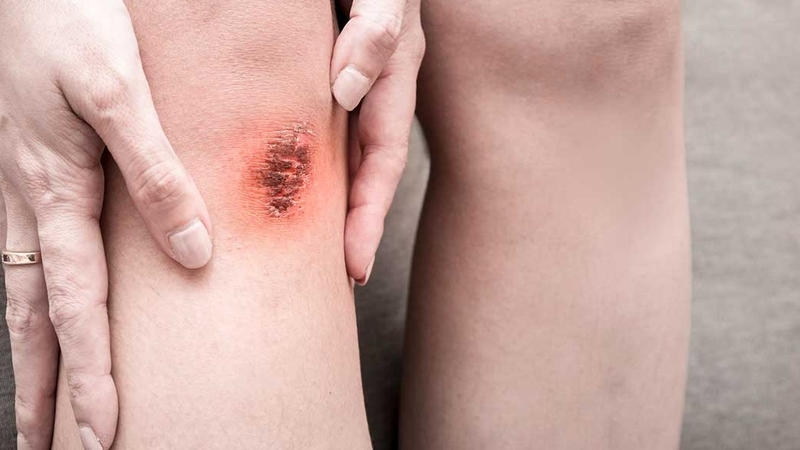
Why a Recurrent Crusty Spot Shouldn't Be Ignored
A typical cut or scrape usually follows a fairly predictable healing process. The damaged area gradually closes, the inflammation settles, and the skin becomes stronger.
A lesion that keeps breaking down may have a different explanation.
It could be caused by chronic irritation, repeated scratching, eczema, psoriasis, contact dermatitis, an insect bite, or another inflammatory skin condition.
However, persistent lesions can also sometimes be associated with precancerous changes or certain types of skin cancer.
That does not mean a recurring scab is automatically cancer.
It means the pattern itself is worth paying attention to.
Look for changes in:
-
Size
-
Shape
-
Color
-
Texture
-
Bleeding
-
Crusting
-
Tenderness
-
Itching
A spot that continues to change or repeatedly opens without a clear explanation should be professionally evaluated.
Actinic Keratosis: One Possible Cause
One common explanation for a persistent rough or crusty patch is actinic keratosis, often abbreviated as AK.
Actinic keratoses are associated with cumulative ultraviolet exposure and usually develop on areas of skin that receive a lot of sunlight.
Common locations include the:
-
Face
-
Scalp
-
Ears
-
Forearms
-
Hands
Sometimes an actinic keratosis is easier to feel than to see.
You may notice a rough, sandpaper-like patch when you run your fingers over the skin, even though the color difference is subtle.
The lesion may look dry, scaly, pink, red, brown, or close to the person's natural skin color.
Some can become thicker, irritated, or crusty over time.
Actinic keratosis is considered a precancerous skin change because some lesions can progress to squamous cell carcinoma.
Not every actinic keratosis becomes cancerous, but its presence can indicate significant cumulative sun damage.
How Sun Damage Can Appear Years Later
One reason skin changes can be surprising is that ultraviolet damage accumulates over time.
A person may spend years outdoors, experience repeated sun exposure, or have frequent sunburns without seeing immediate consequences.
The effects can become noticeable much later.
UV radiation can damage DNA inside skin cells. Over many years, repeated damage can interfere with the normal way those cells grow and repair themselves.
This is one reason rough or scaly lesions often appear in adulthood even though much of the relevant sun exposure may have happened decades earlier.
People with fair skin, a history of significant sun exposure, or repeated sunburns may have a higher risk of developing sun-related skin changes.
What Does Actinic Keratosis Look Like?
There is no single appearance.
Some lesions are very small and subtle.
Others are easier to see or feel.
Typical features can include:
A rough, dry texture
A sandpaper-like surface
Pink, red, brown, or skin-colored patches
Mild itching or irritation
Burning or tenderness
Crusting or occasional bleeding
Many people develop more than one lesion, particularly on areas that receive a great deal of sunlight.
If a rough spot remains present for an extended period or repeatedly develops a crust, it is reasonable to have it examined.
When a “Simple Scab” May Be Something More Serious
Some forms of skin cancer can initially look surprisingly ordinary.
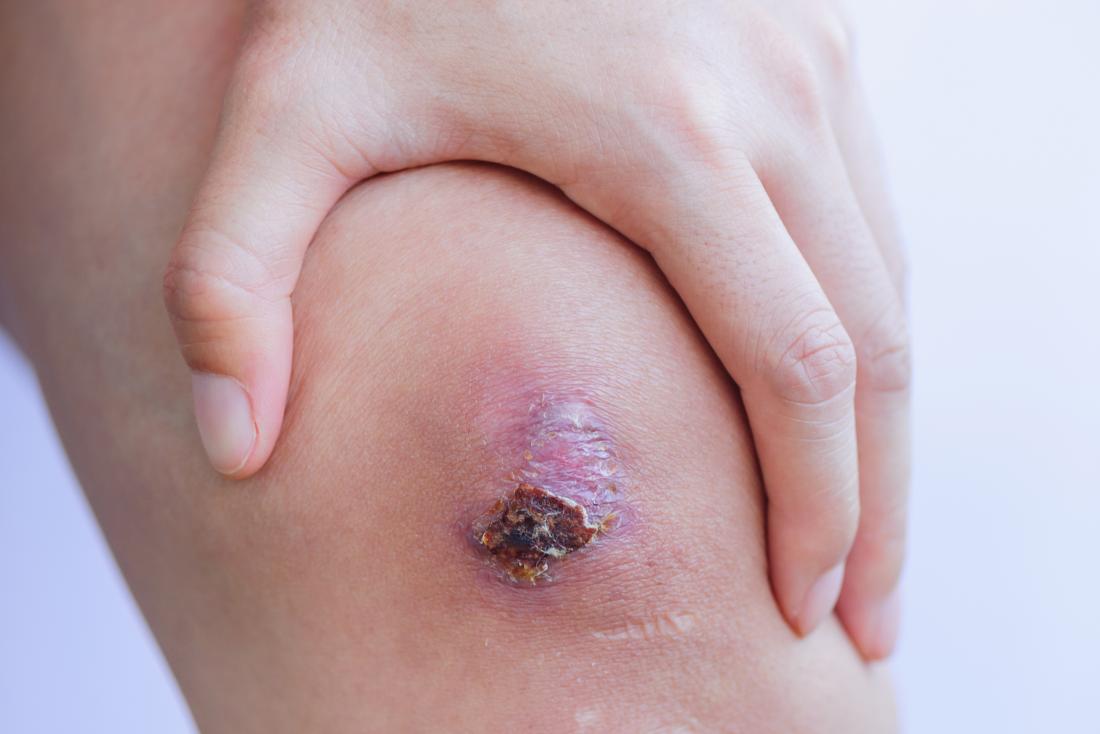
A basal cell carcinoma or squamous cell carcinoma may resemble a sore that never completely heals.
The cycle can look something like this:
The area develops a crust.
It appears to improve.
It bleeds or reopens.
Another crust forms.
Then the process repeats.
This is one reason dermatologists often encourage people not to dismiss a sore that simply refuses to heal.
A lesion that remains for several weeks, bleeds easily, becomes painful, grows, or repeatedly returns deserves professional attention.
Early assessment is particularly important because many common skin cancers are highly treatable when detected early.
Not Every Persistent Scab Is Cancer
This distinction is extremely important.
There are plenty of noncancerous reasons a spot may repeatedly become crusty.
Eczema
Eczema can cause dry, itchy, inflamed skin that cracks and becomes irritated.
Psoriasis
Psoriasis can create thicker, scaly patches that may become uncomfortable or cracked.
Contact dermatitis
A reaction to a cosmetic, soap, detergent, adhesive, plant, or other irritant can cause persistent inflammation.
Repeated scratching
Sometimes the lesion cannot heal simply because it keeps being disturbed.
Insect bites
An insect bite that is repeatedly scratched may remain irritated for a surprisingly long time.
Because these conditions can overlap in appearance, it is often impossible to identify the cause reliably without a proper examination.
Pay Attention to Where the Spot Appears
Location can provide useful context.
Sun-related skin changes are particularly common on areas exposed to sunlight, such as the face, ears, scalp, hands, and forearms.
However, a concerning skin lesion can occur almost anywhere.
That means you should not dismiss a spot simply because it is in an area that gets little sun.
The pattern, duration, changes, and symptoms are all important.
Resist the Urge to Pick at It
A crust can be tempting to remove.
You may think that getting rid of the scab will help the area heal faster.
In reality, repeatedly picking or peeling the lesion can cause additional trauma.
It can:
-
Reopen the wound
-
Cause bleeding
-
Increase inflammation
-
Delay healing
-
Introduce bacteria
-
Make the lesion harder to evaluate
Try to leave the area alone as much as possible.
If you notice yourself touching it repeatedly, covering it appropriately or keeping your nails short may help reduce accidental scratching.
Be Careful With DIY Skin Remedies
Persistent skin lesions often attract online “miracle cures.”
You may see recommendations to apply lemon juice, vinegar, baking soda, essential oils, strong acids, or other household substances.
These approaches can cause irritation or chemical burns.
They may damage the skin barrier and make an existing problem worse.
Aggressive exfoliation can also delay healing.
A persistent or suspicious lesion is not a good place to experiment with unproven remedies.
Gentle care is generally safer until the cause has been identified.
What Can You Do While Waiting for an Appointment?
There are several simple ways to reduce additional irritation.
Clean the area gently
Use a mild, fragrance-free cleanser and avoid scrubbing aggressively.
Keep the skin moisturized
A bland moisturizer or ointment can help protect the skin barrier.
Avoid scratching
This gives the skin the best chance to heal without additional trauma.
Protect the area from the sun
Use broad-spectrum sunscreen with an SPF of 30 or higher and consider protective clothing when appropriate.
Avoid harsh products
Do not repeatedly apply acids, alcohol-based products, or strong exfoliants unless specifically recommended by a healthcare professional.
These steps do not treat an underlying skin condition, but they can reduce irritation while you wait for appropriate evaluation.
Signs That Deserve Prompt Medical Attention
A persistent skin lesion becomes more concerning when it starts behaving differently.
Arrange medical evaluation when you notice:
Rapid growth
A sudden change in color
An irregular or changing shape
Bleeding without an obvious injury
Repeated reopening
Persistent pain or tenderness
Increasing swelling
Pus or other unusual drainage
Redness spreading beyond the lesion
Fever or chills
These features do not prove that a lesion is cancer.
They simply mean that guessing at home is not a good strategy.
How a Doctor May Evaluate It
A healthcare professional may begin by examining the lesion closely and asking questions about:
-
How long it has been present
-
Whether it has changed
-
Whether it bleeds
-
Whether it itches or hurts
-
Whether you have had similar spots before
-
Your history of sun exposure
-
Your personal and family history of skin conditions
A dermatologist may use specialized equipment to examine the lesion in more detail.
If the appearance is concerning, a biopsy may be recommended.
During a biopsy, a small amount of tissue is removed and examined under a microscope.
This is sometimes the only way to determine exactly what a persistent skin lesion is.
Treatment Depends on the Cause
There is no single treatment for every crusty skin lesion.
If the cause is eczema, treatment may focus on restoring the skin barrier and controlling inflammation.
If the lesion is an actinic keratosis, options may include:
Cryotherapy, which freezes the abnormal tissue.
Prescription topical treatments, which target abnormal skin cells.
Photodynamic therapy, which uses a medication together with light treatment.
Removal or other procedures for selected lesions.
If testing shows skin cancer, the appropriate treatment depends on the type, size, location, and extent of the lesion.
That is why identifying the underlying cause is more important than simply trying to remove the crust itself.
Why Follow-Up Matters
If you've developed one actinic keratosis or another sun-related lesion, that may be a sign that your skin has experienced substantial cumulative UV exposure.
New lesions can develop over time.
For people at higher risk, regular skin examinations can help identify concerning changes earlier.
It is also useful to become familiar with your own skin.
You don't need to obsess over every tiny mark.
Instead, pay attention to new lesions or noticeable changes in existing ones.
A monthly skin check can be a practical way to notice changes before they become difficult to remember.
Sun Protection Is Part of Long-Term Prevention
If cumulative UV exposure is contributing to your skin changes, reducing future exposure is important.
Simple habits can help.
Use broad-spectrum sunscreen regularly.
Wear hats and protective clothing when spending extended periods outdoors.
Seek shade during periods of intense sunlight.
Avoid tanning beds.
Sun protection isn't about avoiding the outdoors entirely.
It is about reducing unnecessary cumulative ultraviolet exposure.

Questions to Ask Your Doctor
When you get an appointment, it can help to be prepared.
You might ask:
What is the most likely cause of this lesion?
Does it need a biopsy?
Could it be actinic keratosis?
What treatment options are appropriate?
How often should I have my skin checked?
What changes should make me come back sooner?
You can also take a clear photograph of the lesion before the appointment so you have a record of how it looked previously.
The Bottom Line
A crusty spot that repeatedly scabs over and reopens is worth paying attention to.
It may be caused by something common and manageable, such as eczema, irritation, repeated scratching, or another inflammatory skin condition.
But persistent rough or crusty lesions can also occur with actinic keratosis, and a sore that repeatedly fails to heal can sometimes be associated with basal cell carcinoma or squamous cell carcinoma.
That does not mean you should panic.
It means you should avoid assuming that a recurring lesion is “just a scab.”
Protect the area from further irritation, don't pick at it, avoid harsh DIY treatments, protect your skin from the sun, and arrange professional evaluation when a spot persists, changes, bleeds, or repeatedly reopens.
Your skin has an impressive ability to heal. When one spot repeatedly refuses to do so, it is worth finding out why.