CHAPTER 1 — WHEN THE SIRENS FINALLY FADED, THE QUESTIONS BEGAN
The sound of sirens had dominated the streets only moments earlier. Emergency vehicles had rushed toward the scene, officers had shouted instructions, and paramedics had worked against the clock to reach those who needed immediate help. Then, gradually, the noise began to fade. What remained was a damaged roadway, shattered pieces of metal, emergency barriers, and a silence that seemed almost impossible to reconcile with what had just happened.
For those who witnessed the collision, the moment was difficult to process. A familiar street had suddenly become the center of a devastating emergency. People who had been walking, driving, or going about their daily routines found themselves stopping to watch as authorities secured the area. Some stood behind barricades with expressions of disbelief. Others quietly spoke with people nearby, attempting to understand what they had seen. In a city where unexpected emergencies are never entirely unfamiliar, the scene nevertheless carried a weight that made people pause.
The immediate priority had been saving lives. Emergency responders moved quickly, assessing injuries, providing medical assistance, and transporting those who required further treatment. Police officers worked to control traffic and prevent additional danger. The scene was chaotic, and every second mattered. Yet once the emergency response began to stabilize, a different kind of work started—one that would not be completed in minutes or hours.
Investigators began examining the wreckage.
They moved carefully through the affected area, documenting what remained of the vehicles and the roadway. Photographs were taken from multiple angles. Debris was identified and collected. Skid marks, damaged structures, and the positions of vehicles were recorded. Each detail, even one that appeared insignificant to someone passing by, could potentially help reconstruct the sequence of events.
The investigation would not be based on a single observation. Instead, authorities would need to piece together information from physical evidence, surveillance recordings, witness statements, vehicle inspections, and other available records. What appeared obvious from the outside might not be as simple once the evidence was examined closely.
A damaged vehicle can reveal the force and direction of an impact, but it cannot always explain what happened immediately before the collision. A broken component might have failed before the crash, contributing to the loss of control, or it might have been destroyed by the impact itself. A mark on the road could indicate braking, but investigators would need to determine when it appeared and what it actually represented.
These distinctions matter because the consequences of the investigation could extend beyond the scene itself. Families were waiting for information about loved ones. Injured people were beginning the difficult process of recovery. Witnesses were attempting to make sense of a moment that had unfolded so quickly that many could remember only fragments.
At the edge of the secured area, flowers began appearing. Some were placed carefully near the barricades. Others were left by people who did not know the victims personally but felt compelled to acknowledge what had happened. The gestures were small, yet they reflected something larger: a community trying to respond to a tragedy that had interrupted an ordinary day.
Officials had indicated that there was no evidence of a deliberate attack. That statement offered an important distinction, but it did not answer the central question. If the collision was not intentional, what caused it?
A sudden medical emergency remained one possibility. A mechanical problem was another. Investigators were also considering whether the circumstances involved a combination of factors that could not be understood by looking at the wreckage alone.
The scene had been secured, the immediate emergency had passed, and the city was beginning to move again. But the investigation was only entering its most important stage.
Because the answer, if it could be found, was not lying openly among the shattered pieces. It was hidden in the seconds before the impact and those seconds would have to be reconstructed one detail at a time.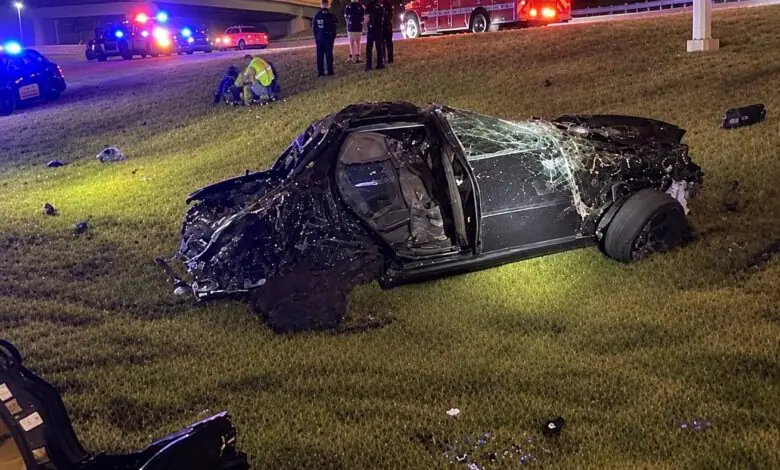
CHAPTER 2 — THE SECONDS BEFORE IMPACT MAY HOLD THE MOST IMPORTANT ANSWERS
A collision can happen in a matter of seconds, but understanding it may require weeks or months of investigation. The difference between what happened immediately before the impact and what happened during the impact can be critical. A vehicle that appears severely damaged may tell investigators where the collision occurred, but the damage alone does not necessarily reveal why the driver lost control or why the event unfolded as it did.
This is why investigators begin by examining the physical evidence carefully.
The roadway itself may contain important clues. Skid marks, tire impressions, scattered debris, damaged barriers, and the final positions of vehicles can help establish a preliminary timeline. Investigators may measure distances, document angles, and examine the location of individual pieces of debris. The goal is to determine how the vehicles moved and where the most significant events occurred.