Finding a lump on your neck can be unsettling. You may notice it while looking in the mirror, washing your face, shaving, putting on makeup, or simply running your fingers over your skin. The first thought is often the most frightening one: “Could this be something serious?”
Fortunately, most neck lumps are not cancerous. Enlarged lymph nodes caused by infections are among the most common explanations, and cysts, thyroid conditions, salivary-gland problems, and other benign causes can also produce noticeable swelling.
Still, a new lump should not automatically be dismissed - especially if it persists, grows, feels unusually hard, or occurs alongside other concerning symptoms.
The important thing is to understand what can cause a neck lump, what characteristics matter, and when professional evaluation is appropriate.
What Is a Neck Lump?
“Neck lump” is a broad description rather than a diagnosis.
A swelling in the neck can come from many different structures, including:
-
Lymph nodes
-
The thyroid gland
-
Salivary glands
-
Skin and soft tissue
-
Muscles
-
Blood vessels
-
Congenital structures
-
Infections or inflammatory conditions
The location of the lump can provide useful clues.
For example, a lump under the jaw may involve a lymph node or salivary gland, while swelling in the lower front portion of the neck may involve the thyroid.
Because many different structures are packed into a relatively small area, determining the cause based on appearance alone can be difficult.
One of the Most Common Causes: Swollen Lymph Nodes
Lymph nodes are small structures that form part of the immune system.
They help filter lymphatic fluid and contain immune cells that respond to infections and other threats.
When your body is fighting an infection, nearby lymph nodes may become enlarged.
This can happen with:
-
Colds
-
Flu
-
Sore throat
-
Tonsillitis
-
Ear infections
-
Dental infections
-
Skin infections
-
Certain viral illnesses
A swollen lymph node may feel like a small, tender lump beneath the skin.
You might notice one on the side of your neck after developing a sore throat, for example.
In many cases, the swelling gradually decreases as the underlying infection improves.
A Recent Infection Can Leave a Lump Behind
One reason people become worried about a neck lump is that it can remain noticeable even after they begin feeling better.
Lymph nodes do not necessarily return to their previous size immediately after an infection.
A node can remain enlarged for some time while the immune system settles down.
That does not mean every persistent lump is harmless, however.
If a lump remains present, continues to enlarge, or does not fit with a recent infection, it should be assessed by a healthcare professional.
Could It Be Your Thyroid?
The thyroid is a butterfly-shaped gland located at the front of the lower neck.
Problems involving the thyroid can sometimes cause a visible or palpable swelling.
A thyroid nodule is a growth within the thyroid tissue. Thyroid nodules are relatively common, particularly with increasing age, and most are benign.
Some thyroid conditions can also cause the entire gland to become enlarged, a condition known as a goiter.
A thyroid-related lump may be noticed in the lower front of the neck and may move when swallowing.
However, you should not attempt to determine whether a lump is thyroid-related simply by feeling it.
A clinician may use a physical examination and, when appropriate, blood tests and an ultrasound to investigate the thyroid.
Cysts Can Also Cause Neck Lumps
Some neck lumps are caused by cysts—fluid-filled or partially fluid-filled structures.
Certain cysts can occur beneath the skin or within deeper tissues.
Some are present from birth or develop because of congenital structures, while others may arise from blocked glands or other processes.
A cyst may feel smooth or rounded, although its consistency can vary.
If a cyst becomes infected, it may become painful, red, warm, or swollen.
A healthcare professional can determine whether a lump appears cystic and whether further investigation is necessary.
Salivary Glands Can Be Involved
Your body contains several major salivary glands, including glands located around the jaw and beneath the tongue.
Infections, inflammation, blocked salivary ducts, and other conditions can cause swelling in these areas.
One clue can be a lump or swelling that becomes more noticeable around mealtimes, particularly if a salivary duct is blocked.
Pain, tenderness, dry mouth, or changes in saliva production may also occur depending on the cause.
Persistent or recurrent swelling around the jaw or neck should be evaluated rather than repeatedly treated at home.
What Makes a Neck Lump More Concerning?
There is no single feature that can tell you whether a lump is dangerous.
However, healthcare professionals pay attention to several characteristics.
A lump deserves medical assessment if it:
-
Persists or does not gradually improve
-
Continues to grow
-
Feels unusually hard or firm
-
Appears fixed rather than moving freely under the skin
-
Is painless but persistent
-
Occurs without an obvious recent infection
-
Is located above or near the collarbone
-
Returns repeatedly
-
Is accompanied by other unexplained symptoms
These characteristics do not mean that the lump is cancer.
They simply make professional evaluation more important.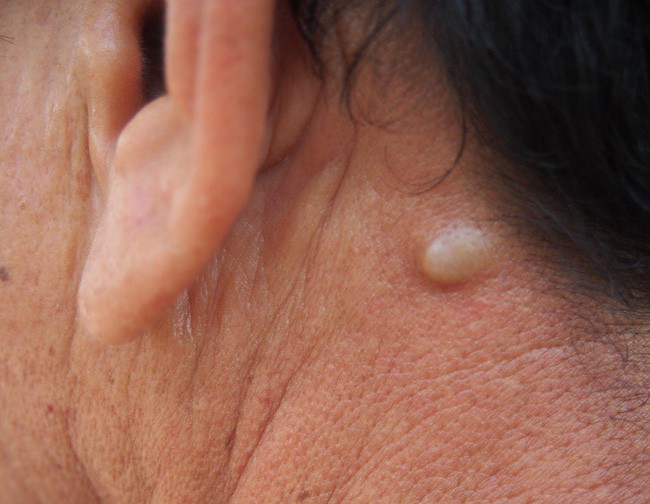
A Painless Lump Isn't Necessarily Harmless
People sometimes assume that a serious lump must hurt.
That's not necessarily true.
Some infections cause painful swelling, but certain benign growths—and some cancers—can be painless.
Therefore, pain alone cannot determine whether a neck lump is harmless.
Likewise, a painful lump is not automatically benign.
The pattern, duration, location, growth, and associated symptoms all matter.
Pay Attention to How Long It Has Been There
Duration is one of the most useful clues.
A small tender lump that appears during a cold and gradually gets smaller as the infection improves is very different from a lump that has been steadily growing for months.
If you have a new neck lump and cannot explain why it appeared, keeping track of its size and changes can be helpful.
Avoid repeatedly pressing or squeezing it, however, because this can irritate the tissue and make it more difficult to determine whether it is actually changing.
Other Symptoms That Shouldn't Be Ignored
A neck lump becomes more important to investigate when it occurs alongside other persistent symptoms.
These can include:
Difficulty swallowing
A sensation that food is sticking or difficulty swallowing normally can have many causes, but persistent symptoms should be assessed.
Difficulty breathing
Any significant or rapidly developing difficulty breathing requires urgent medical attention.
Persistent hoarseness
A voice that remains hoarse for an extended period without an obvious explanation deserves evaluation.
Unexplained weight loss
Losing weight without intentionally changing your diet or activity level can have numerous causes and should be discussed with a healthcare professional.
Night sweats or persistent fever
These can occur with infections and many other conditions. When they are unexplained and persistent, medical evaluation is appropriate.
Persistent sore throat
A sore throat that does not resolve normally—particularly when accompanied by a neck lump—should be checked.
Ear pain without an obvious ear problem
Certain problems involving the throat, mouth, or surrounding structures can sometimes cause referred ear pain.
Again, none of these symptoms automatically means cancer. They simply provide additional information that a clinician can use when determining what needs to be investigated.
What About Cancer?
Cancer is one of the reasons people become concerned about a neck lump, but it is important to keep the overall picture in perspective.
Some cancers can cause enlarged lymph nodes in the neck, including cancers originating in the head and neck, thyroid, or other parts of the body.
However, many neck lumps are caused by infections or benign conditions.
When a neck lump is persistent and unexplained, doctors may consider a number of possibilities rather than jumping immediately to cancer.
The purpose of an examination is to find the actual cause, not to assume the worst.
How Doctors Evaluate a Neck Lump
A healthcare professional will typically begin by asking questions and performing a physical examination.
They may want to know:
-
When you first noticed the lump
-
Whether it has changed in size
-
Whether it is painful
-
Whether you recently had an infection
-
Whether you have experienced fever
-
Whether you have difficulty swallowing
-
Whether your voice has changed
-
What medications you take
-
Whether you smoke or use tobacco
-
Whether you have other medical conditions
-
Whether similar problems have occurred previously
The clinician will also examine the lump itself and may check other lymph nodes.
Depending on the findings, additional tests may be recommended.
Ultrasound Can Be Very Useful
Ultrasound is commonly used to evaluate certain neck masses, particularly those involving the thyroid or superficial soft tissues.
It uses sound waves rather than radiation and can help distinguish between solid and fluid-filled structures and assess features that may require further investigation.
For thyroid nodules, ultrasound is an important tool for determining whether additional evaluation is needed.
Blood Tests May Help
Blood tests may be appropriate depending on the suspected cause.
For example, if a thyroid problem is suspected, thyroid-function testing may be considered.
If infection is suspected, other tests may be useful depending on the clinical situation.
Blood tests alone generally cannot determine the cause of every neck lump, so they are interpreted alongside the examination and other investigations.
Sometimes a Biopsy Is Needed
If imaging or examination identifies a mass that needs further evaluation, a clinician may recommend sampling cells from it.
One commonly used approach for a neck mass is fine-needle aspiration, in which a thin needle is used to collect cells for laboratory examination.
This does not mean that cancer has been diagnosed.
It means that doctors need more information to determine exactly what the lump represents.
Should You Squeeze or Massage a Neck Lump?
It's best not to.
Trying to squeeze, puncture, or aggressively massage an unexplained lump can irritate the surrounding tissue and potentially introduce infection.
It also does not address the underlying cause.
If the lump is an enlarged lymph node, repeatedly touching it can make the area more tender and may make you more anxious because you're constantly checking it.
A better approach is to note when you discovered it and arrange appropriate medical evaluation if it persists or has concerning features.
When Is It an Emergency?
Most neck lumps do not require emergency treatment.
However, seek urgent medical care if swelling is associated with:
-
Significant difficulty breathing
-
Severe difficulty swallowing
-
Rapidly increasing swelling
-
Severe infection symptoms
-
Swelling of the face or tongue
-
Fainting or severe weakness
These symptoms can sometimes indicate an airway problem, serious infection, or another condition requiring immediate attention.
Do not wait for a routine appointment if you are struggling to breathe.
Don't Let Internet Searches Diagnose the Lump
One of the easiest mistakes to make is searching for a picture of a neck lump online and trying to match it to your own.
The problem is that many different conditions can look similar.
A swollen lymph node can resemble another type of mass.
A thyroid nodule can be difficult to distinguish from surrounding structures without appropriate examination.
Even experienced clinicians sometimes need imaging or laboratory testing to determine the cause.
Use online information to understand possibilities—not to replace a medical examination.
What You Can Do While Waiting for an Appointment
If the lump is not causing an emergency, you can keep track of a few basic details.
Note:
-
When you first noticed it
-
Its approximate size
-
Whether it is painful
-
Whether it changes over time
-
Whether you recently had an infection
-
Whether you have developed other symptoms
You can also take a photograph if the lump is visibly noticeable.
Avoid repeatedly poking or squeezing it.
If you develop new or worsening symptoms while waiting, contact a healthcare professional sooner.
The Bottom Line
A strange lump on your neck can be frightening, but a lump does not automatically mean cancer.
Swollen lymph nodes caused by infections are common, while thyroid nodules, cysts, salivary-gland problems, and other benign conditions can also cause neck swelling.
What matters is the overall pattern.
A lump that appears during an infection and gradually gets smaller may be very different from one that is persistent, growing, unusually firm, fixed in place, or accompanied by symptoms such as difficulty swallowing, persistent hoarseness, unexplained weight loss, fever, or night sweats.
If you have a new neck lump that does not have an obvious explanation or does not go away, the safest approach is not to panic—and not to ignore it.
Get it checked.
A medical examination can often provide reassurance when the cause is harmless and can identify problems that need treatment when something more significant is going on.
Your neck may be trying to tell you something, but a lump alone cannot tell you exactly what that message means. The right next step is professional evaluation, not fear or guesswork.