10 Health Benefits of Pineapple: A Sweet Tropical Fruit Packed with Nutrients
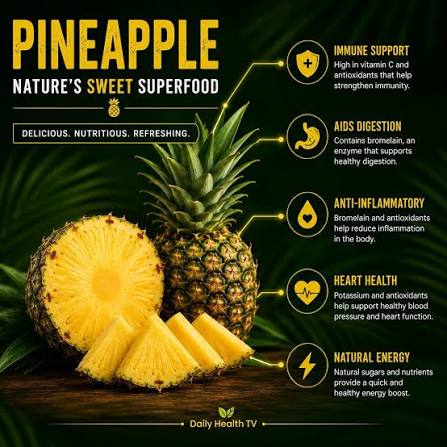
Pineapple is a delicious tropical fruit known for its sweet-tart flavor and juicy texture. Beyond its refreshing taste, pineapple provides vitamins, minerals, antioxidants, and a unique enzyme called bromelain. While it is not a cure for disease, eating pineapple as part of a balanced diet can contribute to overall health.
Here are 10 science-backed benefits of pineapple.
1. Rich in Vitamin C
Pineapple is an excellent source of vitamin C, which helps:
A single serving can provide a significant portion of your daily vitamin C needs.
2. Contains Bromelain
Pineapple is one of the few natural sources of bromelain, an enzyme that helps break down proteins.
Research suggests bromelain may:
-
Support normal digestion of protein-rich meals.
-
Help reduce mild inflammation.
-
Aid recovery after certain injuries or surgeries under medical supervision.
More research is needed to fully understand all of its health effects.
3. Supports Healthy Digestion
Pineapple provides:
-
Dietary fiber.
-
Water.
-
Bromelain.
Together, these may help promote healthy digestion and regular bowel movements.
4. Packed with Antioxidants
Pineapple contains antioxidants such as:
-
Vitamin C.
-
Flavonoids.
-
Phenolic acids.
These compounds help protect cells from damage caused by free radicals.
5. May Support Heart Health
.png)
Pineapple contains potassium, fiber, and antioxidants that may contribute to heart health when eaten as part of a diet rich in fruits and vegetables.
6. Supports Healthy Skin
Vitamin C plays an important role in collagen production, helping maintain healthy skin and supporting normal wound healing.
7. May Help Reduce Inflammation
Some studies suggest bromelain has anti-inflammatory properties.
However, eating pineapple alone should not be considered a treatment for inflammatory conditions.
8. Low in Calories and Naturally Sweet
Pineapple is naturally sweet while remaining relatively low in calories, making it a satisfying alternative to many processed desserts.
9. Provides Essential Minerals
Pineapple contains several important nutrients, including:
-
Manganese.
-
Potassium.
-
Copper.
-
Vitamin B6.
-
Folate.
Manganese is especially important for bone health and normal energy metabolism.
10. Easy to Add to Your Diet
/assets/images/provider/photos/2808133.png)
Pineapple can be enjoyed:
Fresh pineapple generally contains more vitamin C than heavily processed varieties.
Are There Any Precautions?
Pineapple is safe for most people, but keep these points in mind:
-
Eating large amounts may cause temporary mouth irritation because of bromelain and natural fruit acids.
-
People with pineapple allergies should avoid it.
-
Canned pineapple packed in heavy syrup contains much more added sugar than fresh pineapple.
Tips for Choosing a Good Pineapple
Look for a pineapple that:
-
Has a sweet, fresh aroma.
-
Feels heavy for its size.
-
Has green, healthy-looking leaves.
-
Gives slightly when gently pressed.
Avoid fruit with mold, soft spots, or a fermented smell.
The Bottom Line
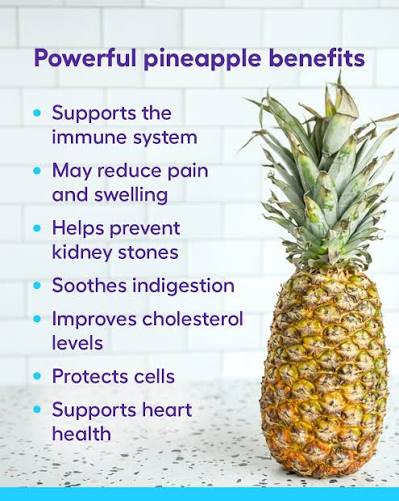
Pineapple is a nutrient-rich tropical fruit that provides vitamin C, manganese, potassium, fiber, antioxidants, and the unique enzyme bromelain. Regularly enjoying pineapple as part of a balanced diet may support immune function, digestion, heart health, skin health, and overall well-being.
For the greatest nutritional benefit, choose fresh pineapple and enjoy it alongside a variety of other fruits and vegetables.