You wake up in the morning, brush your teeth, glance in the mirror—and notice something strange.
Your tongue looks white.
Maybe it is covered by a thin, pale coating. Maybe the entire surface looks almost chalky. Or perhaps there are thicker white patches that seem to cling to the tongue and refuse to disappear after brushing.
For many people, the first reaction is simple:
"What's wrong with my tongue?"
A white tongue can certainly look alarming. But in most cases, it does not automatically mean that something is seriously wrong.
The tongue naturally collects bacteria, dead cells, food particles, mucus, and other debris. When these materials accumulate between the tiny structures on the surface of the tongue, they can create a white or yellowish coating.
Sometimes, however, a white tongue can be associated with dehydration, dry mouth, irritation, oral infections, medications, or other underlying conditions.
That's why the appearance of your tongue can sometimes provide useful clues—but it should never be treated as a standalone diagnostic test.
So what exactly causes a white tongue?
And when is it simply a harmless coating versus something that deserves medical attention?
Let's take a closer look.
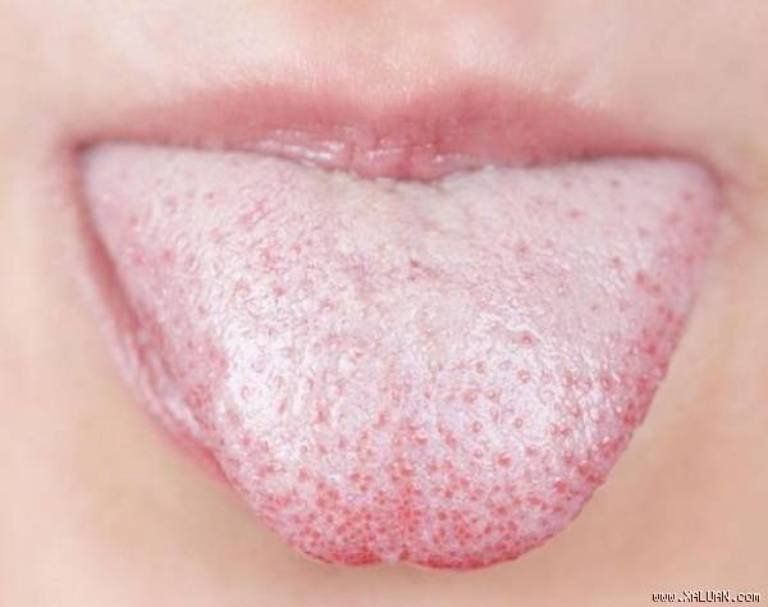
What Is a White Tongue?
A "white tongue" is not a disease by itself.
It is a description of what the tongue looks like.
The surface of the tongue is covered with tiny projections called papillae.
These structures help with functions such as taste and manipulating food.
When the papillae become coated with debris, bacteria, dead cells, mucus, or other material, the surface can appear white.
The coating may be:
-
Thin and barely noticeable
-
Thick and creamy
-
Patchy
-
Yellowish-white
-
Spread across most of the tongue
-
Limited to specific areas
The appearance can change from day to day.
Sometimes you may notice a white coating first thing in the morning and find that it largely disappears after drinking water, eating, brushing your teeth, or gently cleaning your tongue.
That pattern is usually much less concerning than a persistent white patch that does not go away.
The Tongue Is Not Supposed to Be Perfectly Pink
Many people assume that a healthy tongue should look perfectly smooth and bright pink all day.
That's not necessarily realistic.
A healthy tongue can naturally have a slight coating.
The appearance changes depending on:
-
Hydration
-
Food and drink
-
Oral hygiene
-
Saliva production
-
Mouth breathing
-
Sleep
-
Smoking
-
Alcohol consumption
-
Medications
-
Illness
-
The normal balance of microorganisms in the mouth
For example, your tongue may look whiter after waking up because saliva production decreases during sleep.
If you sleep with your mouth open, the effect can become even more noticeable.
So seeing a little white coating in the morning does not automatically mean something is wrong.
Why Does the Tongue Turn White?
There isn't one single cause.
A white appearance can develop when material accumulates between and around the papillae.
Think of the tongue as a textured surface rather than a smooth piece of skin.
Food particles and microorganisms can become trapped within those microscopic structures.
Dead cells can accumulate.
Mucus can stick to the surface.
When all of these materials combine, the tongue can appear white.
The thicker the accumulation, the more obvious the coating becomes.
This is why a person may notice a dramatically whiter tongue after several hours without eating, drinking, or cleaning their mouth.
Dehydration Can Make It More Noticeable
One of the simplest explanations for a white tongue is dehydration.
When your body does not have enough fluid, saliva production can decrease.
Saliva plays an important role in maintaining the mouth.
It helps:
-
Lubricate oral tissues
-
Wash away food particles
-
Support normal oral microorganisms
-
Help with swallowing
-
Protect teeth and oral tissues
When the mouth becomes dry, debris can accumulate more easily.
The tongue may therefore develop a thicker coating.
You may also notice other symptoms of dry mouth, such as:
-
Sticky saliva
-
A dry or rough feeling in the mouth
-
Increased thirst
-
Difficulty swallowing dry foods
-
Bad breath
-
A dry throat
If your tongue looks noticeably whiter after a night of poor hydration and improves after drinking fluids, dehydration or dry mouth may be contributing.
Mouth Breathing Can Play a Role
Do you wake up with a dry mouth?
If so, your breathing pattern during sleep could be part of the explanation.
People who breathe through their mouths while sleeping lose more moisture from the oral cavity.
This can happen because of:
-
Nasal congestion
-
Allergies
-
A blocked nose
-
Structural nasal problems
-
Habitual mouth breathing
-
Sleep-related breathing problems
A dry mouth creates an environment where coating can accumulate more easily.
So if your tongue looks white primarily in the morning, consider what your mouth feels like when you wake up.
A dry mouth combined with a coated tongue may point toward reduced overnight moisture rather than a serious disease.
Poor Oral Hygiene Can Contribute
The tongue is part of your mouth, so it is affected by oral hygiene.
Brushing your teeth removes plaque from the teeth, but the tongue can also accumulate bacteria and debris.
If the tongue is rarely cleaned, a coating may become more noticeable.
However, "poor oral hygiene" does not necessarily mean someone never brushes their teeth.
Even people who brush regularly can develop tongue coating.
The tongue has a naturally textured surface, and some people simply accumulate more material than others.
Gentle tongue cleaning can help reduce the buildup.
What About Bad Breath?
A white-coated tongue and bad breath often appear together.
Why?
Because bacteria and trapped debris can contribute to unpleasant odors.
The tongue can harbor a large population of microorganisms.
Some bacteria produce volatile compounds that contribute to bad breath.
This is one reason tongue cleaning can be useful for some people.
But persistent bad breath has many possible causes.
It can also be associated with:
-
Gum disease
-
Tooth decay
-
Dry mouth
-
Certain foods
-
Smoking
-
Some medications
-
Tonsil problems
-
Sinus or nasal conditions
-
Gastrointestinal conditions in less common situations