Recognizing that distinction can help someone understand their emotions before making decisions that affect a marriage.
Chapter 2: How Friendship Can Gradually Become Emotional Attraction
Not every emotional connection outside marriage begins with romantic intentions.
Two people may start as colleagues, neighbours, friends, or members of the same social group. They may discuss work, exchange advice, share jokes, or help each other with ordinary problems.
At first, there may be nothing unusual about the relationship.
The change can occur gradually when the conversations become more personal and the people involved begin to rely on each other emotionally.
A person may start looking forward to seeing the other individual. They may remember small details about their day or feel disappointed when a planned conversation does not happen.
These experiences do not prove that an affair is developing, but they can signal that the relationship is becoming emotionally significant.
Sharing Private Problems Can Create Closeness
People often become closer when they share personal experiences.
Talking about family difficulties, professional disappointments, fears, or hopes can create a sense of trust. The listener may begin to feel like someone who understands a part of the speaker's life that others do not see.
This can be positive in ordinary friendships. Having supportive relationships outside marriage is healthy, and married people should not be expected to rely exclusively on their spouses for every form of emotional support.
The issue is not friendship itself. It is the combination of secrecy, emotional dependence, romantic expectations, and the gradual exclusion of the spouse.
For example, a woman may begin discussing a difficult period at home with a male colleague. At first, she simply appreciates his perspective. Later, she may find herself sharing information with him that she no longer discusses with her husband.
If she begins hiding the frequency or nature of their conversations, the relationship may be crossing a boundary that deserves attention.
The Importance of Emotional Boundaries
Boundaries are not designed to prevent people from forming friendships. They help individuals protect commitments and avoid situations that could damage trust.
Different couples may define boundaries differently. Some are comfortable with close friendships across genders, while others prefer more explicit agreements about private communication, romantic behaviour, or social situations.
There is no single arrangement that works for every couple. What matters is that expectations are discussed honestly and applied fairly to both partners.
A useful question is whether someone would feel comfortable if their spouse knew the full nature of the interaction.
If a person feels the need to hide messages, delete conversations, invent explanations, or misrepresent where they have been, that secrecy may indicate that the relationship has become more complicated than an ordinary friendship.
Another question is whether the outside connection is taking emotional energy away from the marriage. If someone increasingly turns to another person for comfort, reassurance, and excitement while withdrawing from their spouse, the relationship may be changing in ways that deserve serious consideration.
When a New Connection Becomes an Emotional Escape
An outside relationship can sometimes become a place where someone temporarily escapes problems at home.
The person may enjoy talking with someone who does not know about the household disagreements, financial worries, family tensions, or daily frustrations.
The interaction can feel uncomplicated because it takes place outside the full reality of married life.
This can create an idealized picture of the new person. The individual may appear unusually understanding, patient, or exciting because the relationship has not yet been tested by the same pressures that affect the marriage.
The contrast may therefore say as much about the situation as it does about the people involved.
A healthy decision requires looking at the entire picture, rather than comparing the most enjoyable moments of a new connection with the most difficult moments of an established relationship.
The Role of Personal Identity and Changing Life Stages
A marriage is an important part of many people's identities, but it is not the only part. Individuals also have personal ambitions, friendships, interests, professional goals, and emotional needs.
Sometimes, a person begins to feel that their identity has become limited to their responsibilities as a spouse, parent, employee, or caregiver.
A woman who has spent years prioritizing everyone else's needs may eventually wonder what she wants for herself. She may want to feel independent, attractive, intellectually engaged, or appreciated for qualities that have little to do with her daily responsibilities.
This process can happen at different stages of life. It is not limited to a particular age or type of marriage.
Wanting to Feel Like an Individual Again
Consider someone who has spent years managing a household and caring for children. Her daily routine may revolve around other people's schedules. She may have reduced time for hobbies, friendships, or professional development.
When she meets someone who asks about her ambitions, listens to her opinions, or encourages her interests, she may feel that an overlooked part of her identity is being recognized.
The emotional response can be powerful.
It does not necessarily mean that she wants to leave her marriage. She may simply be discovering that she misses certain aspects of herself.
The healthiest response is to understand the underlying need. Perhaps she wants more personal time, opportunities to pursue interests, or a more balanced division of responsibilities at home.
An outside attraction may reveal those needs, but it is not necessarily the answer to them.
Life Transitions Can Change What People Want
Major life changes can influence how people understand relationships.
A career change, children leaving home, retirement, relocation, the loss of a family member, or a period of personal growth can alter daily routines and emotional priorities.
Partners may respond differently to these changes. One may welcome a quieter lifestyle, while the other wants new experiences. One may become more focused on family responsibilities, while the other wants to rediscover individual interests.
These differences can create distance if they are not discussed.
Sometimes an outside person appears at a moment when someone is reconsidering their future. The attraction may be connected to the possibility of change, novelty, or a different lifestyle.
Again, the important question is not simply whether attraction exists. It is what the feeling represents and how the person chooses to respond.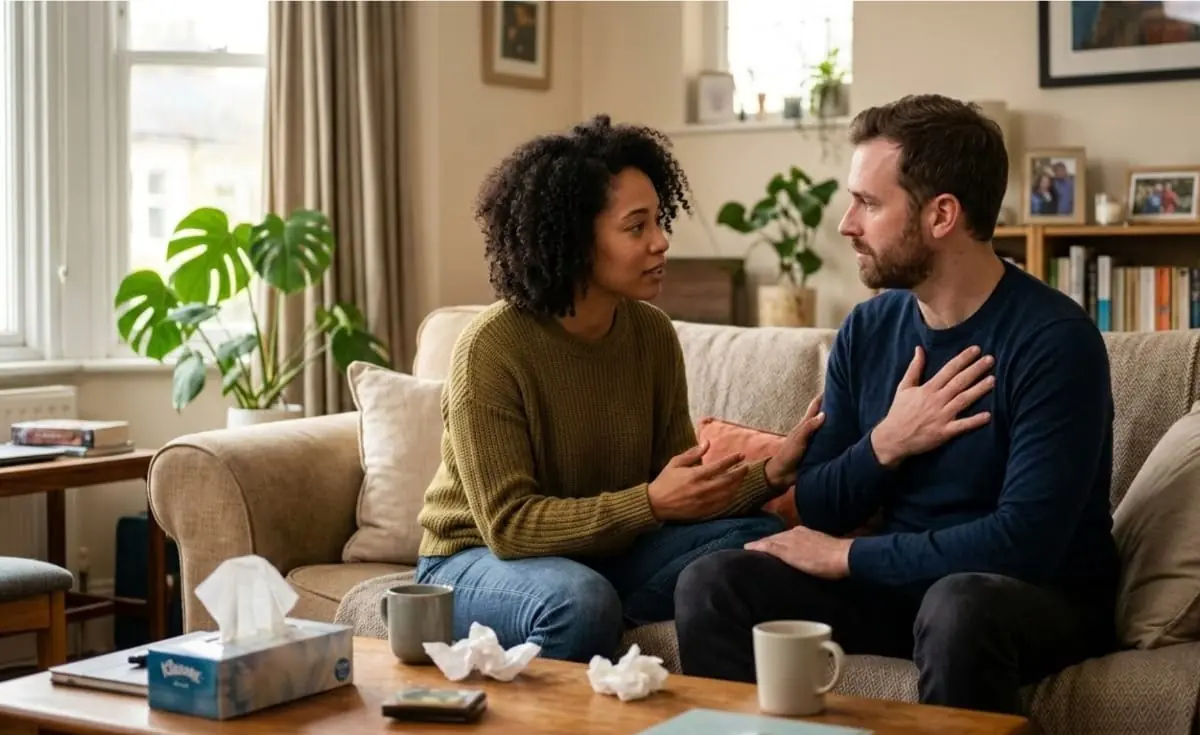
Physical Attraction, Confidence, and Self-Esteem
The original headline focuses on a woman's body shape, but physical appearance should not be confused with emotional behaviour.
A woman's confidence, self-esteem, and relationship choices cannot be predicted from the size of her buttocks, waist, breasts, or any other body feature.
People develop romantic interest for many reasons. Physical attraction may be one factor, but it does not determine whether someone is loyal, emotionally available, satisfied in marriage, or interested in another relationship.
Why Feeling Attractive Can Affect Emotional Experience
Feeling attractive can influence confidence. A person who receives genuine appreciation may feel more comfortable expressing themselves, meeting new people, and participating in social situations.
But confidence does not automatically lead to infidelity.
A married woman can feel attractive and remain fully committed to her partner. Another person may struggle with self-esteem and still experience an unexpected attraction. These experiences are individual, not predictable from physical appearance.
It is also important to avoid the idea that a person's body determines their sexual character. Such claims reduce complex human beings to stereotypes and can contribute to shame or unrealistic expectations.
A healthy relationship should allow both partners to feel respected and valued without making their worth dependent on appearance.