Chapter 1 — A Few Chin Hairs: A Common Experience for Many Women
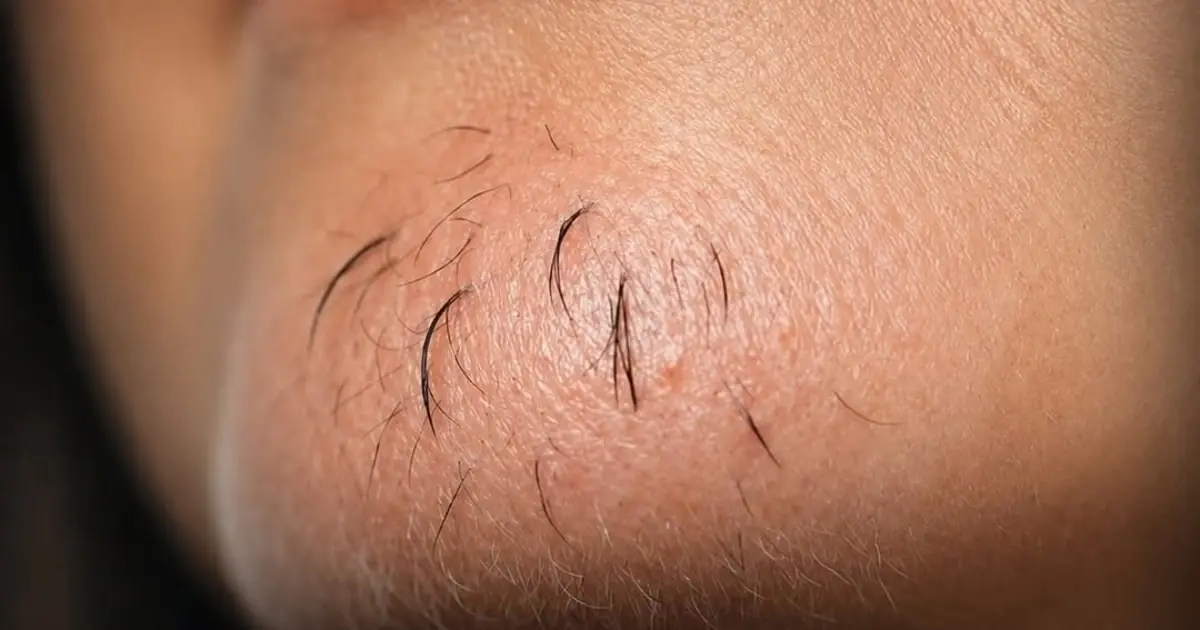
Finding a dark hair growing on the chin can be surprising, especially for a woman who has never noticed facial hair before. Some women discover one or two coarse hairs while looking in the mirror. Others notice that the hair becomes more visible over time or begins appearing along the jawline.
The image circulating online suggests that a woman's chin hair is a sign of something important happening inside her body. In some cases, that can be true. But the presence of chin hair does not automatically mean that a woman has a medical condition.
Women naturally produce small amounts of androgens, a group of hormones that includes testosterone. These hormones are not exclusive to men. They play important roles in both male and female bodies, including influencing hair growth.
Hair follicles respond differently to hormones. Some follicles produce fine, light hair known as vellus hair. Others can develop thicker, darker hair called terminal hair.
When terminal hair grows in areas where women typically have less coarse hair, such as the chin, upper lip, chest, or abdomen, the pattern may be described as hirsutism.
Hirsutism is not simply the presence of any facial hair. It refers to excessive growth of coarse, dark hair in a pattern influenced by androgens.
A few isolated hairs on the chin are common and may occur without any underlying hormone disorder. Some women naturally have more facial hair because of family traits, ancestry, or the way their hair follicles respond to hormones.
The amount of facial hair also varies throughout life.
During puberty, hormone levels change and some fine hairs become thicker. Pregnancy can bring temporary changes in hair growth. Later in life, the hormonal changes associated with menopause may affect the hair on the scalp and face.
For some women, scalp hair becomes thinner while a few darker hairs appear around the chin or jawline.
This can feel frustrating, especially because many beauty standards portray women's faces as completely hairless. But facial hair is a normal biological variation, and it does not make a woman less feminine or less healthy.
The important question is not whether a woman has any chin hair at all.
It is whether the hair growth is new, unusually heavy, rapidly increasing, or accompanied by other symptoms.
A gradual appearance of a few hairs over many years may be related to normal aging or inherited traits. A sudden increase in thick, dark hair over a few months may deserve medical evaluation.
Doctors may consider the person's age, menstrual history, medication use, family history, and other symptoms before deciding whether hormone testing is necessary.
The image's dramatic headline should therefore be interpreted carefully.
Chin hair can sometimes provide a clue about hormonal health, but it cannot diagnose a condition by itself. A woman should not assume that she has a serious illness simply because she notices a hair on her chin.
Likewise, she should not ignore sudden or extensive hair growth if it is accompanied by irregular periods, severe acne, scalp hair loss, or other changes.
Understanding the difference between normal facial hair and hirsutism can help women make informed decisions without unnecessary fear.
The following chapters explore the most common causes of chin hair, the symptoms that may indicate a hormone imbalance, and the treatment options available for women who want to manage unwanted hair.
Illustrative image of facial hair on a woman's chin.
Chapter 2 — Hormones, Genetics, and the Effects of Aging
One of the most important factors affecting facial hair growth is the relationship between hormones and hair follicles.
Androgens, including testosterone, can stimulate certain follicles to produce thicker and darker hair. Women naturally have androgens, although the levels are usually lower than those found in men.
A woman may develop more noticeable chin hair if her androgen levels increase or if her hair follicles become more sensitive to these hormones.
However, hormone levels are not the only explanation.
Genetics can influence the amount, thickness, and distribution of facial hair. If several women in a family have noticeable chin hair, the pattern may be inherited.
Ancestry can also influence typical hair growth patterns. Some populations naturally have more visible facial or body hair than others.
This does not mean that one pattern is healthier than another. It simply reflects normal human variation.
Age is another important factor.
As women approach menopause, estrogen levels gradually change. These hormonal shifts can alter the balance between estrogen and androgens.
Some women notice that their scalp hair becomes thinner while hair on the chin or upper lip becomes more noticeable.
A few coarse chin hairs after menopause are not unusual.
The appearance of facial hair during this stage does not automatically indicate a dangerous hormone disorder. However, a sudden or dramatic change should still be discussed with a healthcare professional.
The body can also respond differently to the same hormone levels.
Two women with similar testosterone levels may have very different amounts of facial hair because their follicles respond differently.
This is one reason why a blood test alone may not explain every case of unwanted hair growth.
Doctors often assess the overall pattern of symptoms rather than relying on a single laboratory result.
For example, a woman who has a few chin hairs but regular periods and no other symptoms may not need extensive testing.
A woman with rapidly increasing facial hair, irregular menstrual cycles, and persistent acne may require a more detailed evaluation.