Chapter 1: Why Do Some Women Suddenly Develop Hair on Their Chins?
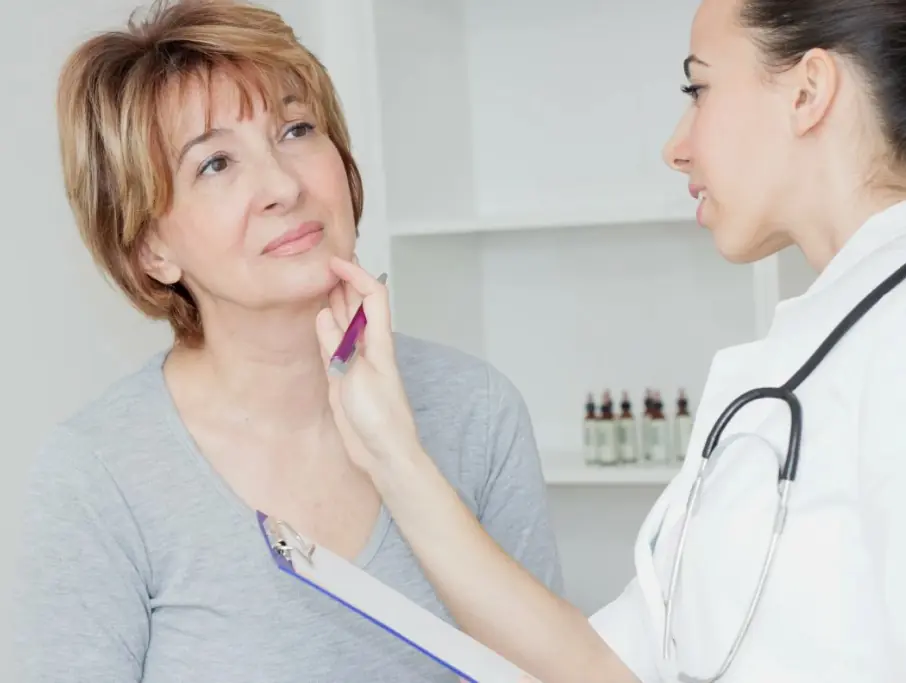
For many women, discovering a dark, noticeable hair growing on the chin can be an unexpected experience. It may appear as a single stubborn strand that seems to return shortly after being removed. For others, several coarse hairs gradually become visible along the chin, jawline, or upper lip.
Although facial hair is commonly associated with men, women naturally have hair follicles in these areas too. The difference is that many women have fine, light-colored hairs that are barely noticeable. Under certain circumstances, these hairs can become thicker, darker, and more visible.
The appearance of chin hair does not automatically mean that something is wrong with the body. In fact, it is relatively common, particularly as women get older. However, understanding why it happens can help women recognize when the change is simply part of normal aging and when it deserves medical attention.
One of the most important factors behind facial hair growth is a group of hormones called androgens.
Androgens are sometimes described as male hormones, but this description can be misleading. Both men and women naturally produce them. Testosterone is one of the best-known androgens, and it plays important roles in several bodily functions, including maintaining muscle, supporting bone health, and influencing hair growth.
Hair follicles respond differently to hormonal signals depending on their location and individual sensitivity. Some follicles are particularly responsive to androgens. When these hormones influence them, fine hairs may gradually develop into thicker, darker hairs known as terminal hairs.
This process explains why a woman might notice a few coarse hairs appearing on her chin even when her hormone levels are not unusually high.
Genetics also plays an important role. Some women naturally have hair follicles that are more sensitive to androgen activity. Others inherit patterns of facial hair growth from their mothers, grandmothers, or other relatives.
This means two women with similar hormone levels may experience very different amounts of facial hair.
One may have completely smooth skin around the chin, while another may regularly discover several dark strands. Neither situation necessarily indicates a health problem.
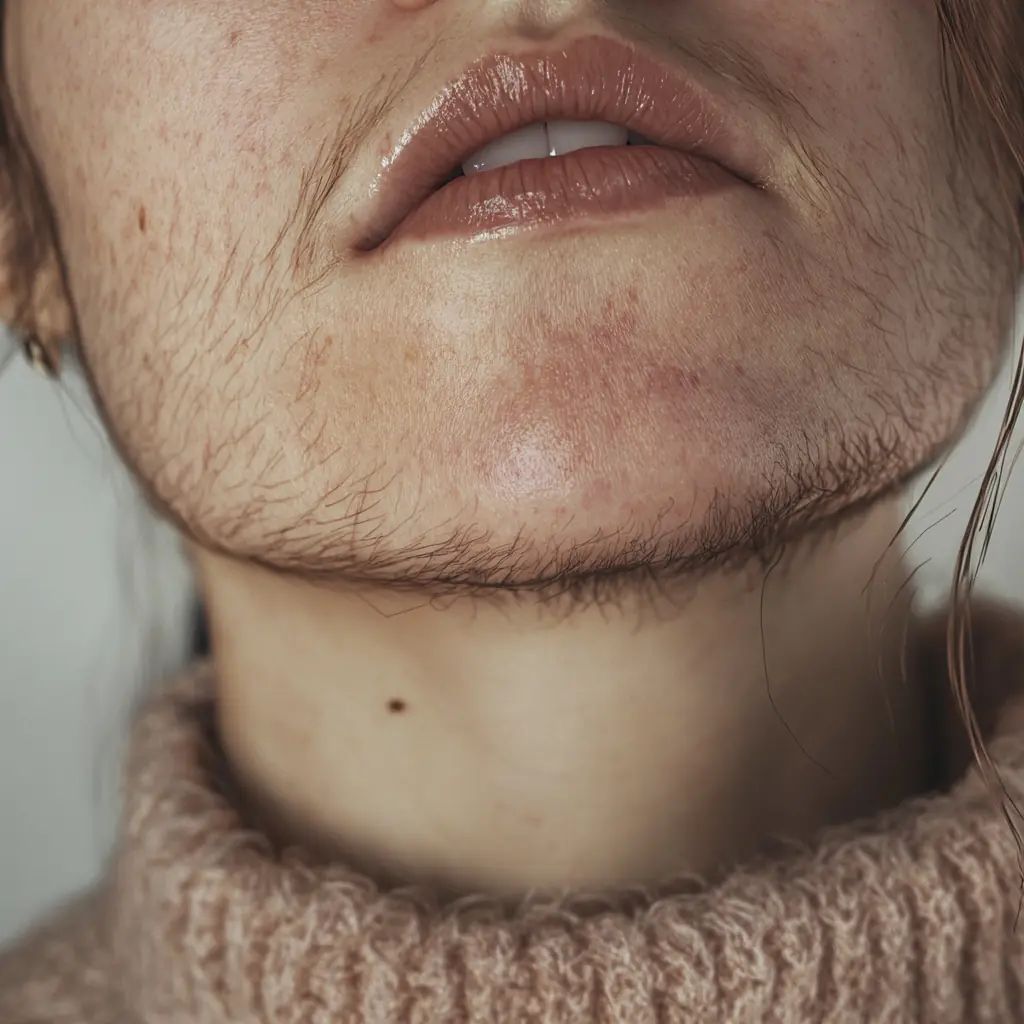
Another important factor is the natural hormonal changes that occur throughout a woman's life.
During puberty, pregnancy, the years leading up to menopause, and after menopause, hormone levels can fluctuate. These changes may influence the thickness and distribution of body hair.
For example, some women begin noticing individual chin hairs during their thirties or forties. Others do not experience noticeable changes until their fifties or sixties.
After menopause, estrogen levels decrease significantly. Although this does not mean that every woman will develop facial hair, the balance between estrogen and androgens changes. As a result, previously inconspicuous facial hairs may become more noticeable.
This is one reason older women sometimes find themselves removing chin hairs that were never a concern earlier in life.
There is also a difference between ordinary facial hair and a condition called hirsutism.
Hirsutism refers to excessive growth of coarse, dark hair in areas where women typically have less terminal hair, including the chin, upper lip, chest, abdomen, and back. It is commonly associated with increased androgen activity.
A few isolated chin hairs are not necessarily hirsutism. The number of hairs, their distribution, how quickly they appear, and whether other symptoms are present all matter.
Women should therefore avoid assuming that every dark hair represents a hormonal disorder.
The most useful first step is to pay attention to changes over time. Has one hair appeared occasionally, or are several new hairs developing every few weeks? Has the change remained limited to the chin, or is it spreading to other parts of the body?
These observations provide useful information if a medical assessment becomes necessary.
Ultimately, chin hair is not a reliable stand-alone indicator of a woman's health. It can reflect ordinary biological variation, aging, genetics, or hormonal activity. The important distinction is whether the growth is mild and gradual or new, rapid, and accompanied by other changes.
Chapter 2: The Hormonal Changes That May Be Behind Chin Hair
When a woman notices that dark hairs are becoming more frequent on her chin, hormones are among the first factors worth considering. Hormones act as chemical messengers throughout the body, influencing everything from menstrual cycles and metabolism to skin condition and hair growth.
A change in the balance of these hormones can sometimes affect the appearance of facial hair.
One condition frequently associated with excessive facial hair is polycystic ovary syndrome, commonly known as PCOS.
PCOS is a hormonal and metabolic condition that affects women during their reproductive years. It can influence how the ovaries function and is often associated with higher-than-usual androgen activity.
Women with PCOS may experience several symptoms, including irregular menstrual periods, acne, weight changes, difficulty becoming pregnant, and increased growth of coarse facial or body hair.
Chin hair can be one visible feature of this condition.
However, not every woman with PCOS experiences excessive facial hair, and not every woman with chin hair has PCOS. Diagnosis requires consideration of several clinical features rather than relying on appearance alone.
For some women, the first noticeable change is an increase in hair around the chin and upper lip. They may also notice that their skin becomes oilier or that acne returns after years of having relatively clear skin.
Others experience irregular periods or longer gaps between menstrual cycles.
When several of these changes occur together, discussing them with a healthcare professional is sensible.
Another important stage is perimenopause, the transition leading up to menopause.