Washing machines are one of the most essential household appliances, making daily chores faster and more convenient. Most people use them regularly but only rely on basic functions like washing, rinsing, and spinning. However, many modern washing machines come with hidden or less-known features that can be extremely useful—one of them being a way to quickly drain dirty water when needed.
Surprisingly, not many people are aware of this function. Whether your machine has a manual drain switch, a special mode, or a small emergency outlet, understanding how to use it can save time, prevent damage, and make maintenance much easier.
Let’s break down what this “hidden trick” really is and how you can use it safely and effectively.
Why You Might Need to Drain Water Quickly
There are several situations where draining water from your washing machine becomes necessary.
For example:
-
The machine stops mid-cycle due to a power outage
-
The washer is overloaded or malfunctioning
-
You need to remove clothes urgently
-
There is an error or blockage in the system
-
You are cleaning or maintaining the machine
In these cases, knowing how to drain water immediately can prevent inconvenience and even avoid damage to the appliance.

The “Hidden Switch” — What It Really Means
The idea of a “hidden switch” does not always refer to a single button. Depending on the type and model of the washing machine, it can mean different things.
1. Drain Mode or Program
Many washing machines include a drain or spin-only mode.
This option allows the machine to remove water without running a full wash cycle. It is often found on the control panel but may be overlooked because users focus on standard programs.
To use it:
-
Turn on the machine
-
Select the drain or spin function
-
Start the cycle
This is the easiest and safest way to remove water quickly.
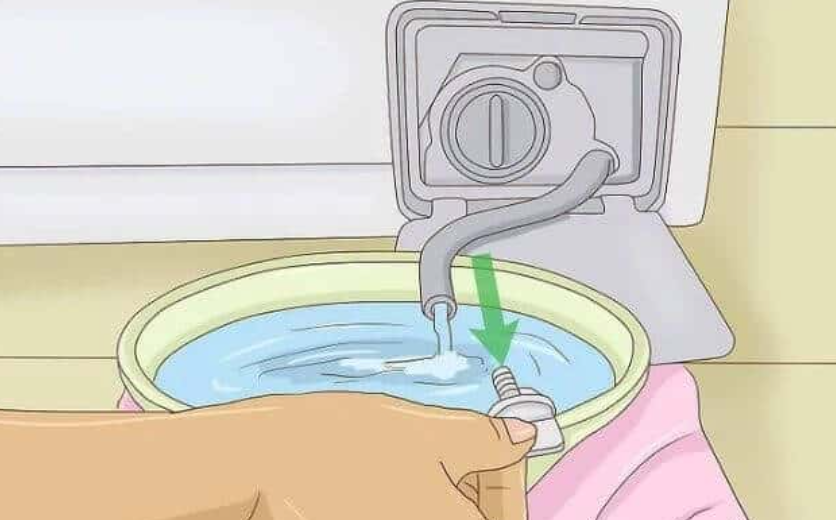
2. Emergency Drain Hose
Front-loading washing machines often have a small hidden drain hose located behind a panel near the bottom front of the machine.
This hose is designed for emergency situations when water cannot be drained automatically.
Steps to use it:
-
Turn off and unplug the machine
-
Open the small panel at the bottom
-
Pull out the drain hose
-
Place a container underneath
-
Remove the cap and let the water flow out
This method is very effective but should be done carefully to avoid spills.
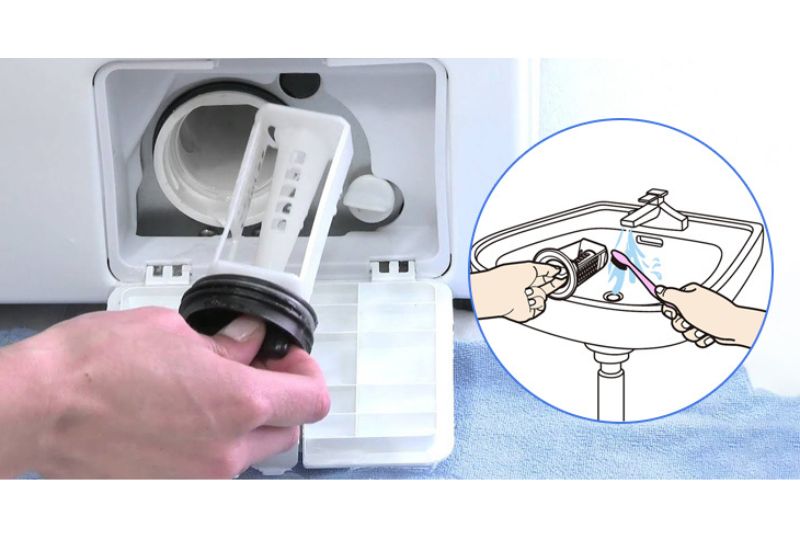
3. Drain Filter Cap
Near the same panel, there is usually a filter cap that can be opened to release water.
This is often used when cleaning the filter, but it can also help drain remaining water inside the machine.
However, opening it too quickly may cause water to spill out, so it should be done slowly.
4. Manual Drain Button (Some Models)
Certain washing machines may include a dedicated drain button or setting, especially in newer or more advanced models.
This feature is designed to simplify water removal and may be labeled differently depending on the brand.
Why Many People Don’t Know About It
The main reason this feature is not widely known is that:
-
It is rarely needed during normal use
-
It is often hidden behind panels
-
Many users do not read the instruction manual
-
The function may be labeled differently across models
As a result, people may struggle with water removal even though the solution is already built into the machine.
Benefits of Knowing This Trick
Understanding how to drain your washing machine quickly offers several advantages:
1. Saves Time
Instead of waiting for a full cycle to finish, you can remove water instantly when needed.
2. Prevents Water Damage
If the machine malfunctions, draining water quickly can prevent leaks or flooding.
3. Helps With Maintenance
Regular cleaning of the drain filter and hose keeps the machine running efficiently.
4. Reduces Stress in Emergencies
Knowing what to do in unexpected situations gives you more control and confidence.
Important Safety Tips
Before using any manual drain method, always follow these precautions:
-
Turn off and unplug the washing machine
-
Prepare a container or towel for water
-
Avoid forcing any parts open
-
Follow instructions specific to your machine model
Safety should always come first when handling electrical appliances.
When to Call a Professional
If your washing machine frequently fails to drain or shows repeated errors, it may indicate a deeper issue such as:
-
Blocked pipes
-
Pump failure
-
Internal mechanical problems
In such cases, it is best to seek professional assistance rather than attempting complex repairs yourself.
Final Thoughts
The “hidden switch” for draining a washing machine is not always a literal switch—it can be a combination of built-in features like drain modes, emergency hoses, or filter caps. While these functions are often overlooked, they can be incredibly useful in everyday situations.
Taking a few minutes to understand your washing machine’s features can save time, prevent problems, and make household tasks much easier.
Sometimes, the most helpful solutions are already there—you just need to know where to look.