These mold-covered corn cobs are highly prized in Mexico and are sold at a price far higher than regular corn.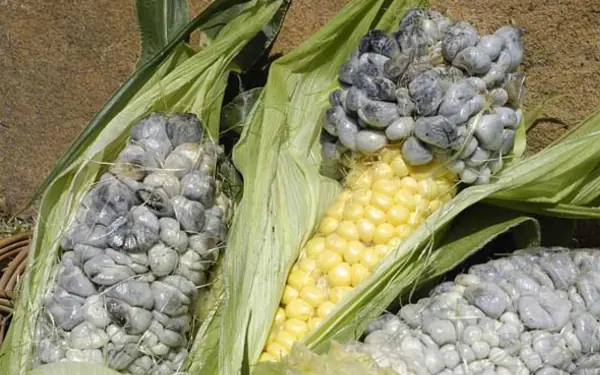
Typically, when you see mold on food, you would consider it spoiled and discard it. However, there is a type of mold that grows on corn that is immensely popular in Mexico. It’s called huitlacoche. This delicacy is also nicknamed “corn fat,” “corn mushroom,” or “Mexican truffle.”
The name huitlacoche comes from Nahuatl, the language of the Aztecs, which is still spoken by over a million people in central Mexico today. The use of this ingredient dates back to that era. Corn was a staple food in the Aztec diet, and they primarily used corn fungus in tamales and stews.
In fact, huitlacoche has been an essential food for the indigenous people of southwestern Mexico for centuries. It was so significant that it played roles in rituals, cooking, and even medicine. From a health perspective, huitlacoche contains more protein than regular corn and has high levels of lysine, an essential amino acid that is lacking in most grains.
However, not everyone is fond of these “diseased” corn cobs. In other countries, farmers typically destroy infected corn plants and replace them with healthy ones. In the United States, huitlacoche has gained recognition and become a gourmet delicacy thanks to Mexican cultural influence.
Using huitlacoche in cooking is quite simple, as it is essentially a type of vegetable and can even be eaten raw. Because it is a soft mushroom, there’s no need to chop or puree it. The easiest way to prepare fresh huitlacoche is to eat it directly or gently tear it apart by hand. Don’t be surprised when the gray fungus turns black when heated—this is a signature characteristic of the ingredient and the reason why many dishes containing huitlacoche have a dark color.
Huitlacoche pairs well with a variety of other ingredients to enhance its unique flavor. Chefs often sauté it and incorporate it into sauces or dishes to highlight its earthy taste. It can be blended with cream to create a delicious sauce for steak, and some restaurants even make huitlacoche flan, adding a savory and aromatic twist to the dessert.