Finding a few ants in your kitchen is common. But when they suddenly start appearing on countertops, floors, windowsills, or even in bedrooms, it can feel like they have come out of nowhere. The good news is that ants usually have a reason for showing up and understanding what attracts them is often the first step toward getting rid of them.
Ants are remarkably persistent insects. Once a worker ant discovers a reliable source of food, water, or shelter, it can leave a chemical trail that helps other ants find the same location.
That means what begins as one or two ants can sometimes turn into a steady stream of tiny visitors.
The solution is rarely as simple as killing the ants you can see.
To reduce an ant problem, you need to understand why they are entering your home in the first place.
1. Food Crumbs May Be Sending Out an Invitation
One of the most common reasons ants enter homes is simple: food.
Ants are opportunistic feeders. They will investigate almost anything that provides usable nutrients.
A few crumbs beneath a toaster may seem insignificant to you.
To a tiny insect, however, those crumbs can represent a surprisingly valuable food source.
Common attractants include:
-
Sugar and sweets
-
Bread and baked goods
-
Fruit
-
Cereal
-
Pet food
-
Greasy food residues
-
Food particles under appliances
-
Spilled drinks
-
Sticky surfaces
Even a countertop that looks clean may contain traces of food that humans cannot easily see.
This is why wiping surfaces with a regular household cleaner and vacuuming floors regularly can make a noticeable difference.
2. Sugary Spills Are Especially Attractive
If ants suddenly appear around a particular area, look for hidden sources of sugar.
A tiny spill from juice, soda, syrup, honey, or another sweet beverage may remain sticky long after the visible liquid has disappeared.
Children's eating areas can be especially prone to small spills and crumbs.
Pet bowls can also become attractive food sources.
Even an empty-looking container may have enough residue to interest ants.
Cleaning the area thoroughly is important because simply removing the visible ants does not remove the scent that attracted them.
3. Your Pet's Food Could Be the Problem
Many people carefully clean their kitchens but forget about pet-feeding areas.
Dogs and cats can leave behind small pieces of food, crumbs, oils, or moisture.
If food remains on the floor for long periods, ants may eventually discover it.
This does not mean you need to stop feeding your pet normally.
Instead, consider keeping feeding areas clean, storing pet food in sealed containers, and removing leftover food when appropriate.
For pets that graze throughout the day, a little extra attention to the surrounding floor can make a difference.
4. Ants Need Water Too
Food is not the only thing that attracts ants.
Water and moisture can be just as important.
A leaking faucet, damp cabinet, condensation around pipes, or a small plumbing leak can create an attractive environment.
Check areas around:
-
Kitchen sinks
-
Bathroom sinks
-
Toilets
-
Pipes
-
Refrigerators
-
Dishwashers
-
Washing machines
-
Air-conditioning equipment
-
Windows
-
Basement or crawl-space areas
A slow leak may be easy for a person to overlook while providing a dependable moisture source for insects.
If ants repeatedly appear near plumbing, finding and correcting the moisture problem may be more important than spraying the ants themselves.
5. Humidity Can Make Certain Areas More Attractive
Homes with consistently high humidity may provide favorable conditions for some ant species.
Bathrooms, laundry rooms, kitchens, and poorly ventilated storage areas can become particularly attractive when moisture accumulates.
Good ventilation can help.
Repairing leaks, drying damp areas, and addressing water intrusion around windows or walls can also reduce the conditions that encourage pests.
This is especially important when ants appear repeatedly even though there is no obvious food source.
6. Weather Changes Can Trigger Ant Activity
Sometimes ants appear suddenly because of what is happening outside your house.
Changes in temperature, rainfall, or soil conditions can influence ant activity and nesting behavior.
Heavy rain, for example, can disturb underground nests and encourage ants to seek drier locations.
During hot or dry conditions, ants may also search for water.
This can make it seem as though they have suddenly “invaded” your house overnight.
In reality, environmental conditions may simply have changed enough to make your home more attractive than it was previously.
7. Your Home May Be Offering an Easy Entry Point
Ants are extremely small.
A gap that appears insignificant to you can be a perfectly usable entrance for them.
They may enter through cracks around windows, doors, foundations, pipes, cables, vents, or other openings.
Once a scout discovers an accessible route inside, other ants may begin using the same path.
That is why sealing gaps can be an important part of long-term prevention.
Pay particular attention to areas where utility lines enter the house and where different construction materials meet.
8. Plants and Landscaping Can Bring Ants Closer to the House
Ants do not necessarily begin inside your home.
Outdoor landscaping may create favorable conditions close to the foundation.
Overgrown vegetation, piles of leaves, mulch, firewood, debris, and certain nesting locations can give ants shelter near the building.
Plants can also support populations of aphids and other insects that produce honeydew, a sugary substance ants often collect.
If vegetation is touching the structure, trimming it back can help create a less convenient path into the house.
9. Sweet Plant Secretions Can Attract Ants
One fascinating relationship in nature involves ants and aphids.
Aphids feed on plant sap and produce a sugary waste product called honeydew.
Some ants collect this honeydew as a food source and may actively protect aphids from predators.
As a result, a plant heavily affected by aphids may also attract more ants.
If you notice ants climbing repeatedly on specific plants, check the leaves and stems for aphids or other sap-feeding insects.
Managing the underlying pest problem may reduce ant activity outdoors and potentially around your home.
10. Garbage and Recycling Can Become Food Sources
Your trash can contain far more attractive material than you might realize.
Food residue on cans, jars, plastic containers, takeout packaging, and other recyclables can provide enough scent to attract ants.
A bin that looks relatively clean from the outside can still contain sticky residue.
Keeping food waste contained, cleaning recycling containers when necessary, and emptying garbage regularly can reduce the available food sources.
This is particularly important during hot weather, when odors can become stronger.
11. Ants May Be Following an Established Scent Trail
One of the most interesting things about ants is the way they communicate through chemicals.
When a worker finds a useful food or water source, it can leave a pheromone trail that helps guide other ants.
Other workers follow the trail.
They may reinforce it.
Soon, you can suddenly see a line of ants traveling along the same route.
That is why wiping away the visible ants may not solve the problem.
The trail itself can continue directing new ants toward the same location.
Cleaning the surface thoroughly can help remove food residue and reduce the scent cues associated with the route.
12. Killing the Visible Ants May Not Solve the Problem
This is one of the biggest mistakes people make.
You see ants.
You spray them.
The ants disappear.
A few hours later, more ants appear.
Why?
Because the colony may still be nearby, and the conditions attracting them have not changed.
The worker ants you see are only part of the colony.
Depending on the species, nests can be located in soil, wall voids, under structures, around landscaping, or in other hidden areas.
The long-term goal is not simply to eliminate the ants you can see.
It is to address the conditions that are supporting their activity.
13. Avoid Creating a Bigger Problem With Random Pesticide Use
When ants suddenly appear everywhere, it can be tempting to use large amounts of insecticide around the home.
That is not always the best approach.
Indoor pesticide use should always follow the product label, especially in homes with children or pets.
Some products are intended for outdoor use only.
Others should never be applied to food-preparation surfaces.
Using more product than recommended does not necessarily mean better pest control.
If an infestation is persistent or involves a location that is difficult to access, professional pest management may be a better option.
14. Keep Food Properly Sealed
One of the simplest preventive measures is also one of the most useful: reduce access to food.
Store foods such as sugar, flour, cereal, cookies, and other dry goods in well-sealed containers.
Clean spills promptly.
Do not leave uncovered food sitting out for extended periods.
Wipe countertops after preparing meals.
Vacuum around appliances and furniture where crumbs can accumulate.
These actions may sound basic, but pest control often depends on consistently removing small resources that support a colony.
15. Don't Forget About Hidden Crumbs
Some of the most attractive food sources are in places people rarely clean.
Think about:
-
Under refrigerators
-
Behind ovens
-
Beneath cabinets
-
Under sofa cushions
-
Around children's high chairs
-
Near pet bowls
-
Inside pantry corners
-
Under small appliances
A few crumbs hidden in a difficult-to-reach area may remain available for days.
Regular vacuuming can help eliminate these overlooked sources.
16. Fix Leaks Before They Become Bigger Pest Problems
If ants repeatedly appear around a sink, bathroom, or appliance, don't assume they simply “like the room.”
Look for moisture.
Check pipe connections.
Inspect under sinks.
Look for water damage.
Check around appliances that use water.
A small leak can contribute not only to pest activity but also to mold, wood damage, and other household problems.
Fixing the underlying issue is more effective than repeatedly treating the insects.
17. Your Houseplants Could Be Involved
Indoor plants can occasionally contribute to pest problems.
Ants may investigate plants that contain aphids, scale insects, or other sources of honeydew.
They may also find moist soil attractive.
Inspect houseplants carefully if ants repeatedly appear around pots.
Look beneath leaves and around stems for small insects or sticky residue.
Cleaning plant areas and addressing any underlying plant-pest problem can help.
18. When Should You Be More Concerned?
Seeing a few ants occasionally is usually not a major cause for concern.
However, persistent or rapidly increasing activity deserves closer attention.
Pay particular attention when:
-
Ants appear in large numbers repeatedly
-
You find ants in multiple rooms
-
They emerge from wall cracks or structural gaps
-
You repeatedly see them despite thorough cleaning
-
There appears to be a nest inside or immediately adjacent to the building
-
You see unusually large ants or winged ants indoors
Winged ants can sometimes indicate a mature colony nearby, although identification depends on the species and circumstances.
When the source is unclear, professional identification can be useful.
19. Identifying the Species Can Matter
Not every ant behaves the same way.
Different species prefer different foods, nesting locations, and environmental conditions.
Some are more likely to nest outdoors and enter buildings only while foraging.
Others may establish colonies in wall voids, wood, insulation, or other parts of a structure.
That's why a professional may ask about the ants' size, color, behavior, where they are appearing, and whether they are carrying food.
Correct identification can make treatment more targeted.
20. A Simple Strategy for Reducing Ant Activity
Instead of focusing only on the ants you see, think of the problem as a series of questions.
What are they eating?
Where are they getting water?
How are they getting inside?
Where might they be nesting?
What environmental change may have triggered the activity?
Once you start answering those questions, the situation becomes much easier to understand.
Clean food residues.
Reduce moisture.
Seal entry points.
Improve sanitation around pet-feeding and garbage areas.
Trim vegetation away from the structure.
Address outdoor pest problems when relevant.
And monitor whether activity decreases.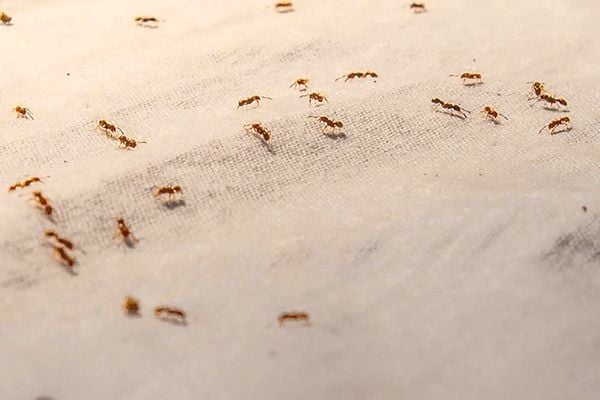
The Bottom Line
When ants suddenly appear everywhere, there is usually a reason.
They may be following food crumbs, sugary spills, pet food, moisture, or an established scent trail. Weather changes can also influence their behavior, while cracks and gaps provide easy access into your home.
The most effective long-term approach is usually not simply killing the ants you can see. It is removing the food and water sources, blocking entry routes, improving sanitation, and addressing conditions that make your home attractive to them.
A few ants do not necessarily mean your house is dirty.
Sometimes a tiny leak, a forgotten crumb, a nearby nest, or a change in weather is all it takes.
Once you figure out what is attracting them, getting control of the problem becomes much easier.