You reach into the pantry to grab a few potatoes for dinner—and notice something unexpected.
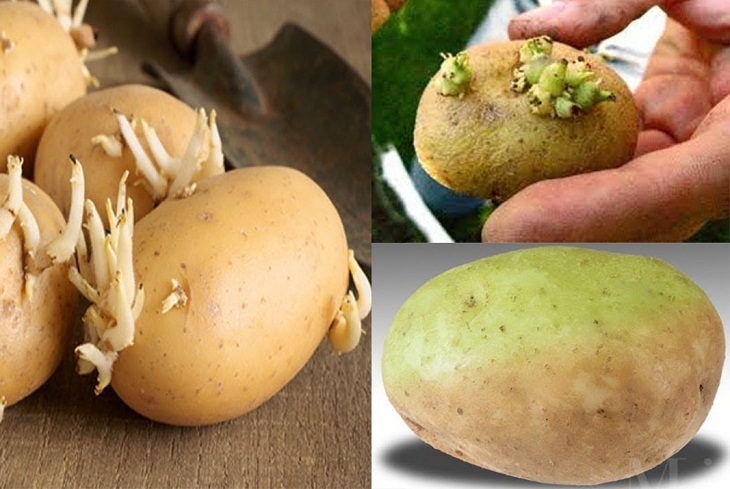
Small green shoots have started growing from the potatoes.
At first, it may seem harmless. After all, potatoes are vegetables, and a few tiny sprouts don't necessarily make them look spoiled. Many people simply cut the sprouts off and continue cooking as usual.
But is that actually safe?
The answer is a little more complicated than simply “yes” or “no.”
Sprouted potatoes can contain naturally occurring compounds called glycoalkaloids, particularly solanine and α-chaconine. These compounds are part of the potato plant's natural defense system and tend to become more concentrated when potatoes are exposed to light, damaged, or begin to sprout.
That doesn't mean every potato with a tiny sprout is automatically dangerous. However, it does mean that the condition of the potato matters.
Here's what you should know before deciding whether to eat a potato that has started sprouting.
🥔 Why Do Potatoes Sprout?
Potatoes are technically modified underground stems called tubers. When harvested and stored, they remain alive.
Given the right conditions, a potato can eventually begin producing new shoots. Those sprouts are the plant's attempt to grow a new potato plant.
Several factors can encourage sprouting, including:
-
Warm storage temperatures
-
Exposure to light
-
Long storage periods
-
Humidity
-
Physical damage
-
Natural aging
That's why potatoes left in a warm kitchen cabinet for several weeks may eventually develop small “eyes” with shoots growing from them.
A potato that has started sprouting isn't necessarily rotten. Sprouting is a natural biological process.
The bigger question is what else is happening to the potato at the same time.
🌱 What Are Those Green Sprouts?
The sprouts themselves are growing plant tissue.
They commonly emerge from the small indentations known as “eyes” on the surface of the potato.
As sprouting progresses, the shoots may become:
-
White or pale
-
Greenish
-
Purple
-
Long and thin
-
Thick and prominent
The color and size of the sprout can vary depending on the potato variety and storage conditions.
However, the presence of sprouts is a useful warning sign that the potato has undergone changes during storage.
More importantly, sprouting can occur alongside an increase in naturally occurring glycoalkaloids.
⚠️ What Are Glycoalkaloids?
Glycoalkaloids are naturally occurring chemical compounds found in plants in the nightshade family, which includes potatoes.
In potatoes, the two main glycoalkaloids are:
α-solanine and α-chaconine.
These compounds serve as part of the plant's natural defense system against pests and other threats.
Small amounts naturally occur in potatoes and are generally not a concern for most people.
The concern arises when concentrations become unusually high.
Levels can increase in potatoes that are:
-
Green
-
Sprouted
-
Damaged
-
Bitter
-
Exposed to light
-
Poorly stored
This is why a heavily sprouted or green potato deserves more caution than a firm potato with only one or two tiny shoots.
🟢 Does a Green Potato Mean It's Poisonous?
Not necessarily—but it's a reason to be cautious.
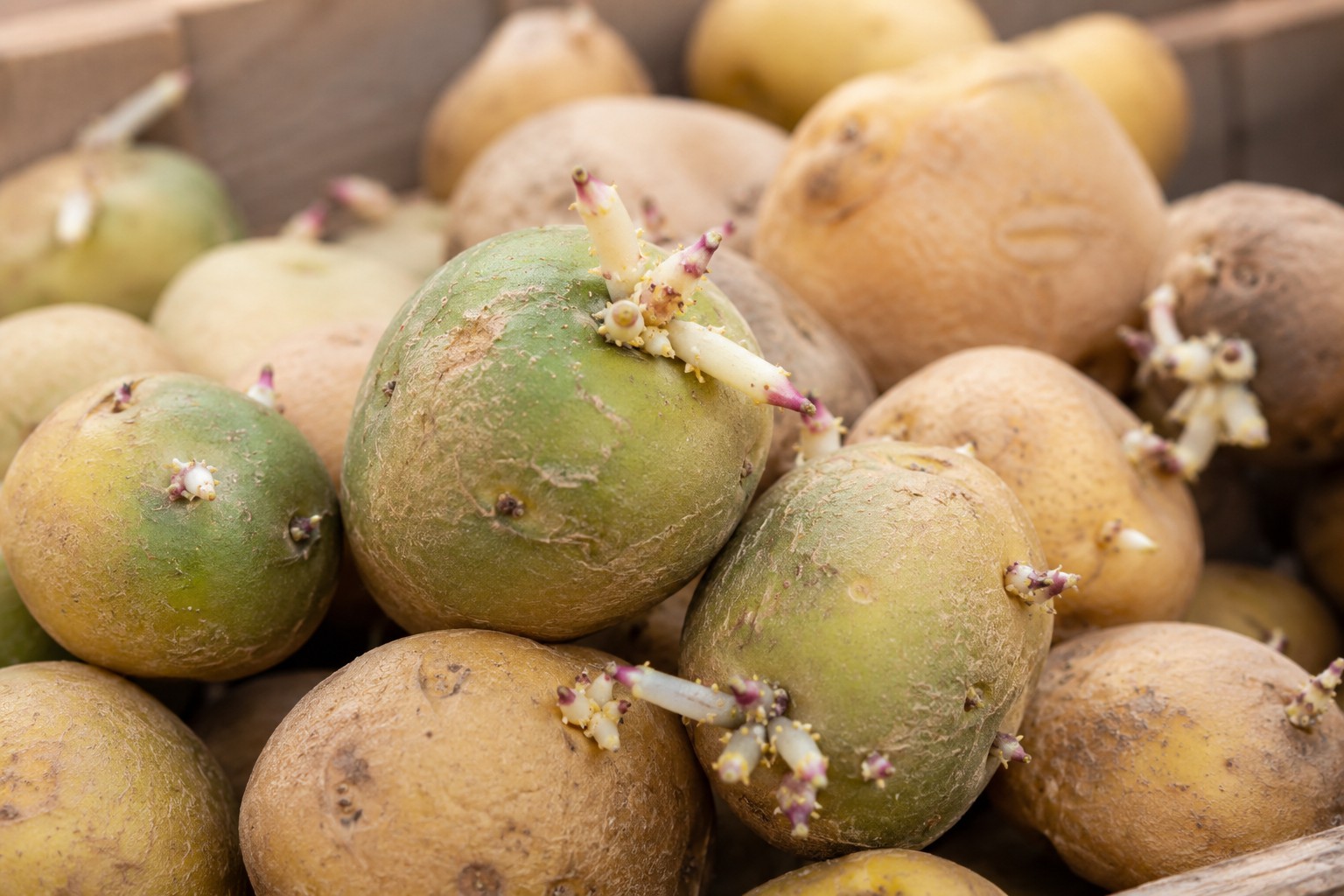
A green color on a potato's skin is usually caused by chlorophyll, which develops when the potato is exposed to light.
Chlorophyll itself isn't the toxic compound.
However, increased greening can occur alongside increased glycoalkaloid levels. In other words, the green appearance can be a useful visual warning that the potato may have experienced conditions associated with higher glycoalkaloid concentrations.
This is why heavily green potatoes are generally best avoided.
If only a small area of the skin has turned green, some food-safety guidance recommends removing the green portions generously before cooking. But if the potato is extensively green, heavily sprouted, bitter, or otherwise deteriorated, throwing it away is the safer choice.
🔪 Can You Just Cut Off the Sprouts?
This is one of the most common questions.
The answer depends on the condition of the potato.
If a potato is still:
-
Firm
-
Not significantly green
-
Free from mold
-
Not rotten
-
Not unusually bitter
-
Only lightly sprouted
then removing the sprouts and the surrounding area can reduce exposure to compounds concentrated near the sprouts and skin.
It's better to cut out the entire sprout and its base, rather than simply snapping off the visible tip.
Peeling the potato can also remove some glycoalkaloids because these compounds tend to be more concentrated in the skin and outer layers.
But this doesn't mean peeling can make every heavily sprouted potato safe.
If the potato is very green, badly shriveled, extensively sprouted, moldy, rotten, or bitter, it's better not to take the chance.
🍳 Does Cooking Destroy the Toxins?
Here's another common misconception:
Cooking does not reliably eliminate potato glycoalkaloids.
Boiling, baking, frying, or microwaving can affect their concentration to some extent, but ordinary cooking should not be considered a guaranteed way to make a heavily affected potato safe.
This is important because someone might think:
“I'll just cook it really well, and everything dangerous will disappear.”
That's not a reliable approach.
Instead, the safest strategy is to start with potatoes that are properly stored and in good condition.
Preparation can help reduce exposure, but it shouldn't be used as an excuse to eat potatoes that are clearly deteriorated.
😖 What Does a Dangerous Potato Taste Like?
One useful clue is bitterness.
Potatoes with unusually high glycoalkaloid concentrations may have a bitter taste or unpleasant sensation in the mouth.
However, you should not deliberately taste a suspicious potato to test whether it's safe.
If a potato looks significantly green or deteriorated, there's no reason to sample it.
A bitter taste discovered during normal eating is another reason to stop eating it rather than continuing with the meal.
🚨 What Happens If Someone Eats Too Many Glycoalkaloids?
Consuming potatoes containing unusually high levels of glycoalkaloids can cause gastrointestinal and neurological symptoms.
Possible symptoms include:
-
Nausea
-
Vomiting
-
Abdominal pain
-
Diarrhea
-
Headache
-
Dizziness
-
Confusion
-
Weakness
The severity depends on factors such as the amount consumed and the concentration of glycoalkaloids.
Serious poisoning is uncommon, but it is possible when potatoes contain exceptionally high concentrations.
If someone develops significant or persistent symptoms after eating suspicious potatoes, particularly severe vomiting, confusion, weakness, or other concerning symptoms, medical advice should be sought promptly.
👀 What Should You Look for Before Cooking?
Before putting potatoes into a meal, take a few seconds to inspect them.
Look for these warning signs:
Extensive green coloring
A little discoloration isn't necessarily an emergency, but widespread greening is a reason to discard the potato.
Heavy sprouting
A few small shoots on an otherwise healthy potato are different from a potato covered in long, developed sprouts.
Softness or shriveling
Potatoes naturally lose moisture over time. A slightly wrinkled potato isn't automatically unsafe, but severe shriveling combined with other warning signs suggests that it's past its best.
Mold
Visible mold is a clear reason to discard the potato.
Rot or unpleasant odors
Soft, wet, decaying areas indicate deterioration.
Strong bitterness
An unusually bitter taste is a warning sign, although you shouldn't taste questionable potatoes intentionally.
🧺 How Should You Store Potatoes to Reduce Sprouting?
Proper storage can make a surprisingly big difference.
Potatoes generally keep best in a cool, dark, dry, and well-ventilated place.
Avoid leaving them:
-
In direct sunlight
-
Next to a hot appliance
-
In a warm pantry
-
In sealed plastic without ventilation
-
In excessively humid conditions
A paper bag, cardboard box, or breathable storage container can help protect potatoes from light while allowing some airflow.
You should also inspect stored potatoes periodically and remove any that are beginning to rot.
One spoiled potato can sometimes accelerate deterioration among potatoes stored nearby.
🧊 Should You Keep Potatoes in the Refrigerator?
This is an area where storage advice can vary depending on the type of potato and local food-safety recommendations.
Traditionally, potatoes have often been stored outside the refrigerator in a cool, dark location because very cold temperatures can alter the potato's starch and affect cooking characteristics.
For everyday home storage, the key principles are more important:
Keep potatoes dark, cool, dry, and well ventilated.
If you buy potatoes in quantities larger than you can use quickly, consider how long you expect to store them and follow the storage instructions appropriate for the product and your local food-safety guidance.
🍎 Don't Store Potatoes Next to Onions
Another useful kitchen tip is to avoid storing potatoes and onions directly together.
Both foods release gases during storage, and storing them together can contribute to faster deterioration.
Instead, keep them in separate, well-ventilated areas.
This simple habit can help extend their storage life and reduce unnecessary waste.
🥔 What About Potatoes That Have Only Tiny Sprouts?
This is where common sense and careful inspection matter.
Imagine you find a potato with one or two tiny sprouts.
The potato is still firm.
The skin isn't significantly green.
There is no mold, rot, or strange smell.
In this situation, removing the sprouts and surrounding tissue and then thoroughly cooking the potato may be reasonable according to many food-safety recommendations.
Now imagine a different potato.
It's soft and heavily wrinkled. Several long sprouts cover the surface. Large portions have turned green, and the potato tastes bitter.
That's a very different situation.
Throwing it away is the sensible choice.
The goal isn't to panic every time a potato sprouts.
The goal is to recognize when a potato has gone beyond a condition in which it's worth using.
💡 Why Wasting Food Isn't Always the Best Reason to Take a Risk
Food waste is a real concern.
Nobody wants to throw away perfectly usable food, especially when grocery prices continue to rise.
But trying to save every potato isn't always worth the risk.
If a potato is only lightly sprouted and otherwise looks healthy, careful trimming may allow you to use it.
If it's heavily green, rotten, moldy, or otherwise questionable, the cost of one potato is small compared with the potential consequences of eating spoiled or excessively glycoalkaloid-rich food.
When in doubt, it's better to discard it.
🔍 The Bottom Line
So, are sprouted potatoes safe to eat?
Sometimes but not every sprouted potato should be eaten.
A potato with a few small sprouts may still be usable if it remains firm and otherwise looks normal. Remove the sprouts and surrounding tissue, and consider peeling it before cooking.
But if the potato is heavily sprouted, extensively green, bitter, moldy, rotten, or badly deteriorated, it's safest to throw it away.
And remember: cooking isn't a guaranteed way to eliminate glycoalkaloids.
The best protection starts before you even cook the potato: store it properly, keep it away from light, inspect it regularly, and use older potatoes before they become heavily sprouted.
One Small Kitchen Habit Can Make a Difference
The next time you open your pantry and see a potato beginning to sprout, don't automatically panic—and don't automatically toss it either.
Take a closer look.
Is it still firm?
Is the skin mostly normal?
Are the sprouts small?
Is there any mold, rot, extensive greening, or unusual bitterness?
Those simple observations can help you make a better decision.
Potatoes are inexpensive, versatile, and nutritious when properly prepared. But like any food, their condition matters.
A tiny sprout doesn't necessarily mean dinner is ruined.
A potato that's green, rotten, heavily sprouted, and bitter is another story.
When it comes to questionable food, knowing when to save it and when to let it go is the real kitchen skill.