Wise people should not install these 6 types of ceiling lights or they will waste money and cause trouble.
Ceiling lights will greatly affect the "face" of your living space.
When decorating a new home, choosing ceiling lights can be a challenge. With a diverse market of eye-catching ceiling lights and different price points, many people often feel confused about where to start.
After many times of changing ceiling lights in my house, I realized that when buying this device, I need to follow the "6 no" rule.
1. Do not create a gap between the ceiling and the light when installing.
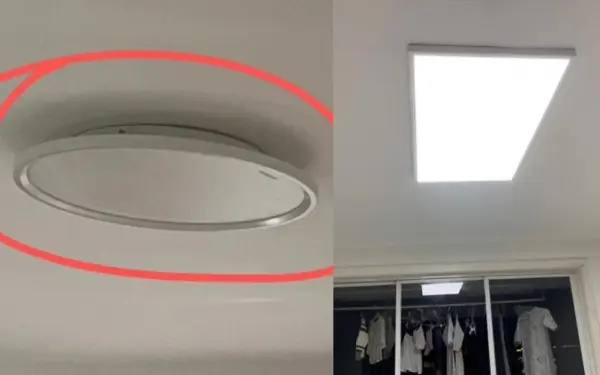
When installing ceiling lights, you should pay attention to choosing gaps near the ceiling. Some types of lights have a large gap between the light and the ceiling, which may not be obvious at first, but over time, dirt and insects such as mosquitoes will easily accumulate in these gaps.
Furthermore, high hanging lights can make a room that is already low feel even more stuffy and dull. When the light shines down, the ceiling will appear unsightly dark shadows. In contrast, ceiling lights mounted directly on the ceiling help prevent dust and insects from entering effectively. They only need to be gently wiped with a dry cloth to keep them clean.
Even if the apartment does not have the ideal floor height, installing ceiling lights in a reasonable position can still help the space become bright and fresh. Even lighting and no blind spots will make the space more impressive and practical.

2. Do not choose plastic lampshades, choose acrylic lampshades.
When choosing lampshades for ceiling lights, many people are often attracted to plastic products because of their low price. However, after a short period of use, plastic lampshades often encounter many problems, such as turning yellow, becoming brittle and cracking easily when touched.
Moreover, the light transmittance of plastic lampshades is quite poor, causing the light emitted to be dim, as if covered by a layer of fog, making the space dark and lifeless. On the contrary, lampshades made of acrylic bring many outstanding benefits. With high light transmittance, acrylic lampshades not only emit clear and bright light but also help to illuminate the room effectively.
Acrylic material is also very sturdy, resistant to wear and aging, so it still retains its new look after many years of use. Therefore, investing a little more in acrylic lampshades not only brings aesthetic value, but also ensures durability and lighting efficiency for your living space.
3. Don't choose a light that lacks spectrum, choose one that has full spectrum.
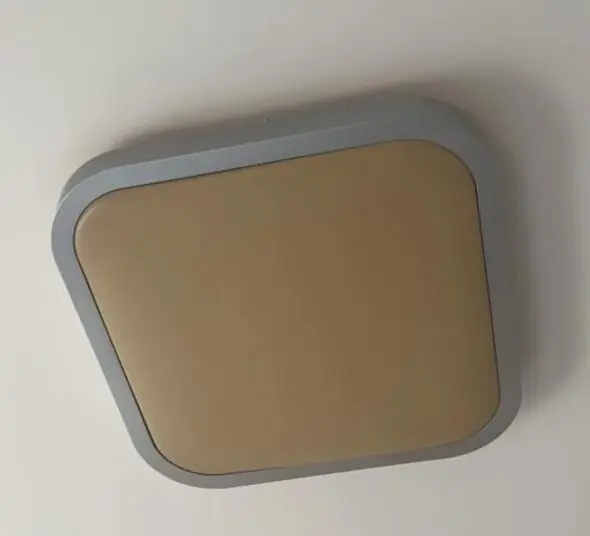
When choosing lighting, opt for full spectrum lighting over deficient lighting, especially those with too much blue light. Prolonged exposure to this type of light can cause dry, sore eyes and can also affect your body's internal clock, making it difficult to fall asleep at night.
In particular, children can experience rapid vision loss when reading or doing homework under inappropriate lighting. In addition, lamps with incomplete spectrums also cause poor color rendering, distorting the colors of clothes and paintings, making the living space less attractive.
In contrast, full-spectrum ceiling lights are like bringing a “little sun” into the house. Its light is close to natural light, helping to restore the true color of objects and creating a comfortable feeling for the eyes.
4. Do not choose lamps with low color rendering index
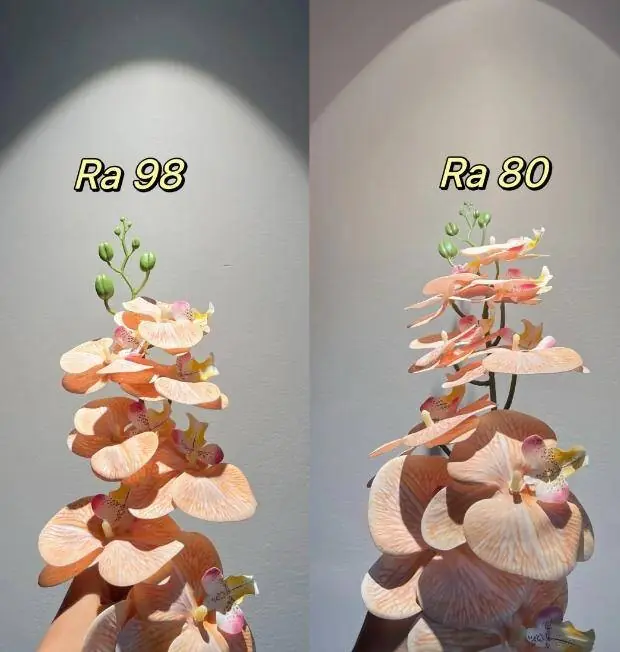
When choosing ceiling lights, avoid those with a low color rendering index (CRI). Under the light of these types of lights, the color of objects will change, such as a red sofa becomes a dark red, green plants lose their vitality, and food becomes less attractive.
Using poor quality lighting for a long time not only affects the aesthetics of the living space, but also reduces the ability of the eyes to distinguish colors. This is especially serious for those in the family who work in painting, photography or fields that require high color accuracy.
In contrast, ceiling lights with a high color rendering index, usually greater than 90, emit light similar to natural sunlight. This light helps highlight every detail and color in your home, bringing a feeling of comfort and ease. From there, the living space not only becomes more beautiful, but also better supports your family's daily activities.
5. Do not choose lamps that emit direct light.
When choosing ceiling lights, avoid those that emit direct light, as they are often glaring and only illuminate a small area. This makes many corners of the room dark, making it easy to bump into them when you move around at night.
Concentrated light and strong contrast between light and dark areas can make your eyes feel tired after a long time. In contrast, ceiling lights emit ambient light, creating a more pleasant atmosphere. The light from these sources usually spreads from one side, covering the entire room evenly without creating dead corners or shadows.
This type of light is not only soft and not dazzling, but also brings a warm and comfortable feeling to the living space. When you enter the room, you will feel relaxed immediately, helping to create a friendly and pleasant home environment.
6. Do not choose monochromatic light
When choosing ceiling lights, avoid monochromatic lighting, as it often remains the same color throughout its use. This can make the atmosphere in the room monotonous, and easily cause drowsiness.
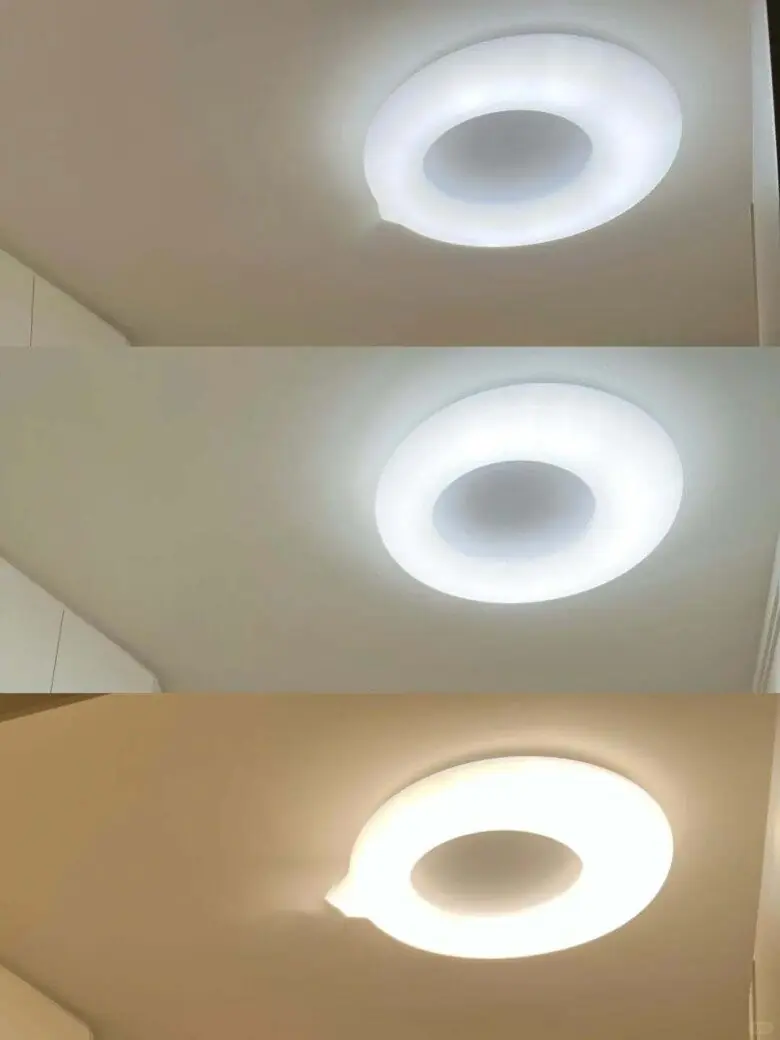
If you want to read a book before bed or adjust the brightness when hanging out with friends, monochromatic lighting won't provide the flexibility you need to fit your lifestyle. Instead, consider ceiling lights with three-tone lighting or infinitely dimmable options.
With these lamps, you can easily switch between cold, warm and natural light at will, and adjust the brightness freely. When resting, you can choose warm yellow light to create a comfortable feeling. On the contrary, when working, switching to cool white light will help you stay awake and focus better.