From ancient cave paintings to modern boardrooms, hand gestures have served as a silent language capable of expressing peace, hostility, respect, or rebellion. Let's explore the history and hidden meanings behind some of humanity's oldest and most enduring hand gestures.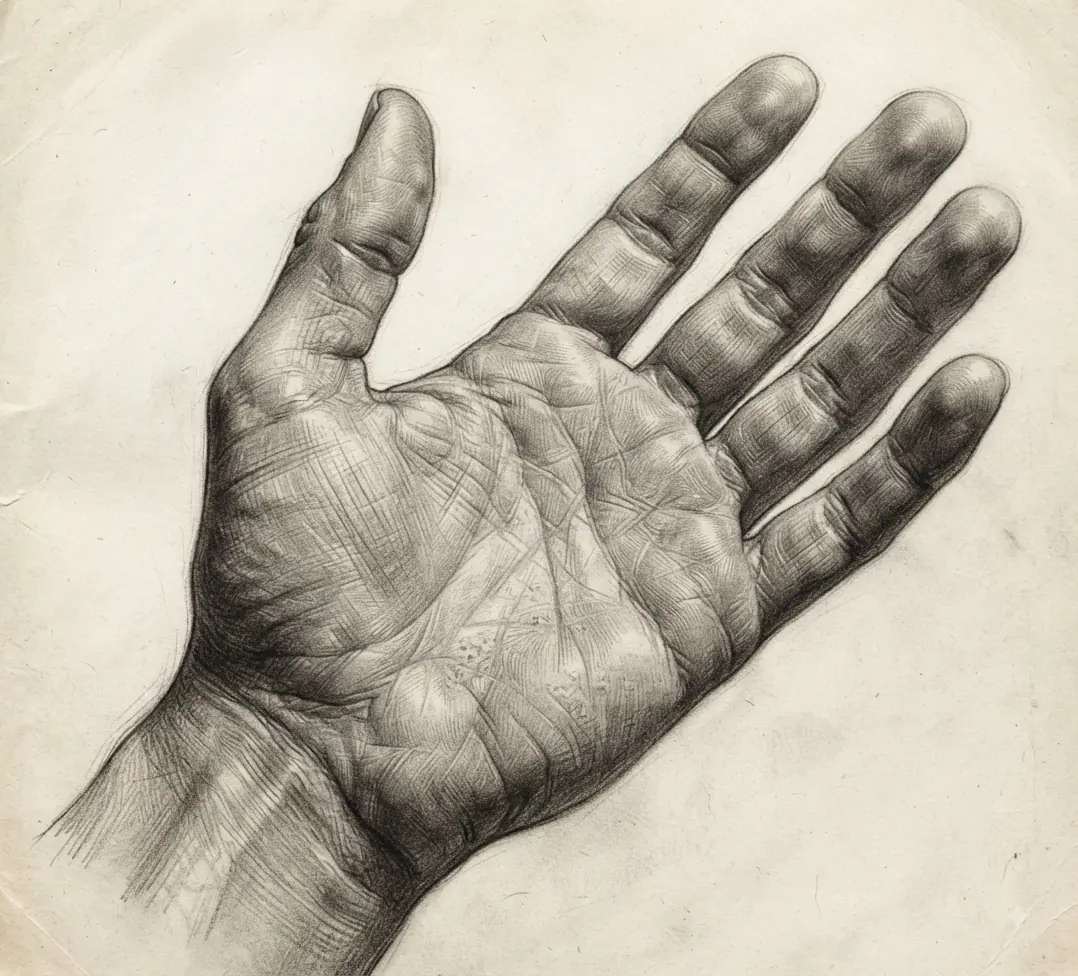
1. The Open Palm and the Handshake: A Declaration of Peace
One of the oldest recorded interactions in human history is the simple act of extending an open hand or clasping hands in a greeting.
-
The Origin: Archaeological records and ancient art—such as depictions found in 5th-century B.C. Greece—show that the handshake and open-palm display were foundational parts of early civilization. Homer even referenced it in The Odyssey.
-
The Meaning: Originally, showing an open palm or extending your hand meant one critical thing: you weren't carrying a weapon. It was a physical guarantee of safety, trust, and goodwill. Over centuries, the rhythmic shaking motion evolved into a formal pledge of mutual respect and agreement.
2. Waving Hello and Goodbye: The Primal Beacon
Have you ever waved awkwardly at someone across a room? If so, you are participating in a ritual tens of thousands of years old.
-
The Origin: Anthropologists believe hand-waving is among the earliest recognized gestures, with cave art dating back 35,000 years hinting at early forms of hand-signaling.
-
The Meaning: Much like the open palm, waving began as a natural way to call attention to oneself while simultaneously proving harmlessness from a distance. As societies grew more structured, it transitioned smoothly into standard etiquette for greetings and farewells.
3. The Middle Finger: Ancient Rome's Favorite Insult
While many hand gestures are rooted in diplomacy, others were created purely to cause offense.
-
The Origin: Flashing "the bird" is far from a modern invention; it dates back to ancient Rome, where it was known as the digitus impudicus (the indecent finger).
-
The Meaning: To the Romans, the extended middle finger represented a phallic symbol. Curiously, it wasn't just used to insult people—it was frequently deployed as a superstitious ward against the "evil eye," believed to protect the user from curses and malicious stares. Over the centuries, its defensive magic faded, leaving only its pure, rebellious attitude toward authority.
4. Crossing Your Fingers: A Quiet Plea for Divine Protection
When we cross our fingers today, we do so out of habit, hoping for good luck or a favorable outcome.
-
The Origin: This gesture gained major traction in medieval Europe, heavily influenced by Christian traditions.
-
The Meaning: People in medieval times revered symbols shaped like crosses. Crossing fingers served as a subtle, low-key version of invoking a crucifix. It was a way to quietly summon divine backup or solidarity during uncertain times without drawing unwanted attention.
5. Clapping: The Sound of Approval
Whether celebrating a theatrical performance, a sports victory, or a safe airplane landing, clapping is a reflex we rarely question.
-
The Origin: Clapping is likely as old as human communication itself. However, it was systematically institutionalized in ancient Rome, where theaters hired professional "clappers" (laudatores) to guarantee lively audience reactions.
-
The Meaning: It remains a universal acoustic cue for praise, shared joy, and collective validation.
A Language That Needs No Translation
Gestures remind us that human communication has always relied on more than just words. They are living artifacts of our ancestors' fears, hopes, and social codes.
So, the next time you wave to a friend, shake someone's hand, or catch yourself flashing a thumbs-up, remember: you are carrying on a conversation that started thousands of years ago.