Chelsea's recollections place that universal experience at the center of a childhood that was anything but ordinary.
The White House may have been her childhood address, but family remained the place where she sought normalcy.
A Different Kind of Legacy
Political legacies are usually measured through elections, policies, speeches, victories, controversies, and historical milestones.
Family legacies are different.
They are measured through conversations remembered years later.
Through values passed from one generation to the next.
Through the confidence a parent gives a child.
And through the ability to remain grounded even when the world is watching.
That is the quieter legacy reflected in Chelsea's memories.
The public may remember Bill Clinton for his presidency and the major events that defined his time in office. Chelsea's memories, however, are also shaped by the private moments that existed beyond the headlines.
For her, he was not simply a political figure whose name appeared in history books.
He was the father who asked about school, encouraged her ambitions, and tried to preserve a sense of family amid extraordinary circumstances.
The Human Side Behind the Headlines
Chelsea Clinton's story offers a reminder that public history and private life are rarely as separate as they appear.
Behind every major political figure is a family experiencing the consequences of public attention in deeply personal ways.
Behind every headline are people whose lives continue after the cameras move on.
And behind the public image of a powerful father can be the much simpler image remembered by his daughter: someone who made time to listen, encouraged her to stand confidently on her own, and reminded her that the family bond mattered even when everything outside the home felt chaotic.
Those memories do not belong to the political world.
They belong to the personal one.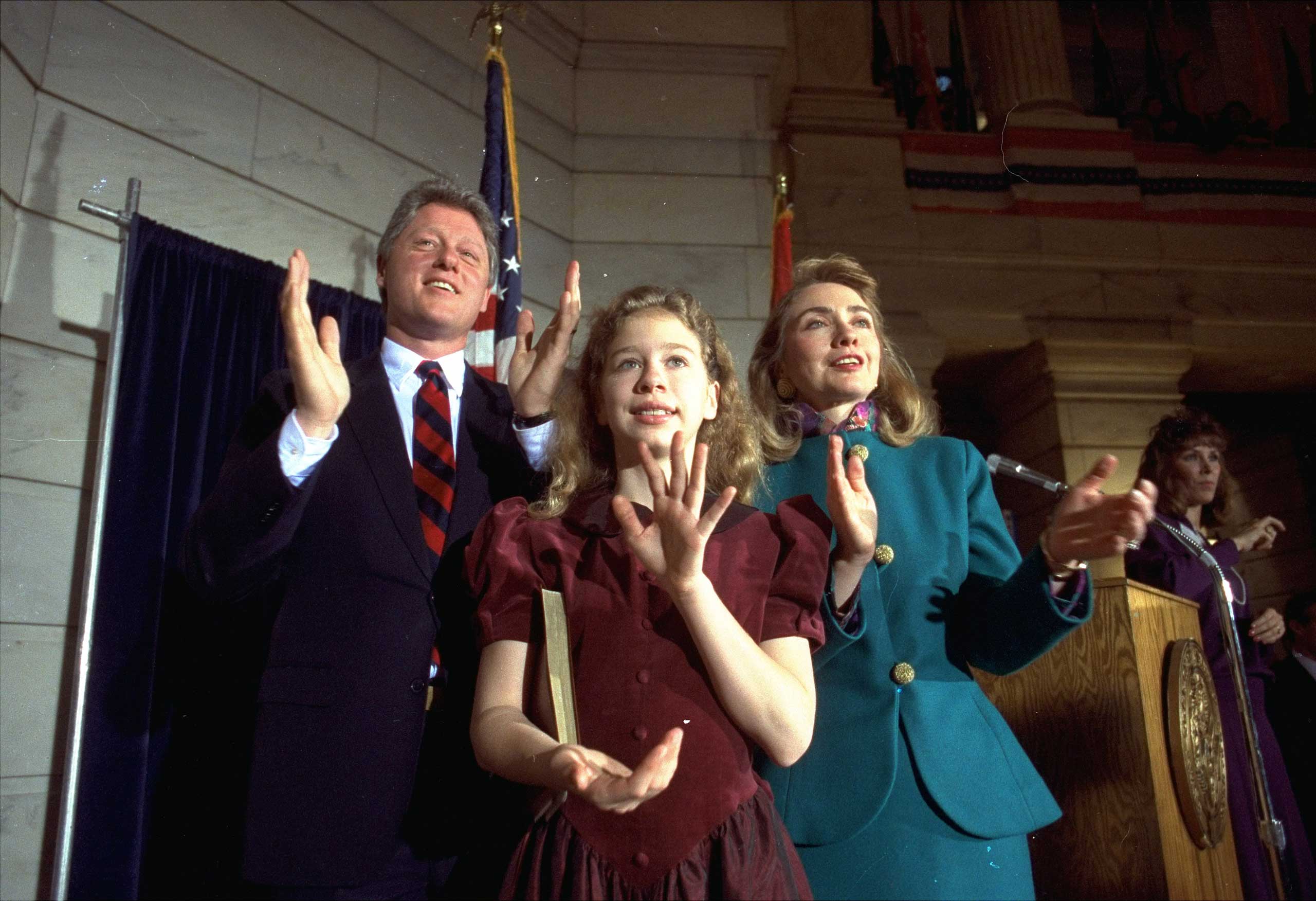
And perhaps that is why they can carry so much emotion.
At the end of the day, history may remember presidents, elections, scandals, and speeches. But for a daughter looking back on her childhood, the memories that remain strongest may be much quieter—the conversations, encouragement, and ordinary family moments that helped her become the person she is today.
Beyond the Headlines: The Family Experiences That Shaped Chelsea Clinton
Growing up in a family that attracted constant public attention meant that Chelsea Clinton experienced an unusual childhood. Her father’s political career placed the family at the center of national conversations, while her mother’s professional ambitions and public service created an environment in which education, responsibility, and civic engagement were important themes.
Yet the experience of growing up in a prominent political family cannot be understood through headlines alone. Public appearances reveal only a small part of family life. They do not show every private conversation, disagreement, ordinary routine, or moment of uncertainty that shapes a relationship between a parent and a child.
For Chelsea, one of the defining challenges was learning how to develop her own identity while living in the shadow of her father’s public reputation.
Bill Clinton was known around the world as a former governor of Arkansas and later as the president of the United States. His decisions, speeches, successes, and controversies became subjects of public debate. As his daughter, Chelsea inevitably became associated with that history, even though she had no control over the political events that surrounded her family.
Growing up under those circumstances required a distinction between public identity and private identity. The person the world discussed was a political leader. The person Chelsea knew as her father was also a family member whose relationship with her developed through the experiences of everyday life.
Those two versions of the same person could never be entirely separated, but neither were they identical.
Learning to Build an Independent Life
As Chelsea moved into adulthood, education became an important part of her personal and professional development. She attended Stanford University before pursuing graduate studies at the University of Oxford and later completing a public health degree at Columbia University.
Her academic path reflected interests that extended beyond the political world in which she had grown up. Public health, international development, education, and the well-being of children became central areas of her work.
These interests also allowed her to contribute to public life in her own way. Rather than relying exclusively on her family name, she developed professional experience and pursued projects connected to social issues.
Her work with the Clinton Foundation included initiatives focused on improving the lives of children and families. She also became involved in efforts to encourage early childhood development, strengthen health initiatives, and expand opportunities for young people.
Through these activities, Chelsea demonstrated that a person's background can influence their opportunities without completely determining their future.
Having access to influential networks may create advantages, but maintaining a meaningful career still requires effort, judgment, and a willingness to take responsibility for one's work. Her professional life has unfolded within a complicated combination of public recognition, institutional connections, personal interests, and expectations attached to her family name.
That complexity is important when considering her relationship with her father. Their family history is only one part of her identity, not the entirety of it.