These materials have different fire characteristics.
The amount stored, the arrangement of storage areas, the availability of ventilation, and the presence of ignition sources can all influence how a fire develops.
A storage area with tightly packed combustible goods may be difficult for firefighters to access.
If flames reach concealed spaces or spread through connected storage sections, extinguishing the fire can become more complicated.
Businesses must therefore consider fire safety when designing warehouses and arranging their inventory.
Keeping combustible materials away from electrical equipment and heat-producing machinery is an important precaution.
4. Hot Work and Maintenance Activities
Industrial facilities sometimes carry out welding, cutting, grinding, and other maintenance activities.
These operations can produce sparks or hot particles capable of igniting nearby combustible materials.
For this reason, businesses commonly use hot-work permits and controlled procedures for activities that create ignition risks.
Before work begins, the surrounding area should be checked for combustible materials. Appropriate fire protection equipment should be available, and the work area should be monitored afterward.
A fire can sometimes develop after maintenance work has ended if a hidden hot particle remains capable of igniting nearby materials.
This is why proper supervision and post-work inspection are important.
None of these possible causes has been established as the explanation for the Puchong incident. They are examples of the issues that investigators may consider when examining an industrial fire.
What Happens During an Official Fire Investigation?
A major factory fire requires more than an immediate firefighting response.
Once the scene is sufficiently safe, investigators may need to examine the origin and development of the blaze.
The first stage is generally to secure the affected area.
Access may be restricted because damaged buildings can contain unstable walls, weakened roofs, exposed electrical systems, and other hazards.
Investigators may then examine the physical condition of the premises.
The location of the most severe damage can provide clues about how the fire developed, although it cannot independently establish the cause.
Investigators may also review electrical systems, machinery, maintenance records, surveillance footage, and information provided by employees or witnesses.
Depending on the circumstances, technical specialists may be required to examine particular equipment or materials.
In an incident involving four adjoining factories, the investigation may need to establish the relationship between the original fire and the subsequent spread.
For example, investigators would need to distinguish between the building where the fire began and the neighboring premises that were damaged later.
That distinction is important for understanding the incident and assessing any potential legal or insurance responsibilities.
It is equally important not to confuse an early eyewitness description with a confirmed investigation finding.
A witness might hear a loud noise, notice smoke, or see flames coming from a particular part of a building. Such observations can help investigators, but they do not necessarily identify the source of ignition.
The same caution applies to claims circulating on social media.
A photograph of flames does not establish that an explosion occurred. A video showing a building burning does not reveal whether the cause was electrical, mechanical, chemical, or accidental.
The available reports about the Puchong fire confirmed the destruction of four factories and the emergency response, but did not establish the cause.
That distinction should remain clear in any accurate account of the incident.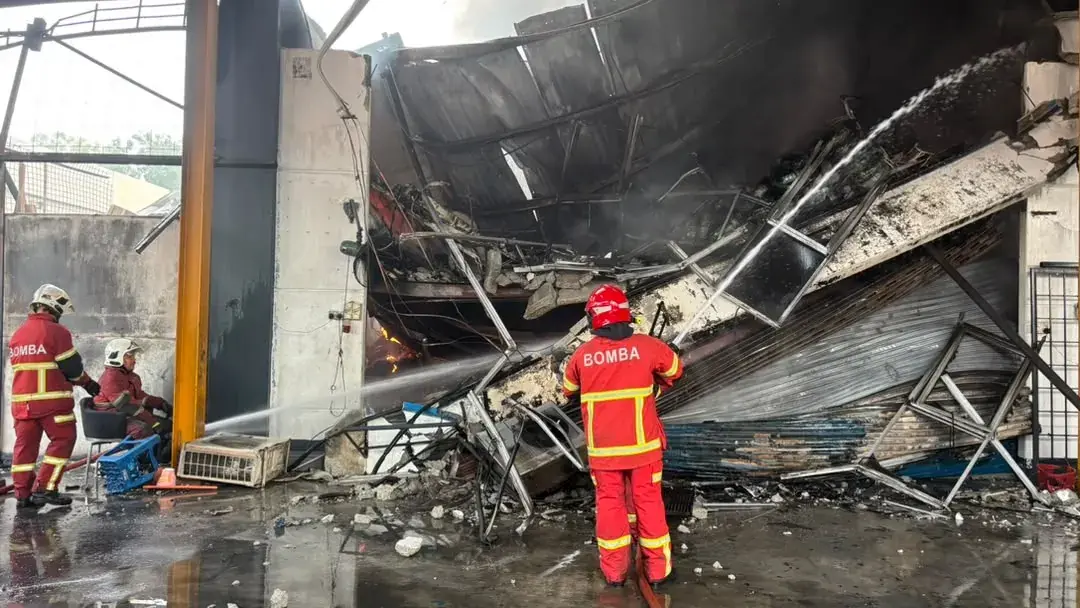
The Human Impact Behind the Destroyed Buildings
Photographs of major fires often focus on flames, smoke, damaged roofs, and emergency vehicles.
Yet the consequences extend beyond the physical structures.
Every factory is connected to a network of people whose livelihoods may depend on its continued operation.
These include business owners, employees, contractors, delivery drivers, suppliers, customers, maintenance workers, and families.
When a factory is badly damaged, the effects can spread through that network.
Workers Face Uncertainty
Employees may suddenly find that their workplace is no longer operational.
For some, the immediate concern may be whether everyone escaped safely. Once that question has been answered, other worries can emerge.
Will the factory reopen?
Will their jobs continue?
How long will repairs take?
Will the company be able to replace its equipment?
Will employees receive their normal wages while operations are suspended?
These questions cannot be answered solely from the initial fire reports.
The outcome depends on the financial condition of each business, its insurance arrangements, the availability of alternative facilities, and the time required to restore production.
For workers whose income supports their families, uncertainty can be particularly difficult.
Small and Medium-Sized Businesses May Face Severe Pressure
A large industrial company may have several facilities, alternative production arrangements, and substantial financial resources.
A smaller business may depend heavily on one premises.
If that premises is destroyed, its entire operation may be disrupted.
The company may lose its stock, machinery, records, tools, and the physical infrastructure needed to fulfil customer orders.
Even if insurance is available, the claims process can take time.
Owners may need to document the damage, establish the value of lost property, review policy conditions, and arrange independent assessments.
Meanwhile, regular business expenses may continue.
Rent, salaries, loan payments, supplier obligations, and other commitments can create pressure while production remains suspended.
This is why business continuity planning is important even for companies that have never experienced a serious emergency.
A backup location, secure digital records, alternative suppliers, and appropriate insurance can make recovery more manageable.
Suppliers and Customers May Also Be Affected
The consequences of a factory fire are not limited to the companies whose buildings are damaged.
Manufacturing businesses often depend on a chain of suppliers and customers.
If one factory cannot deliver products, another business may be unable to complete its own work.
A furniture supplier, for example, may have customers waiting for orders. An engineering workshop may provide components or services needed by other industrial operators.
A disruption can therefore affect schedules, contracts, transportation, and production planning.
Businesses that depend on a single supplier may need to find alternatives.
This can be particularly difficult when products require specialized manufacturing equipment or technical expertise.
The Puchong fire involved four different types of industrial premises, making the potential commercial consequences broader than the damage to any one building.
However, the precise number of affected workers, customers, suppliers, and contracts was not established in the initial reporting.
It is important to avoid inventing figures when describing the wider economic impact.
The confirmed information is already significant: four factories suffered approximately 90 percent damage, and the incident required a coordinated response involving multiple fire stations.
Why the Absence of Casualties Matters
One of the most important aspects of the Puchong incident was that no casualties were reported.
A fire capable of destroying four factories could easily have created a much more dangerous situation if people had remained inside the buildings.
Industrial premises may contain complicated layouts, heavy machinery, storage racks, narrow access routes, and areas that are difficult to evacuate quickly.
Smoke can also make escape difficult even when flames are not directly blocking a route.
People may become disoriented, experience breathing difficulties, or struggle to locate exits.
The absence of reported casualties does not mean the incident was minor. It means that, despite the extensive property damage, the reported human toll was avoided.
This outcome highlights the importance of emergency preparedness.
Factories should have clear evacuation routes, accessible exits, emergency lighting, fire alarms, and procedures that employees understand before an incident occurs.
Workers should know where to assemble after evacuation and how to report missing colleagues.
Supervisors should understand their responsibilities during an emergency.
Businesses should also ensure that visitors, delivery personnel, and contractors can receive basic safety instructions.
An evacuation plan is only effective if people know how to follow it.
The Importance of Fire Prevention in Industrial Areas
The Puchong incident raises a wider question for industrial communities: what can businesses do to reduce the likelihood that a fire in one building will affect neighboring premises?
There is no single measure that can eliminate every fire risk.
However, a combination of building design, maintenance, training, detection systems, and emergency planning can make a substantial difference.
First, factories need appropriate fire detection systems.
Smoke detectors, heat detectors, and alarm systems can help identify an emergency before it becomes widespread.