At first, they thought the tiny bundle on the ground was nothing more than a piece of fluff caught among the dirt and leaves.
It was barely noticeable.
So small that it seemed almost impossible that anything could be hiding inside it. But then the little bundle moved.
Just slightly.
A faint shiver ran through its impossibly tiny body.
The young couple stopped in their tracks.
They looked again, this time more carefully, and suddenly realized that what they were seeing wasn't a scrap of fur or a fallen leaf.
It was alive.
There, lying helplessly on the ground, was a tiny animal struggling to breathe.
There was no nest nearby.
No mother searching for it.
No familiar sounds coming from the trees.
Just a fragile little creature, trembling in the open air, with barely enough strength to move.
The couple had no idea what they had found.
But they knew one thing immediately:
It needed help.
A Tiny Stranger Alone on the Ground
The discovery happened during what should have been an ordinary outdoor trip.
The couple hadn't been searching for wildlife. They weren't expecting to encounter anything unusual. But when they noticed the strange, shivering bundle on the ground, curiosity quickly turned into concern.
They carefully approached.
The animal was extraordinarily small, covered in soft fur, and appeared exhausted. Its tiny body trembled as it tried to conserve what little energy it had left.
For a moment, they simply watched.
Could the mother be nearby?
Had the little animal fallen from a tree?
Would an adult return to retrieve it?
Those questions were impossible for them to answer.
But leaving it there didn't feel right.
They gently picked up the fragile creature and held it carefully in their hands, realizing just how incredibly small it was.
It was the kind of animal that could easily have been overlooked.
Had they walked a few steps farther without noticing, they might never have known it was there.
And that thought made the situation even more heartbreaking.

Then Wildlife Rescuers Arrived
The couple contacted wildlife rescuers, and eventually a team from Wildlife Victoria arrived to assess the tiny animal.
The rescuers quickly realized that this was not an ordinary small mammal.
The little creature was identified as a feathertail glider, one of Australia's remarkably small marsupials.
Despite its name and delicate appearance, this species is an extraordinary animal.
Feathertail gliders are adapted to life high among Australia's trees. They are nocturnal, meaning they are generally active after dark, moving through the forest in search of food and shelter.
Their bodies are incredibly lightweight, allowing them to move between branches and glide through the air.
But the animal lying on the ground that day wasn't gliding.
He wasn't climbing.
He wasn't searching for food.
He was simply trying to survive.
Being on the Ground in Daylight Was a Serious Warning
There was one detail that immediately concerned the rescuers:
The tiny glider had been found helplessly on the ground in daylight.
For an animal adapted to life in trees and nighttime activity, this was highly unusual.
The little marsupial was also severely dehydrated and cold.
His condition suggested that he had already been struggling for some time.
A healthy wild animal will usually try to hide, escape, climb, or otherwise defend itself when approached by humans.
This little glider didn't have the strength to do any of those things.
He simply remained in the couple's hands.
His tiny body shivered.
His breaths were faint.
And every minute mattered.
The Couple Had Already Become Attached
Something unexpected had happened while they waited for the rescuers.
The couple had begun to care deeply about the tiny stranger.
They had no idea what species he was when they first found him. They didn't know his story or how he had ended up alone.
Yet holding such a fragile animal created an immediate connection.
He was so small that he could almost disappear inside their hands.
Every movement seemed significant.
Every breath mattered.
They knew they couldn't keep him themselves, but they also knew that handing him over to experienced wildlife carers was the best chance he had.
So they stayed with him.
They kept him as safe and calm as possible while waiting for professional help.
And eventually, the rescuers took over.
The Fight to Get Him Warm and Stable
At the rescue center, the focus was simple:
Keep him alive.
The little glider needed warmth, fluids, appropriate nutrition, and a quiet environment where he could recover without unnecessary stress.
Wildlife rehabilitation isn't simply a matter of giving an injured animal food and waiting for it to get better.
Small native animals can have extremely specific needs.
The wrong food, incorrect temperature, excessive handling, or inappropriate care can create additional problems.
That's why trained wildlife carers carefully assess each animal and develop a rehabilitation plan based on its species, age, condition, and circumstances.
For this tiny glider, the first priority was stabilizing his condition.
Warmth was essential.
So were carefully administered fluids and appropriate feeding.
He needed time.
And, perhaps most importantly, he needed someone to give him a chance.
Slowly, Something Changed
At first, progress was almost impossible to see.
The little glider remained weak.
His movements were limited.
His body still looked incredibly fragile.
But then small signs of improvement began to appear.
His grip became stronger.
His eyes became brighter.
He began responding more normally.
The tiny animal who had once been barely able to hold himself together was slowly regaining his strength.
For the people caring for him, these changes were enormous.
In wildlife rehabilitation, recovery doesn't always happen dramatically.
Sometimes it happens one tiny step at a time.
A stronger grip.
A better appetite.
A more alert expression.
A little more movement.
A longer period of restful sleep.
Each small improvement can mean that an animal is moving farther away from the edge.
Finally, He Could Sleep Peacefully
One of the most reassuring moments came when the little glider was finally able to relax enough to sleep.
Instead of trembling constantly, his tiny body settled.
Instead of struggling to conserve every bit of energy, he could finally rest.
For an animal that had been found cold, dehydrated, and alone on the ground, sleep was more than simply a quiet moment.
It was part of recovery.
His body needed the opportunity to restore itself.
And for the rescuers, seeing him sleep peacefully was a sign that their careful work was beginning to pay off.
From Survival to Rehabilitation
Once his immediate condition improved, the next challenge began.
Surviving rescue was only the first step.
The ultimate goal of wildlife rehabilitation is not to make an animal comfortable around humans.
It is to help it regain the skills necessary to live as independently as possible in the wild.
For a young feathertail glider, that means much more than simply becoming strong enough to move around.
He needs to develop natural behaviors.
He needs to learn how to navigate his environment.
He needs to become capable of finding appropriate food.
He needs to strengthen his body.
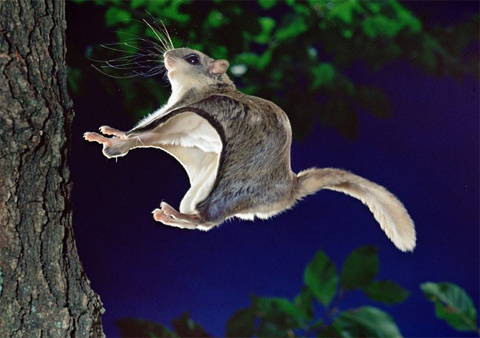
And, eventually, he needs to be able to move through the trees and glide as his species naturally does.
The Treetops Are Still Waiting
For now, the tiny glider remains in long-term wildlife care.
There is still a journey ahead.
He has to grow stronger.
He has to develop.
He has to learn.
And he has to reach the point where returning to the wild is safe and realistic.
The goal is eventually to see him back where he belongs—not in a human's hands, not inside a rescue enclosure, and not helpless on the ground.
But high among the trees.
Moving through the branches.
Searching for food.
Gliding from one place to another.
Living the life he was born to live.
A Few Extra Steps Made All the Difference
What makes this rescue especially remarkable is how easily the story could have ended differently.
The tiny animal was almost invisible.
There was no obvious cry for help.
No dramatic movement.
No sign that would necessarily attract attention from a passing person.
He was simply lying in the dirt.
But someone stopped.
Someone looked closer.
Someone noticed that the tiny bundle was breathing.
That moment of attention changed everything.
Had the couple walked past, the little glider might have remained exposed to the elements.
He was cold.
He was dehydrated.
He was vulnerable.
And he was completely dependent on someone noticing him.
A Reminder to Look Twice When You're Outdoors
Wildlife encounters don't always look like the dramatic scenes we see in documentaries.
Sometimes they're incredibly quiet.
A bird lying beside a trail.
A baby animal beneath a tree.
A small creature hidden among leaves.
An injured animal that barely moves.
That is why wildlife rescuers often encourage people to observe carefully and contact trained professionals when they find an animal that appears injured, orphaned, or unusually vulnerable.
The instinct to help is valuable—but wild animals can have specialized needs, and handling them incorrectly can sometimes cause additional stress or harm.
The safest response is usually to keep a safe distance when possible, prevent immediate danger, and contact an appropriate wildlife rescue organization for guidance.
![Cách Phân Biệt Giới Tính Sóc Bay Úc Đực Cái [✓CHUẨN 100%]](https://encrypted-tbn0.gstatic.com/images?q=tbn:ANd9GcQlpd6RRoWzN-kGvB6WmZ1VuXv0huC4sTnTCZIokxT7sTMR_dJoCcfOEw&s=10)
From a Nearly Invisible Bundle to a Second Chance
The little feathertail glider began this story as something almost too small to notice.
A strange bundle on the ground.
A faint movement.
A few fragile breaths.
But because someone stopped to look, his story didn't end there.
Instead, he was given warmth.
He was given fluids.
He was given appropriate care.
He was given time.
And most importantly, he was given a second chance.
His rescuers still have work ahead of them. The path back to the wild won't happen overnight.
But every stronger grip, every healthy meal, every peaceful sleep brings him a little closer to the life waiting for him beyond the enclosure.
One day, if rehabilitation goes well, that tiny animal may return to the trees and disappear into the darkness just as naturally as he once disappeared into the dirt.
And perhaps nobody will ever know how close he came to being lost.
Except for the couple who happened to stop that day.
They saw something everyone else might have missed.
And because they did, one of Australia's tiniest creatures has another chance to grow, glide, and disappear into the treetops—not forever, but exactly where he belongs.