A persistent cough can make even an ordinary day exhausting.
It can leave your throat irritated, interrupt your sleep, make talking uncomfortable, and sometimes cause soreness in your chest and abdominal muscles. When that happens, many people look for simple home remedies that can provide some relief.
One popular combination is banana, honey, and water.
The mixture is often shared online as a natural remedy for coughs and even bronchitis. But there is an important distinction between soothing symptoms and treating the underlying cause of an illness.
Bananas and honey may help make a cough feel more manageable, particularly when throat irritation is involved. Honey has also been studied for cough relief, especially in children over one year of age with upper respiratory infections.
However, there is no good reason to claim that a banana-and-honey drink can make bronchitis disappear or cure an infection.
So what can this simple combination realistically do?
Let's take a closer look.

Why Does a Cough Happen in the First Place?
Before discussing home remedies, it helps to understand what a cough actually is.
A cough is a protective reflex.
When your airways detect something irritating—such as mucus, dust, smoke, allergens, or inflammation—the body responds by forcefully moving air out of the lungs.
This helps clear the respiratory tract.
Common causes of coughing include:
-
Common colds
-
Influenza
-
Other respiratory infections
-
Postnasal drip
-
Allergies
-
Asthma
-
Acid reflux
-
Smoking
-
Air pollution
-
Certain medications
-
Acute bronchitis
The type of cough can also vary.
Some coughs are dry, while others produce mucus or phlegm.
A cough can also be short-lived or persistent.
That distinction matters because a home remedy that soothes an irritated throat may not address the underlying cause of a chronic cough.
What Makes Honey Interesting for Cough Relief?
Of the three ingredients in this popular mixture, honey has the strongest connection to cough relief.
Honey is thick and naturally sweet.
When swallowed, it can coat the throat and may reduce the irritation that triggers coughing.
This is one reason honey has traditionally been used in warm drinks and home remedies for sore throats and coughs.
Research has also examined honey for acute cough associated with upper respiratory infections, particularly in children.
Some studies suggest that honey may reduce cough frequency or severity and may help improve sleep when compared with no treatment or certain simple alternatives.
But this doesn't mean honey is a cure.
It doesn't eliminate viruses.
It doesn't directly clear a bacterial infection.
And it doesn't replace appropriate medical treatment when someone has a significant respiratory illness.
Its potential role is primarily symptom relief.
Why Does Honey Sometimes Feel So Soothing?
The texture of honey may be part of the reason.
Unlike plain water, honey is thick and coats the mouth and throat.
This can provide temporary relief from the scratchy sensation that accompanies some coughs.
Honey also contains naturally occurring plant compounds, depending on its floral source.
However, it is important not to overstate these properties.
You don't need a special or expensive type of honey to make a soothing drink.
For most people, ordinary honey can be used as a simple food-based option.
What About Bananas?
Bananas aren't a cough medicine.
However, they can make sense as part of a soothing drink or light meal when you're not feeling well.
Bananas provide:
-
Carbohydrates
-
Dietary fiber
-
Potassium
-
Vitamin B6
-
Vitamin C in smaller amounts
-
Other micronutrients
When you're sick, appetite can sometimes decrease.
A soft food such as a ripe banana may be easier to eat than a heavy meal.
Bananas are also naturally sweet, which can make the drink more palatable without requiring a large amount of additional sugar.
But there is no strong evidence that bananas themselves directly stop coughing or treat bronchitis.
Their role in this combination is better understood as nutritional and textural, rather than medicinal.
And What Does Water Do?
Water may be the simplest ingredient, but it is still important.
Drinking fluids helps maintain hydration.
When you're sick, you may lose fluids through:
-
Fever
-
Sweating
-
Increased breathing
-
Reduced food and fluid intake
-
Vomiting or diarrhea
Adequate hydration can also help prevent your mouth and throat from becoming excessively dry.
For people with respiratory infections, staying hydrated can make mucus less thick and easier to manage, although hydration alone does not eliminate the cause of the infection.
Warm liquids may also feel particularly soothing when your throat is irritated.
That's why many people prefer warm water, tea, broth, or similar drinks when they have a cold.
So, Can Banana, Honey and Water Stop a Cough?
The most accurate answer is:
It may help soothe some cough-related discomfort, but it does not “stop” or cure every cough.
Honey is the ingredient with the most evidence for symptomatic cough relief.
Banana provides nutrition and can make the drink thicker and easier to consume.
Water contributes hydration and can make the mixture more comfortable to swallow.
Together, they can form a pleasant home drink.
But the effect is likely to be temporary symptom relief, not treatment of the underlying condition.
What About Bronchitis?
This is where misinformation about the recipe often becomes a problem.
Acute bronchitis is usually caused by a viral respiratory infection.
It can cause:
-
Cough
-
Mucus production
-
Chest discomfort
-
Fatigue
-
Mild fever
-
Wheezing in some people
The cough can sometimes last for several weeks even after the original infection has improved.
A banana-and-honey mixture cannot be expected to eliminate bronchitis.
Honey may soothe the throat and reduce the unpleasant sensation associated with coughing, but it doesn't remove inflammation from the bronchial tubes or eliminate an underlying infection.
If someone has suspected bronchitis, the appropriate approach depends on the severity of symptoms and the person's medical history.
A Simple Banana and Honey Drink
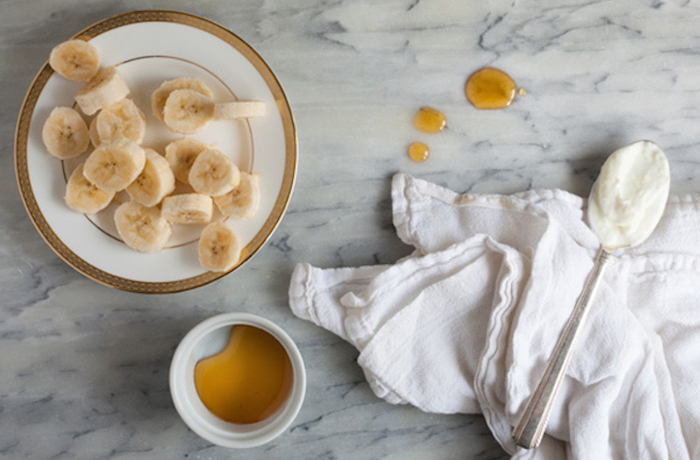
If you'd like to try this combination as a soothing food, you can keep the recipe simple.
Ingredients
-
1 ripe banana
-
1–2 teaspoons of honey
-
About ½–1 cup of warm water
Preparation
Mash the banana until smooth.
Add warm water gradually and stir until the mixture reaches a consistency you find comfortable.
Allow it to cool to a comfortably warm temperature if necessary.
Add honey and mix thoroughly.
You can adjust the amount of water depending on whether you prefer a thicker or thinner drink.
Important detail
The water doesn't need to be boiling.
Extremely hot liquids can irritate an already sore throat and can cause burns.
Warm or comfortably hot is enough.
Don't Add Too Much Honey
Honey is still a source of sugar.
Although it can be useful as a soothing ingredient, more isn't necessarily better.
A large amount of honey adds significant calories and sugar without providing proportionally greater cough relief.
For most people, a small amount is sufficient if the goal is simply to coat and soothe the throat.
People with diabetes or those who need to carefully manage carbohydrate intake should also consider the sugar content.
Who Should Not Have Honey?
There is one particularly important safety rule:
Children under 12 months of age should not be given honey.
Honey can contain spores of Clostridium botulinum, which can cause infant botulism.
The risk is particularly important in infants because their digestive systems are still developing.
For older children and adults, honey is generally considered safe as a food unless there is an allergy or another individual reason to avoid it.
If you're preparing a home remedy for a child, always consider the child's age first.