Have you ever looked closely at your palm and wondered whether the lines on your hand might reveal something about your future?
For centuries, people have turned to palmistry, also known as chiromancy, in search of answers about personality, relationships, health, luck, career, and even financial fortune. The practice is based on the belief that the lines, shapes, mounts, and markings found on the hands can offer clues about a person's character and life journey.
Among the many fascinating interpretations in palmistry, one question continues to attract attention:
Can the lines on your hand reveal whether you are destined for wealth - or a life of financial struggle?
According to traditional palm-reading beliefs, certain markings are sometimes associated with prosperity, good fortune, or the ability to accumulate wealth. Other markings are interpreted as signs of financial obstacles or a more modest path.
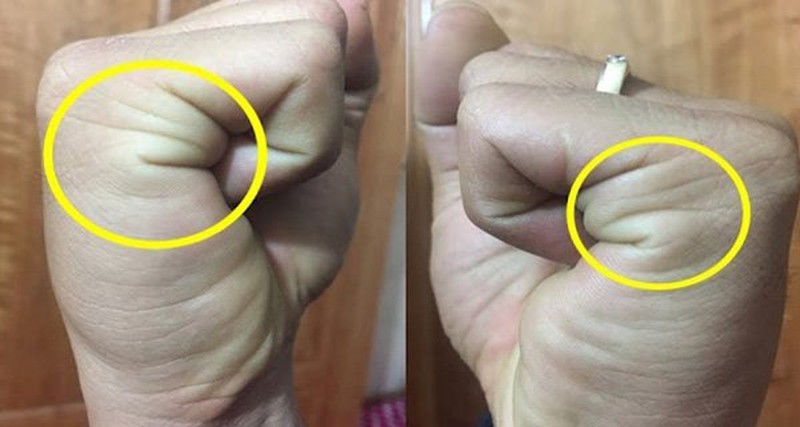
One popular illustration compares two different patterns near the base of the thumb, labeling one as a “poor” hand and the other as a “rich” hand.
But what do these markings actually mean?
And more importantly, can the lines on your palm really predict your financial future?
Let's take a closer look.
✋ What Is Palmistry?
Palmistry is an ancient divination practice involving the interpretation of the human hand.
Palm readers traditionally examine several features, including the major lines, the shape of the palm, the length and position of the fingers, the mounts beneath the fingers, and smaller markings such as crosses, stars, triangles, circles, and islands.
The four major lines most commonly discussed are the:
-
Life Line
-
Head Line
-
Heart Line
-
Fate Line
Each is traditionally given a symbolic meaning.
The Life Line is often associated with vitality and major life changes. The Head Line is interpreted in relation to thinking, intelligence, and decision-making. The Heart Line is commonly connected with emotions and relationships, while the Fate Line is sometimes associated with career direction and life circumstances.
Beyond these major lines, palmists may also pay attention to smaller markings that appear throughout the palm.
This is where the idea of wealth-related palm markings comes into the picture.
💰 The “Rich” and “Poor” Palm Theory
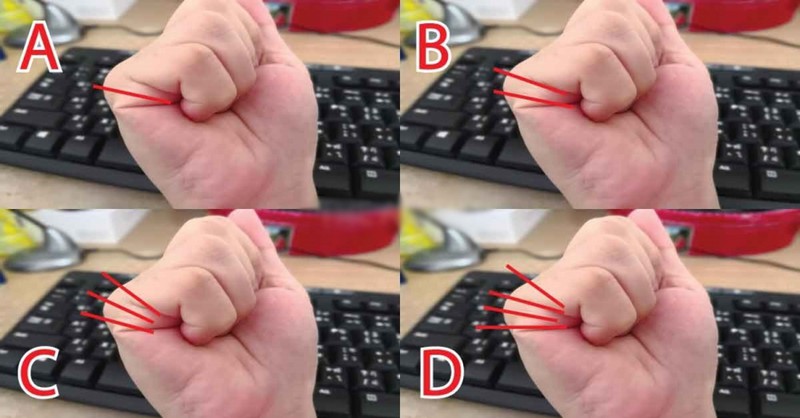
One popular palmistry belief focuses on a cross-shaped marking near the base of the thumb, in an area traditionally associated with the Mount of Venus.
In some interpretations, the appearance, depth, and clarity of markings in this region are believed to provide symbolic clues about financial circumstances.
The “Poor” Hand
In traditional interpretations, a faint, shallow, broken, or poorly defined cross may be described as a sign of financial difficulty.
Palmistry enthusiasts sometimes associate such markings with:
-
Difficulty accumulating savings
-
Financial instability
-
Frequent unexpected expenses
-
A tendency to work hard without seeing immediate financial rewards
-
Challenges in maintaining long-term financial security
However, these interpretations vary considerably between palmistry traditions.
A faint marking does not mean that someone is destined to be poor. Instead, within the symbolic framework of palmistry, it may be interpreted as suggesting a person whose financial journey involves more challenges or fluctuations.
The “Rich” Hand
On the other hand, a clearer, deeper, or more prominent cross is sometimes considered a favorable sign.
Traditional palm readers may associate such a marking with:
-
Financial opportunity
-
Strong ambition
-
Material success
-
Good fortune
-
The ability to recognize profitable opportunities
-
Greater potential for prosperity
Some palmistry traditions also interpret particularly distinctive markings as indications of unexpected financial gains or success later in life.
Again, these are traditional beliefs rather than scientifically established predictions.
🌿 Why Is the Area Near the Thumb Important?
The region near the base of the thumb is known in palmistry as the Mount of Venus.
In traditional palm reading, Venus is associated with qualities such as:
-
Love
-
Passion
-
Vitality
-
Sensuality
-
Energy
-
Social relationships
-
Enjoyment of material life
Because these qualities are sometimes connected with ambition, social influence, and the enjoyment of material comforts, markings in this area have acquired numerous interpretations over time.
A well-developed Mount of Venus is sometimes described as a sign of warmth, enthusiasm, confidence, and a strong desire to experience life.
Some palmists extend this interpretation into the financial realm, suggesting that people with prominent features in this region may have a greater drive to pursue comfort and prosperity.
⭐ Other Palm Markings Traditionally Associated With Wealth
The cross near the thumb is only one of many markings discussed in palmistry.
Depending on the tradition, several other shapes are sometimes considered favorable.
⭐ Stars
A star-shaped marking is often viewed as an unusually significant symbol.
In some palmistry traditions, a star appearing in a favorable location may represent luck, recognition, achievement, or a sudden turning point.
If it appears near an area associated with career or ambition, some readers may interpret it as a sign of professional success.
However, the meaning can change depending on its exact location.
🔺 Triangles
Triangles are another marking frequently mentioned in traditional palmistry.
A clearly defined triangle may be interpreted as representing intelligence, planning ability, strategy, or financial awareness.
Some palmists believe that a triangle associated with certain lines can symbolize an individual's ability to manage resources or turn opportunities into material gains.
This interpretation has made triangular markings particularly popular among people interested in the idea of “wealth lines.”
✚ Crosses
Crosses can have very different meanings depending on where they appear.
A cross in one part of the palm may be interpreted negatively, while a cross in another location may be viewed as favorable.
This is an important point because palmistry is not simply about finding one symbol and assigning it a universal meaning.
Location matters.
The surrounding lines, the depth of the marking, and the overall structure of the palm may all influence how a traditional palm reader interprets it.
🧭 The Fate Line and Financial Success
Another feature often discussed when people ask about career and money is the Fate Line.
The Fate Line generally runs upward through the center of the palm toward the middle finger, although not everyone's palm contains a clearly visible one.
Traditional palmistry associates this line with:
-
Career direction
-
Responsibilities
-
Major life changes
-
Professional opportunities
-
External influences
-
A person's perceived life path
A deep and continuous Fate Line is sometimes interpreted as a sign of stability and a strong sense of direction.
A broken or changing Fate Line, meanwhile, may be interpreted as indicating career transitions or periods of uncertainty.
Some palmists connect a strong Fate Line with professional achievement and, indirectly, financial stability.
But once again, this is a symbolic interpretation—not a proven method of predicting income.
🌏 Palmistry Across Different Cultures
One reason palmistry remains fascinating is that it has developed differently across cultures.
🇮🇳 Indian Palmistry
Indian or Vedic palmistry has a long historical tradition and often connects features of the hand with concepts such as karma, planetary influences, and life patterns.
Different lines and mounts may be associated with planetary symbolism, creating an elaborate system of interpretation.
🇨🇳 Chinese Palmistry
Chinese traditions of palm reading have also developed their own approaches, sometimes incorporating ideas related to yin and yang, traditional philosophy, and concepts found within traditional Chinese medicine.
The shape and appearance of the hand may be considered alongside broader ideas about balance and personal characteristics.
🇬🇷 Western Traditions
Western palmistry generally places considerable emphasis on the major lines and mounts of the hand.
Palm readers may examine the Heart Line, Head Line, Life Line, Fate Line, and other features to construct a symbolic interpretation of someone's personality and life experiences.
Although these traditions differ, they share a fascinating underlying idea:
The hand can be read as a symbolic map of human life.
🧬 Why Do We Have Lines on Our Palms?
There is a very ordinary biological explanation for the lines on our palms.
The major creases of the hand are known as palmar flexion creases. They develop before birth and help the skin fold as the hand moves.
When you close your hand, grip an object, or bend your fingers, these creases allow the skin to move without stretching excessively.
Their shape and appearance can vary from person to person because of genetics, development, age, hand structure, and other factors.
So while palmistry gives these lines symbolic meanings, their physical existence has a clear anatomical explanation.
🔬 What Does Science Say About Palmistry?
This is where traditional belief and modern science clearly separate.
There is currently no reliable scientific evidence that palm lines can predict a person's wealth, intelligence, personality, career success, or future events.
A person's financial situation is influenced by an enormous number of variables, including:
-
Education
-
Family circumstances
-
Employment
-
Economic conditions
-
Financial decisions
-
Access to opportunities
-
Social networks
-
Risk tolerance
-
Health
-
Geography
-
Luck and unexpected events
None of these can be reliably predicted simply by examining the lines of someone's palm.
For this reason, palmistry is generally regarded as a form of divination or pseudoscience rather than an evidence-based method of prediction.
That doesn't necessarily make the practice meaningless from a cultural or entertainment perspective.
🧠 Why Do People Find Palmistry So Convincing?
Part of palmistry's appeal may come from something deeply human: our desire to find patterns and meaning in our lives.
People naturally look for explanations for success, failure, relationships, and major turning points.
When someone hears a palm reading that seems remarkably accurate, it can feel as though the reader has discovered something hidden.
Psychological effects such as confirmation bias can contribute to this experience. People may remember statements that seem accurate while paying less attention to predictions that do not match reality.
Palm readings can also use broad descriptions that apply to many people, allowing individuals to recognize themselves in the interpretation.
This doesn't mean people are foolish for enjoying palmistry.
Rather, it shows how powerful storytelling, symbolism, and self-reflection can be.
💡 Can a “Rich Palm” Actually Make You Wealthy?
Probably not in the literal sense.
A deep cross, triangle, star, or other marking cannot guarantee financial success.
But there is an interesting way to look at the idea.
Suppose someone believes their palm indicates that they have strong potential for prosperity. That belief might encourage them to become more confident, take initiative, develop useful skills, or pay closer attention to opportunities.
In that situation, the psychological effect of the belief—not the palm marking itself—could influence behavior.
Likewise, someone who believes their hand indicates financial difficulties might become more cautious with money.
The important distinction is that the outcome comes from human choices and circumstances, rather than a physical line determining destiny.
💭 Your Palm May Tell a Story—But It Doesn't Have to Write Your Future
There is something undeniably poetic about palmistry.
Our hands accompany us through almost everything we do.
They work, create, communicate, comfort others, build relationships, and turn ideas into physical reality.
So perhaps it is not surprising that ancient cultures imagined that the story of a person's life could somehow be written across the palm.
But there is a powerful difference between reading your hand and letting your hand decide your future.
A palm marking may be interesting to interpret as a cultural symbol. It can be a fun conversation starter or an opportunity for personal reflection.
But your financial future is shaped far more by what you learn, how you act, the decisions you make, and the opportunities you pursue.
💰 So, What Does Your Palm Say About Your Wealth?
If you have a prominent cross near the base of your thumb, traditional palmistry might call it a favorable sign.
If your marking is faint or difficult to see, some traditional interpretations might describe your financial path as more challenging.
You might even discover triangles, stars, unusual intersections, or other markings that palmistry associates with luck and prosperity.
But don't worry if your hand doesn't appear to contain any of these supposed “wealth signs.”
There is no scientific rule saying that a particular palm line determines how much money you will make.
Your hand doesn't need a special marking to build a successful life.
The hands you use to learn a skill, start a business, work hard, create something valuable, save money, help others, or pursue an opportunity may be far more important than any mysterious line.
In that sense, perhaps the most meaningful “wealth line” isn't a line you were born with at all.
It's the path you create through your choices.
Palmistry may offer a fascinating glimpse into ancient beliefs about luck, destiny, and prosperity - but your future remains much bigger than the lines on your hand.
After all, the richest hands may not be the ones with the deepest markings. They may simply be the hands that never stop building, creating, giving, and reaching for something better.