A person who records an unusual scene may have a theory about what is happening. The person may even know something that is not visible in the video. But unless that information is supported by direct evidence, it should remain an interpretation.
The original post is useful for identifying the recording's circulation and approximate date. It does not establish the woman's identity, relationship status, or reason for walking through the snow.
Nor does the fact that several websites repeated the same explanation make it independently verified.
When multiple articles rely on one social-media post, they are not necessarily multiple sources confirming the event. They may simply be repeating the same original speculation.
This is an important distinction for anyone reading viral stories.
A reliable account should explain where the information came from, what the source directly observed, and which details remain unknown.
Without that separation, a humorous caption can become an accusation that follows an unidentified person long after the original video has disappeared from people's feeds.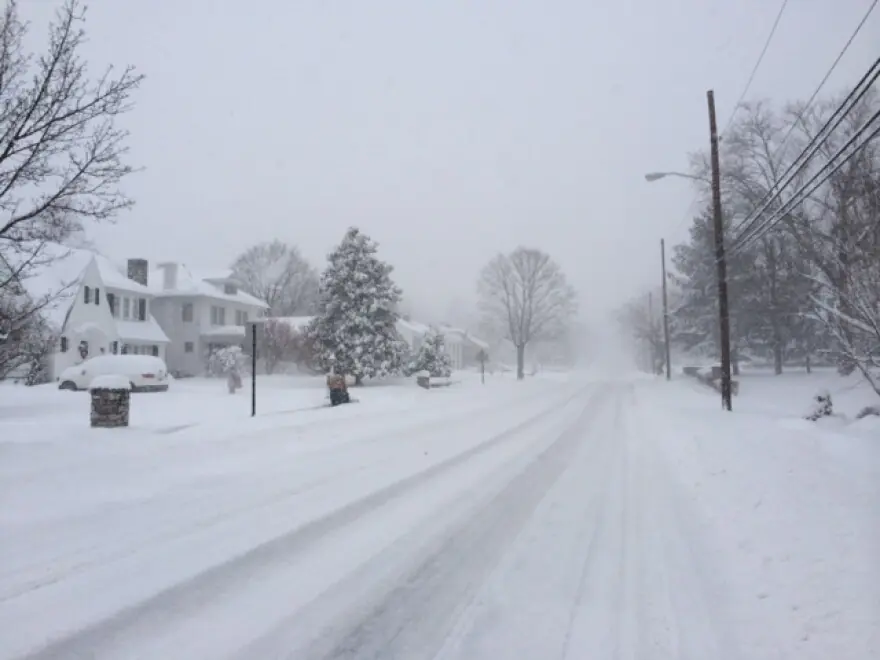
Could It Have Been a Bet, a Dare, or an Emergency?
Several explanations are possible, but none can be confirmed from the supplied footage.
One possibility is that the woman was taking part in a dare or challenge. People sometimes agree to unusual activities for entertainment, and walking through snow in light clothing would certainly attract attention.
Another possibility is that she had been somewhere nearby and was trying to get to another location quickly. She may have had a reason to remove her shoes or carry them rather than wear them.
She could also have been responding to an unexpected situation.
Perhaps she had left a building without collecting her belongings. Perhaps she was trying to reach a vehicle or a nearby residence. Perhaps something had happened that required her to move outside quickly.
These are possibilities, not established explanations.
The video does not show what happened before the woman appeared. It does not show whether she was accompanied by anyone, whether someone was waiting for her, or whether she eventually found shelter.
It also does not provide a clear account of the temperature at the exact location and moment of recording.
The wider storm conditions are documented, but the precise circumstances of this woman's journey remain unknown.
That is why it would be misleading to select one explanation and present it as the answer.
The most responsible conclusion is that the video captured an unusual moment during a severe winter storm, while the reason for the woman's clothing and behavior was not confirmed in the available reports.
What the Story Reveals About Online Privacy
There is another side to this story that is easy to overlook.
The woman was filmed in a public place, but that does not mean every assumption about her private life is fair or accurate.
People can become recognizable to friends, relatives, coworkers, or neighbors even when their names are not published. A location, vehicle, clothing detail, or familiar background may be enough for someone to identify them.
Once a video spreads, the person shown may have little control over the discussion surrounding it.
A humorous clip can become a source of embarrassment. A speculative caption can become a repeated accusation. A person may find themselves being judged by strangers who know nothing about their circumstances.
This is one reason publishers should be careful when writing about unidentified people.
There is a difference between describing what can be seen and inventing a private story about the person in the image.
It is reasonable to report that a woman was filmed walking through snow in a T-shirt. It is not reasonable to state that she was an unfaithful wife without evidence.
The same principle applies to videos involving people who appear distressed, confused, intoxicated, injured, or unusually dressed.
A few seconds of footage rarely reveal the complete context.
Responsible reporting can still be interesting without turning a stranger into the target of public humiliation.
Why the Clip Still Attracts Attention Years Later
The footage has several qualities that make it easy to rediscover.
It is visually unusual, simple to understand, and open to interpretation. The setting is recognizable as a winter storm, while the woman's clothing creates an immediate contrast.
The story also offers a question that has no confirmed answer.
People naturally want to know why someone would be outside in such conditions. When the original footage does not provide an explanation, the mystery remains.
The dramatic headline adds another layer by suggesting that the woman was running home after being caught in an affair.
That claim gives readers a ready-made story, even though the evidence does not support it.
The passage of time has also helped the video resurface. An old clip can be shared again when a new winter storm occurs, when a website republishes an archive story, or when someone discovers the footage for the first time.
A viewer encountering it in 2026 may assume it happened that year, especially if the page displays a recent publication date.
But the historical record points to January 2016.
That is a useful reminder that viral videos do not always belong to the news cycle in which they appear. Sometimes the newest thing about a viral story is simply the page that reposted it.
The Real Answer Behind the Headline
So, was a cheating wife caught running home through the snow?
The available evidence does not establish that.
What can be established is that an unidentified woman was filmed in Morgantown, West Virginia, during the period of Winter Storm Jonas in January 2016. She was wearing a white T-shirt and appeared to have little protection against the snow. The footage was shared online by Chandlar Fowler and attracted attention because of the unusual circumstances.
Some social-media commentary described the scene as a "walk of shame." That interpretation was repeated by several publications, but it was not proof of infidelity.
The photograph cannot tell us whether the woman was married, where she had been, why she was outside, or where she was going.
It also cannot show what happened after the recording ended.
The story is therefore less about a confirmed relationship scandal and more about how an unusual public moment became a viral mystery.
There is a genuine historical event behind the image: a major winter storm, a snowy street in Morgantown, and a woman moving through the cold in clothing that seemed completely out of place.
The rest remains speculation.
Perhaps the most interesting lesson is not about the woman's private life at all. It is about how quickly people can turn a few seconds of video into a complete story—and how important it is to pause before accepting that story as fact.
The footage is certainly unusual. The winter conditions were real. The woman's journey was captured on camera.
But the claim that she was a cheating wife caught fleeing an affair remains unverified.