Every relationship develops in its own way.
The goal is not to reach a perfect emotional milestone by a certain date.
The goal is to build a relationship in which the child can gradually feel safe enough to be themselves.
Chapter 16: The Parents' Grief and the Dream They Must Reconsider
Adoption is often described as a joyful event, and it can be profoundly joyful.
But parents may also experience grief when the reality of family life differs from the picture they carried in their minds.
They may grieve the uncomplicated beginning they imagined.
They may feel sadness that their child has experienced painful events before arriving in their home.
They may feel guilt when they realize that they cannot protect the child from every difficult feeling.
They may even feel embarrassed to admit that they are struggling, especially when others congratulate them and expect them to be happy.
These emotions deserve compassion.
A parent who needs counseling is not failing the child. A parent who asks for respite or practical support is not rejecting the responsibility of adoption.
Caregivers need opportunities to rest, reflect, and receive guidance.
Support groups can be particularly valuable because other adoptive parents may understand the mixture of love, uncertainty, and exhaustion that can accompany the transition.
Professional support can also help parents separate realistic concerns from self-blame.
The most important shift may be letting go of the idea that a successful adoption must begin with a perfect story.
A family does not need a flawless beginning to build a meaningful future.
It needs commitment, support, and the willingness to keep learning.
Chapter 17: What the Story Should Leave With Its Readers
The viral headline is designed to create suspense. It invites readers to imagine a sudden event that transforms a family's life within hours.
But the most important lesson is not the mystery of the night.
It is the responsibility that begins when a child enters a new home.
Adoption should not be treated as a rescue fantasy in which adults provide love and a child immediately becomes happy. Children are individuals with their own histories, needs, and identities. Their adjustment cannot be measured by how quickly they appear grateful or comfortable.
Parents deserve preparation that is honest about the challenges.
Children deserve homes that are patient, safe, and respectful of their past.
Agencies and professionals deserve to be held accountable for providing appropriate information and support.
Communities deserve reminders that families experiencing crisis need compassion rather than gossip.
And readers deserve stories that distinguish verified facts from emotional illustrations.
The screenshot does not establish exactly what happened to Mark and Sarah. It does not provide enough evidence to confirm the dramatic details suggested by the headline and images.
But the broader message remains worth discussing.
A child's arrival is not the end of a journey.
It is the beginning of a relationship that may require more patience, understanding, and professional support than anyone initially expected.
The first hours may be joyful. They may be difficult. They may contain both emotions at once.
What matters is that the child is not expected to carry the entire burden of making the adoption succeed.
Adults must be ready to learn.
They must be ready to ask for help.
They must be ready to recognize that healing is not a straight line.
And they must be ready to build a family not only through love, but through the daily practice of safety, respect, and consistency.
Chapter 18: What Parents Can Do When the First Night Becomes Difficult
When an unexpected problem occurs during the first hours of adoption, parents may feel that they must make every decision immediately.
In reality, the best response often begins with slowing down and identifying what is most urgent.
If the child is physically unwell, injured, or in immediate danger, medical or emergency assistance should come first. Parents should not assume that a frightening situation is simply an emotional reaction.
If everyone is physically safe, the next step is to reduce confusion and provide reassurance.
A child may not be able to explain what they need. Parents can use short, clear sentences and avoid asking too many questions at once. They can explain who is present, what is happening, and what will happen next.
For example, a parent might say:
"You're safe right now. I'm going to stay nearby. We will talk to the person who can help us understand what happened."
This kind of reassurance does not promise that everything will immediately become easy. It gives the child information they can understand in the moment.
Parents should also avoid making major decisions while overwhelmed, unless immediate safety requires action. They can contact their adoption professional, pediatrician, or other appropriate support person and explain the situation clearly.
It may help to write down what happened, including the time, circumstances, and any changes in the child's behavior. This information can assist professionals in understanding the situation.
However, parents should avoid treating a child's behavior as evidence of a particular diagnosis or assuming that one incident reveals the entire history.
The goal is to gather information, not to assign blame.
A difficult first night can become an opportunity to identify needs that were not previously obvious. With the right support, the family can develop a plan that is more realistic and more responsive to the child.
The experience may be frightening, but it does not have to become the defining event of the child's life.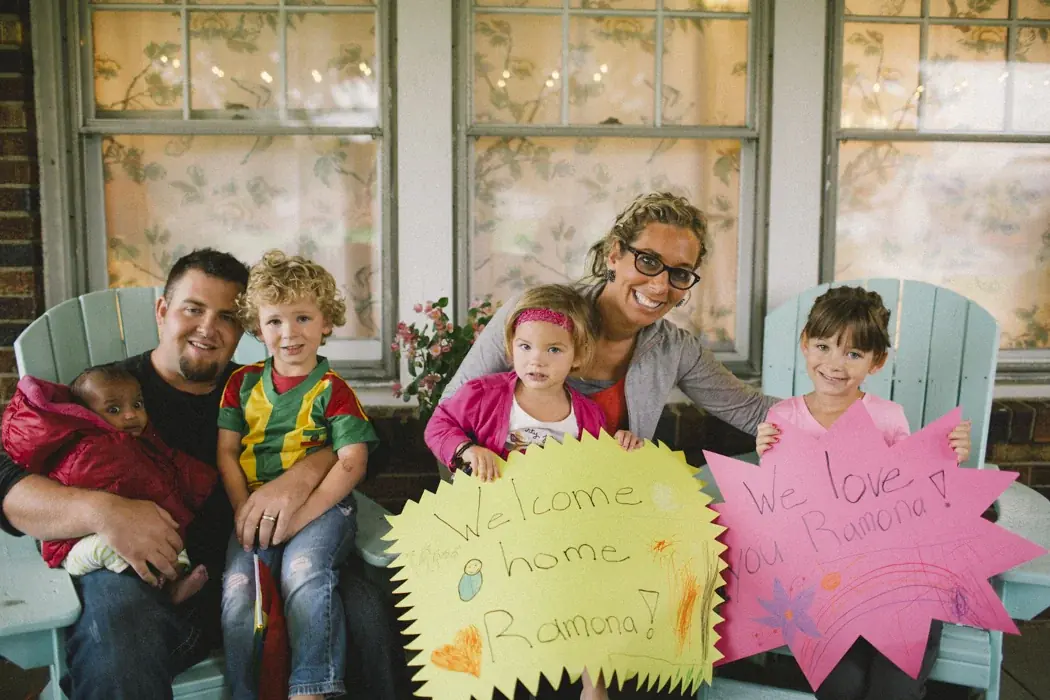
Chapter 19: The Beginning That Comes After the Beginning
The most meaningful part of an adoption story may not be the moment a child arrives.
It may be the moment the adults understand that the child needs something different from what they originally imagined.
That realization can be painful.
Parents may have spent years preparing for a particular kind of family life. They may have imagined a child who would quickly feel at home, enjoy family activities, and respond warmly to affection.
When reality becomes more complicated, those expectations must change.
The change does not mean that the dream of becoming a family was wrong.
It means the dream must make room for the real child.
A real child may be cautious. They may need space. They may have memories they cannot yet share. They may feel happiness and grief at the same time.
A real child may not know how to trust someone who has promised to stay.
That trust must be earned through experience.
The parents' task is not to convince the child that the past no longer matters. It is to show that the child can carry the past into a future where safety, affection, and support are possible.
The family may have to learn new routines, seek professional help, and reconsider what success looks like.
Perhaps success will not mean that the child immediately calls the parents "Mom" and "Dad."
Perhaps it will mean that the child asks for help after a nightmare.
Perhaps it will mean that the child begins to share a memory without fear.
Perhaps it will mean that a difficult evening ends with everyone safe, calmer, and willing to try again tomorrow.
Those moments may seem small to outsiders.
But for a family learning to trust one another, they can be extraordinary.
The long-awaited adoption may have taken an unexpected turn. The first hours may have been nothing like the parents imagined.
Yet a family's future cannot be measured by a single night.
It is shaped by the many ordinary days that follow, by the support the family receives, and by the willingness of adults to keep showing up when the journey becomes difficult.
The child deserves that patience.
The parents deserve that support.
And the family deserves the chance to write a story that is larger than the frightening beginning.