Bloating and Constipation? Try These Simple Ways to Feel Better
Simple Ways to Find Relief From Inflammation, Bloating, and Constipation
⏱️ 1 min read 14/08/2026 12:38
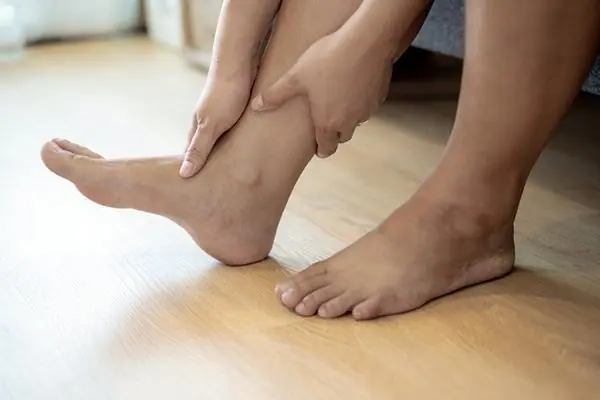
Cracked heels are extremely common. For many people, they appear when the skin around the heel becomes dry, thick, and less flexible. As pressure is placed on the heel while walking or standing, the hardened skin can split and form visible cracks.
But dry skin isn't always the whole story.
Persistent or severe cracked heels can sometimes be associated with irritation, fungal infections, inflammatory skin conditions, prolonged pressure, certain medications, or underlying health conditions. In some cases, the cracks can become painful or infected.
Understanding the possible causes can help you choose the right approach instead of simply applying moisturizer and hoping the problem disappears.
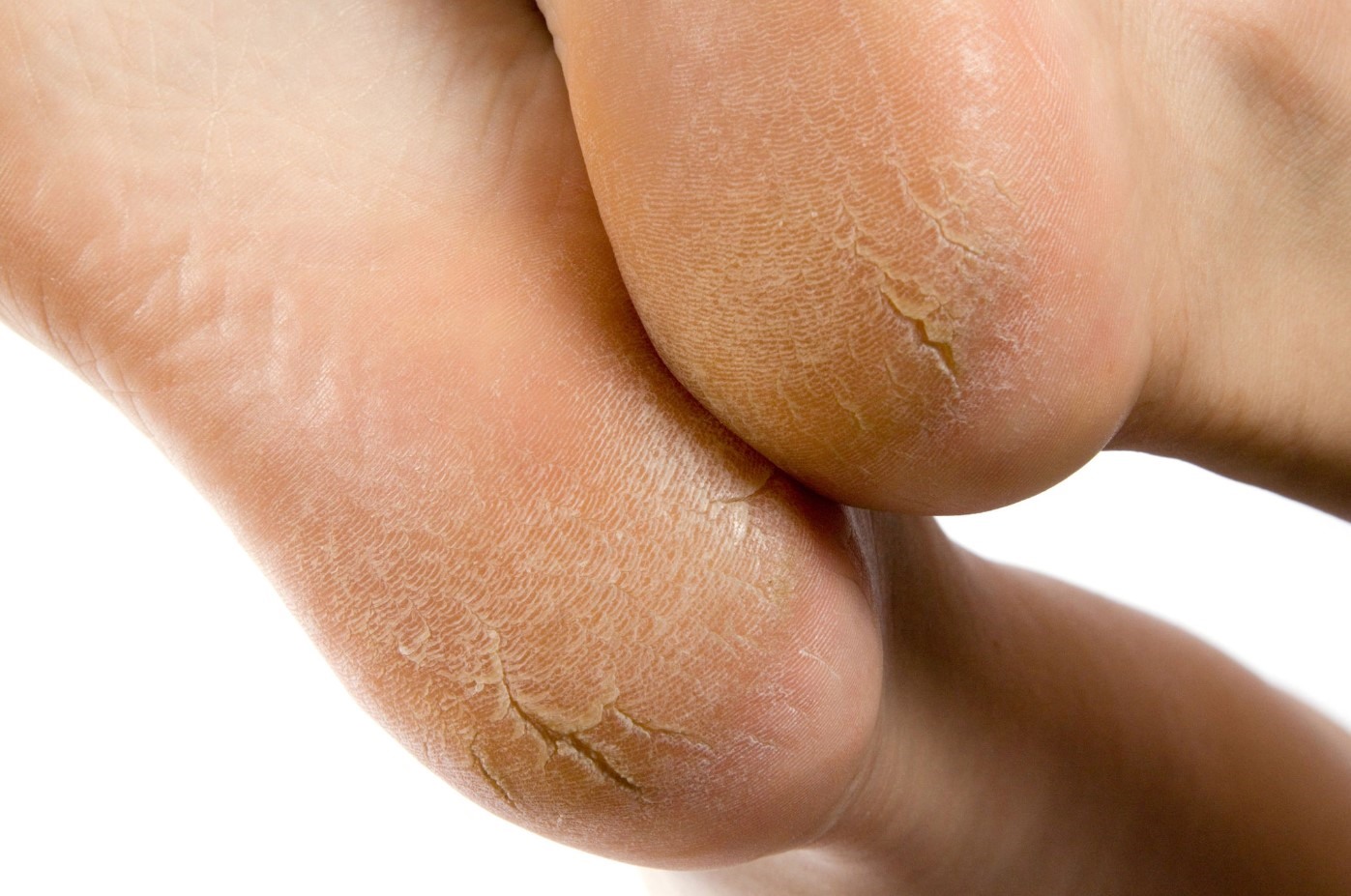
The skin around your heels is naturally thicker than skin in many other parts of the body.
When this skin becomes:
Dry
Thickened
Hard
Less elastic
it may struggle to withstand the pressure created by walking and standing.
The outer layer can eventually split, creating what is commonly called a heel fissure.
Mild fissures may look like thin lines.
More severe cracks can:
Become deep
Bleed
Hurt while walking
Become inflamed
Become vulnerable to infection
That's why persistent cracked heels shouldn't always be dismissed as a cosmetic issue.
Let's start with the most obvious explanation.
Dry skin can make the heel less flexible and more prone to cracking.
Dryness may become worse during:
Cold weather
Dry climates
Winter months
Frequent hot showers
Long baths
Use of harsh soaps
Older adults may also experience drier skin because the skin naturally becomes thinner and produces less oil with age.
For mild cases, consistent moisturizing may make a significant difference.
But if your heels continue cracking despite regular care, consider other possibilities.
Your heels absorb a significant amount of pressure every day.
If your job or lifestyle requires prolonged standing, the constant pressure can contribute to thickened skin and fissures.
People who frequently:
Stand at work
Walk long distances
Work on hard floors
Carry heavy loads
may be more prone to heel problems.
The issue isn't necessarily that the skin is simply "too dry."
Repeated mechanical stress can contribute to thickening and splitting.
Sandals and shoes with open backs can allow the heel area to spread outward as you walk.
This can increase mechanical stress on the thick skin around the heel.
Shoes that don't fit properly can also contribute to:
Friction
Pressure
Callus formation
Heel fissures
If your heels are repeatedly cracking, consider whether your footwear could be part of the problem.
Supportive, well-fitting shoes may reduce mechanical stress.
A callus is an area of thickened skin that develops in response to repeated friction or pressure.
Calluses aren't inherently harmful.
They're essentially your skin's protective response.
However, when the skin becomes excessively thick and dry, it may lose flexibility.
The result can be:
Thick skin → reduced flexibility → pressure → cracking
This is one reason why gently managing thickened skin can be useful.
Avoid aggressively cutting calluses yourself.
Eczema can cause dry, irritated, itchy, or cracked skin.
Depending on the type, you may notice:
Redness
Scaling
Itching
Thickened skin
Small cracks
Peeling
If both feet and other areas of the body are affected, an inflammatory skin condition becomes more plausible.
Persistent eczema may require treatment beyond ordinary moisturizer.
A dermatologist can determine the most appropriate treatment.
Psoriasis isn't limited to the elbows and knees.
It can affect the soles of the feet and may produce thick, scaly patches.
When psoriasis affects the feet, the skin can become:
Thick
Dry
Inflamed
Cracked
Painful
Some people have psoriasis elsewhere on the body, while others primarily notice symptoms on their feet.
If your heel cracks are persistent and accompanied by thick plaques or scaling, consider discussing them with a dermatologist.
A fungal infection known as tinea pedis, commonly called athlete's foot, can affect the skin of the feet.
Symptoms may include:
Itching
Peeling
Scaling
Burning
Redness
Cracking
It commonly affects the spaces between the toes, but it can also cause widespread scaling across the soles and sides of the feet.
Some forms of athlete's foot can resemble very dry skin.
That means repeatedly applying moisturizer may not solve the underlying problem.
An antifungal treatment may be needed.
People with diabetes can be more vulnerable to foot problems.
High blood glucose over time can contribute to nerve damage and circulation problems.
These complications can make it harder to:
Notice injuries
Heal wounds
Fight infections
Dry skin can also occur.
For someone with diabetes, a deep heel crack isn't something to ignore.
Check your feet regularly for:
Cuts
Cracks
Blisters
Redness
Swelling
Sores
Changes in skin color
If you have diabetes and develop a deep, painful, bleeding, or infected-looking crack, contact your healthcare professional promptly.
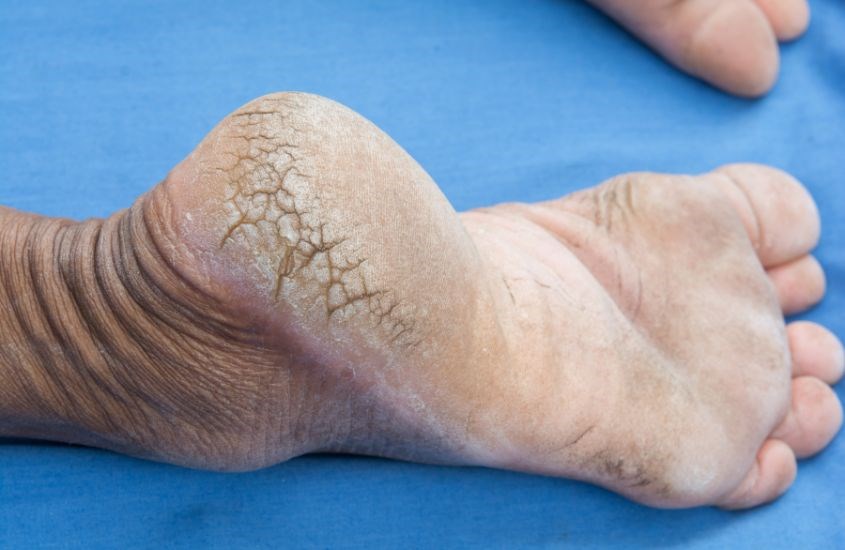
Healthy blood circulation is important for delivering oxygen and nutrients to tissues.
Circulation problems can make wounds slower to heal.
You may notice other symptoms such as:
Cold feet
Changes in skin color
Leg pain when walking
Slow-healing wounds
Reduced hair growth on the lower legs
Persistent heel fissures that don't heal normally deserve medical evaluation, particularly when other circulation symptoms are present.
An underactive thyroid can contribute to dry skin.
Some people with hypothyroidism may also experience:
Fatigue
Feeling unusually cold
Constipation
Weight changes
Dry skin
Hair changes
Cracked heels alone do not indicate a thyroid problem.
But if persistent dry skin occurs alongside several other symptoms, discussing thyroid function with a healthcare professional may be appropriate.
Your skin needs adequate water balance to maintain its normal function.
Dehydration can contribute to dryness, although cracked heels are not usually caused by dehydration alone.
Factors such as:
Excessive sweating
Hot weather
Illness
Inadequate fluid intake
can contribute to dehydration.
However, simply drinking huge amounts of water isn't a guaranteed solution for cracked heels.
Topical skin care and reducing mechanical stress are often more directly relevant.
A long, very hot shower may feel relaxing, but hot water can remove some of the skin's natural oils.
If your heels are already dry, repeated exposure may worsen the problem.
Try:
Warm rather than extremely hot water
Shorter showers
Gentle cleansers
Moisturizing shortly after bathing
This helps protect the skin barrier.
Strong soaps and detergents can strip away protective oils.
If your feet are frequently exposed to harsh products, you may notice:
Dryness
Tightness
Scaling
Irritation
Cracking
Choose a gentle cleanser when possible.
You don't need to scrub your heels aggressively to keep them clean.
When people see thick skin, their first instinct may be to scrub harder.
But aggressive scraping can cause irritation and small injuries.
It can also encourage the skin to become thicker in response to repeated trauma.
If you use a pumice stone or foot file, be gentle.
The goal is to reduce excessive dead skin—not remove every bit of thickened skin.
Poorly fitting footwear can contribute to heel fissures.
Shoes may cause problems if they are:
Too tight
Too loose
Rubbing the heel
Providing inadequate cushioning
Allowing excessive heel movement
Look for footwear that fits comfortably and provides appropriate support.
If your heels crack repeatedly, rotating between different shoes may also reduce repetitive pressure in the same areas.
Body weight affects the mechanical load placed on the feet.
Higher loads can increase pressure on the heels during standing and walking.
This doesn't mean body weight is the only cause of cracked heels.
But if heel fissures are persistent, reducing mechanical stress through supportive footwear and appropriate foot care can help.
As we age, the skin can become:
Thinner
Less elastic
Drier
Slower to repair itself
Natural oil production may decrease.
These changes can make cracked heels more common.
Older adults should therefore pay particular attention to regular foot care.
Some medications can contribute to dry skin or other skin changes.
If your heel problems started around the same time as a new medication, mention the change to your doctor or pharmacist.
Don't stop a prescribed medication without medical guidance.
The medication may not be responsible, but the timing is useful information.
People often see cracked heels and immediately assume they have a vitamin deficiency.
The relationship is not that straightforward.
Nutritional deficiencies can affect skin health, but cracked heels alone aren't enough to diagnose a deficiency.
A balanced diet containing:
Protein
Healthy fats
Fruits
Vegetables
Whole grains
Legumes
supports normal skin function.
If you have multiple symptoms suggesting nutritional problems, a healthcare professional can determine whether testing is appropriate.
Avoid taking high-dose supplements simply because your heels are cracked.
Healthy skin has a protective barrier that helps retain moisture and protect against irritants.
When that barrier is damaged, water loss increases.
That's why treating cracked heels isn't just about "adding moisture."
You also want to reduce the factors that are causing moisture loss and irritation.
This includes:
Harsh soaps
Hot water
Excessive scrubbing
Friction
Prolonged exposure to dry environments
Not all moisturizers work in exactly the same way.
For very dry or thickened heel skin, products containing ingredients such as:
Urea
Lactic acid
Salicylic acid
Petrolatum
Ceramides
may be useful.
Urea, in particular, can help soften and hydrate thickened skin.
Some products combine moisturizing ingredients with keratolytic ingredients that help reduce excessive buildup.
If your skin is cracked open, some active ingredients may sting.
Start gently and follow product instructions.
Plain petroleum jelly is a simple option for severely dry skin.
Apply it to clean, dry heels before bed.
Then consider wearing clean cotton socks to help keep the product in place.
This doesn't treat every cause of cracked heels, but it can help support the skin barrier when dryness is the main issue.
Avoid experimenting with strong household chemicals or irritating substances.
Cracked skin is already vulnerable.
Products not designed for skin can cause:
Chemical burns
Inflammation
Infection
Delayed healing
Use products specifically formulated for foot or skin care.
If a heel has a thick layer of hardened skin, it may be tempting to cut it with scissors, blades, or other sharp tools.
Don't.
You could create a deeper wound or introduce bacteria.
If professional removal of thick callused skin is necessary, a healthcare professional or qualified foot-care specialist can do it safely.
Good foot hygiene can reduce the risk of fungal and bacterial infections.
Wash your feet regularly and dry them thoroughly, especially between the toes.
Change socks when they become damp.
Choose breathable footwear when possible.
These habits are particularly important if you sweat heavily or are prone to athlete's foot.
People often focus entirely on the heel and overlook the rest of the foot.
If you have peeling or scaling between your toes, especially with itching, fungal infection may be contributing to your symptoms.
That may require antifungal treatment rather than simply applying a heavy moisturizer.
A deep crack can provide an entry point for bacteria.
Warning signs of infection may include:
Increasing redness
Warmth
Swelling
Pus
Worsening pain
Red streaking
Fever
If these symptoms develop, seek medical care.
People with diabetes or poor circulation should be particularly cautious.
Consider professional evaluation if:
Cracks are deep
They bleed repeatedly
Walking becomes painful
Home treatment doesn't help
The skin is severely inflamed
There is pus or swelling
You have diabetes
You have poor circulation
You have significant nerve problems
You suspect a fungal infection
The condition keeps returning
Persistent problems often require identifying the underlying cause rather than repeatedly treating the surface.
For mild dry or cracked heels, try a consistent routine.
Use warm water and a mild cleanser.
Pat your feet dry.
Apply a thick foot cream or moisturizer.
For very dry heels, petroleum jelly can be applied over moisturizer.
Clean cotton socks can help prevent the product from rubbing off.
Choose comfortable, supportive footwear.
Consistency matters more than doing an aggressive treatment once.
If you've consistently moisturized your heels and addressed obvious causes but the cracks continue, don't simply keep adding more products.
Consider whether you might have:
Athlete's foot
Eczema
Psoriasis
Significant callus buildup
Footwear-related pressure
Diabetes-related skin problems
Circulation issues
Another underlying condition
A healthcare professional can examine the skin and determine whether testing or prescription treatment is appropriate.
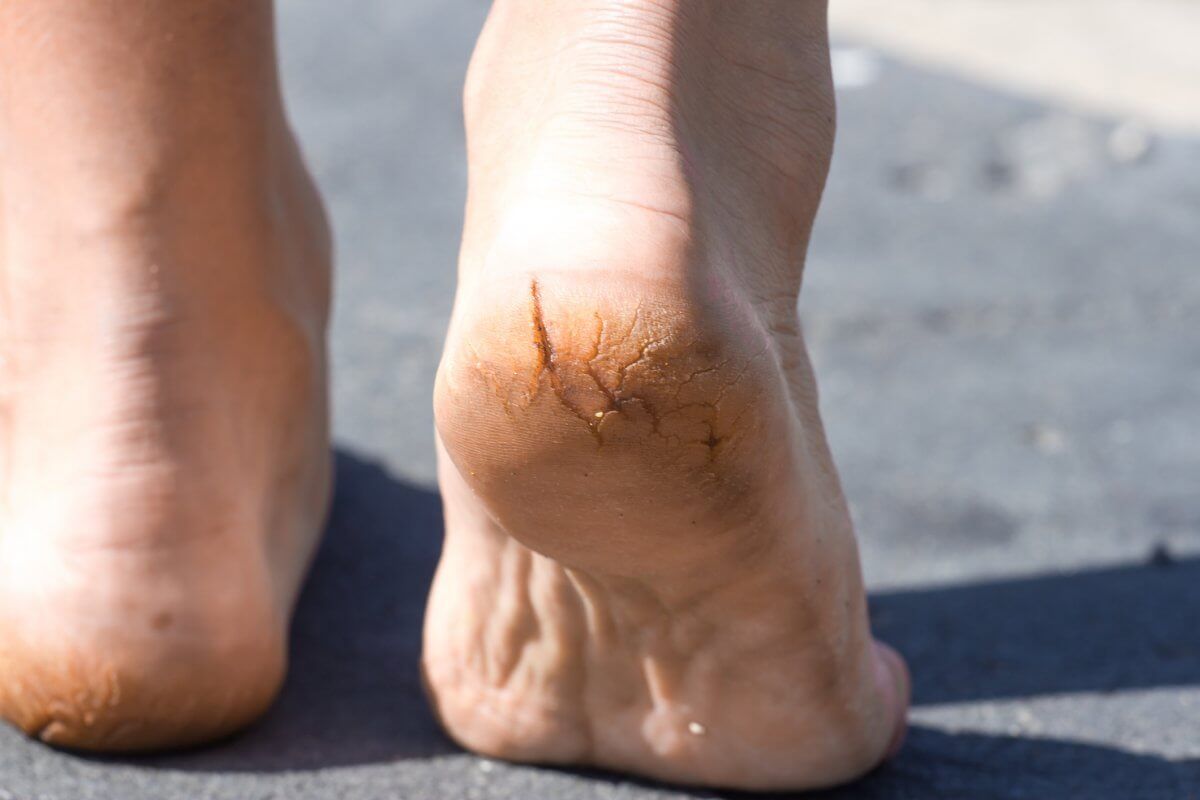
Not necessarily. Fungal infections and inflammatory skin conditions can produce similar symptoms.
Aggressive scrubbing can irritate the skin and make problems worse.
Hydration is important, but topical care and mechanical factors are often more directly involved.
Deep fissures can become painful and provide an entry point for infection.
Using blades at home can create injuries and increase infection risk.
Certain people should take heel cracks particularly seriously.
Reduced sensation and impaired healing can make seemingly small foot wounds more significant.
Slow healing can increase the risk of complications.
Age-related skin changes can make fissures more persistent.
Eczema and psoriasis may require targeted treatment.
Repeated peeling and cracking may require appropriate antifungal management.
Cracked heels are common, but dry skin isn't always the only explanation.
Other possible contributors include:
Pressure and prolonged standing
Poorly fitting or open-back footwear
Calluses
Eczema
Psoriasis
Athlete's foot
Diabetes
Circulation problems
Aging-related skin changes
Irritating skin-care habits
For mild cases, consistent moisturizing, gentle exfoliation, supportive footwear, and good foot hygiene can make a noticeable difference.
But deep, painful, bleeding, infected, or persistent cracks deserve more attention.
Your heels take a surprising amount of mechanical stress every day.
Walking, standing, footwear, body weight, weather, skin conditions, and general health can all influence how well the skin around your heels tolerates that stress.
If your heels are mildly dry, a consistent moisturizing routine may be enough.
But if the cracks keep returning despite good care, become painful, bleed, or appear alongside itching, scaling, redness, swelling, or other symptoms, don't assume you simply need a stronger moisturizer.
The skin may be telling you that something else is going on.
And if you have diabetes, poor circulation, or reduced sensation in your feet, even a small crack deserves extra attention.
The goal isn't just to make your heels look smoother.
It's to protect the skin barrier, prevent deeper fissures, and address the underlying cause when one exists.
Simple Ways to Find Relief From Inflammation, Bloating, and Constipation
Never Smoked? Here’s Why Your Risk of Lung Can.cer May Still Exist
Eating Boiled Sweet Potatoes for Breakfast: Potential Benefits to Know
Think twice before drinking coffee at these two times of day, experts advise


Feeding Your Child? 7 Foods Parents May Want to Avoid or Limit

8 Groups of People Who May Need to Limit Coconut Water

Millions start their day with coffee, but what actually happens inside your body after that first morning cup?

If Diabetes Runs in Your Family, These 4 Foods Deserve a Second Look

Eggs are nutritious, but not everyone should eat them daily.

She Thought It Was Just Indigestion—Doctors Found Something Far More Serious
Why Did This Finger Suddenly Turn White? The Answer May Surprise You

Could Your Family Be Making the Same Mistake?
Your Heart Might Be Warning You Right Now

Most People Eat Bananas Every Day But Never Realize This

😱 Millions Eat Cashews Every Day—But Few Know What Happens Next

4 Reasons Every Woman Should Know

Magnesium is an essential mineral in the human body, playing a critical role in over 300 enzymatic processes.
Simple Ways to Find Relief From Inflammation, Bloating, and Constipation
Never Smoked? Here’s Why Your Risk of Lung Can.cer May Still Exist
The Coward They Laughed At
Ethan looked like a scarred, rugged worker. But when armed robbers opened fire inside a bank, he threw himself into the line of fire to save a terrified child.
The Strongest Heart in the Camp
Midnight at the Clock Tower
Why Do Deceased Loved Ones Appear in Our Dreams?
The Broken Ferris Wheel
Eating Boiled Sweet Potatoes for Breakfast: Potential Benefits to Know
Think twice before drinking coffee at these two times of day, experts advise
THE SOLDIER JUMPED INTO THE FLOOD
Feeding Your Child? 7 Foods Parents May Want to Avoid or Limit
The Bridge of Fire
Blocked Drain? Try These Easy DIY Methods Before Calling a Plumber
Duke looked intimidating on his heavy motorcycle. But when a stranded young woman was cornered during a midnight storm, the rugged biker stepped in to protect her.