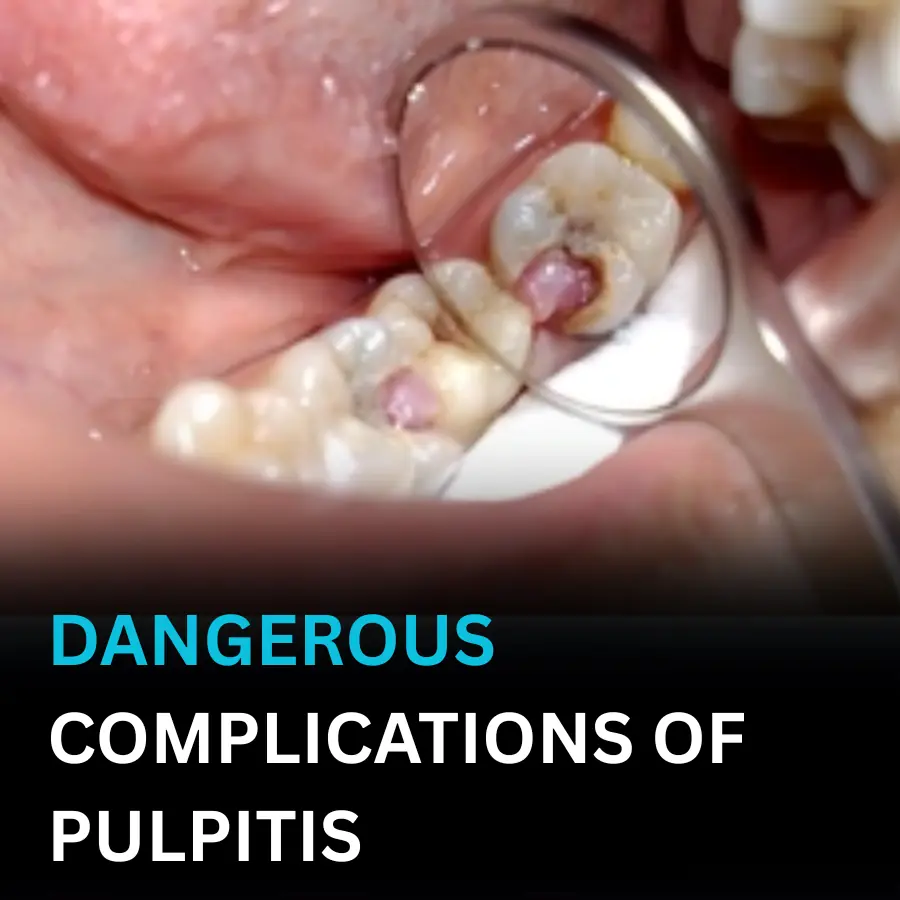
Pulpitis not only causes significant pain and discomfort but can also lead to serious complications if not diagnosed and treated promptly.
The dental pulp is a specialized connective tissue containing nerves and blood vessels, located within a cavity surrounded by dentin. The pulp extends through both the crown and the root of the tooth (known as the pulp chamber and root canals), protected by dentin and enamel. The root canals are extremely small, delicate channels that branch from the pulp chamber down to the tip of the root.
Causes of pulpitis
Although the pulp is protected by dentin and enamel—structures that seem robust and resistant—it can become exposed and inflamed if these protective layers are damaged.
Pulp disease is common and usually results from inflammation of the pulp tissues, most often due to complications of dental caries. If tooth decay is not treated correctly and early, bacteria in the oral cavity penetrate the exposed pulp through carious lesions and cause infection.
Other causes of pulp disease include:
-
Bacteria leading to pulpitis or periodontal inflammation
-
Chemical injury such as mercury or lead poisoning
-
Physical trauma causing disruption of blood supply to the pulp
-
Fractured, chipped, or severely worn teeth
-
Sudden changes in environmental pressure
Pulpitis often presents as severe toothache and discomfort.
Recognizing the signs of pulpitis
Pulpitis progresses through three stages, each with increasingly severe symptoms. As the disease advances, treatment becomes more difficult, and in severe cases the dead pulp must be removed.
Reversible pulpitis
This is the initial stage and often has minimal symptoms. The patient may occasionally experience mild toothache or brief sensitivity, especially at night or when consuming hot or cold foods. These symptoms can be mistaken for other dental issues.
This stage is short and difficult to detect. Few people recognize they have pulpitis at this point. If diagnosed early, the pulp can recover fully.
Acute pulpitis
Symptoms become more pronounced as the infection progresses:
-
Persistent or radiating pain that can last for hours
-
Severe, throbbing pain that may spread to adjacent teeth, gums, or even cause unilateral headache
-
Presence of pus inside the tooth, swollen gums
-
Foul-smelling breath
-
Sharp sensitivity when chewing or when food contacts the tooth
At this stage, daily activities and quality of life are significantly affected.
Necrotic pulpitis
This is the most advanced stage. The patient may no longer feel pain because the pulp tissue has died.
Necrotic pulp releases foul-smelling fluids through the root apex. These fluids, containing bacteria, can spread to surrounding soft tissues, causing infection, root damage, bone inflammation, and eventually destruction of the alveolar bone, leading to tooth loss.
Complications of pulpitis
Inflamed pulp becomes congested. If left untreated, necrotic pulp can lead to periapical inflammation, apical abscesses, and other severe complications such as root resorption, bone infection, swollen lymph nodes, and tooth loss.
Warning symptoms—including large cavities, trauma, frequent toothache, or tooth discoloration—require immediate dental evaluation, as they may indicate pulpitis or pulp necrosis.
Summary
Pulpitis is a common dental condition. Early detection allows for easier treatment, as inflammation at this stage can still be controlled and the tooth restored to normal health.
However, if the disease progresses, it may affect surrounding tissues. Necrotic pulp can leak through the root apex, causing periapical lesions, inflammation of connective tissues, jawbone infection, or the formation of granulomas and cysts. Without timely treatment, tooth loss may result.
Bacteria from the pulp can also spread to other organs, leading to complications such as maxillary sinusitis or infective endocarditis.