Found a Frog in Your Bathroom? The Meaning May Surprise You!
You walk into the bathroom, turn on the light, and suddenly notice a small creature sitting beside the bathtub or hiding near the drain. A frog! For a moment, you may wonder how it got inside, whether it is dangerous, and whether its unexpected appearance means something special. Some traditions associate frogs with wealth, renewal, fertility, and good fortune. Science, however, offers a different explanation—and it may be just as fascinating.
Finding a frog in your bathroom can be an unforgettable surprise. One moment, the room is quiet and familiar; the next, a tiny amphibian is sitting on a damp tile, clinging to a wall, or attempting to hide behind a toilet. For people who rarely encounter wildlife indoors, the sight can be confusing or even frightening.
The title of this story asks what it means when a frog appears in your bathroom. There are two ways to approach that question. The first is cultural: throughout history, frogs have been associated with rain, fertility, abundance, transformation, and prosperity. The second is practical: frogs need suitable moisture, shelter, food, and temperatures, and a bathroom can occasionally provide several of these conditions.
Understanding both explanations helps separate folklore from biology. A frog in the bathroom is not proof that money is coming, that a major life change is approaching, or that something supernatural has happened. It is usually a small wild animal that has found its way into a human-made environment.
But the encounter can still carry a meaning for someone who enjoys traditional symbolism. It can become a reminder of renewal, adaptability, and the surprising ways nature enters everyday life.
There is also an important detail in the supplied picture: the large close-up photograph appears to show a dragon fruit, not a frog. It does not visually document the bathroom encounter described in the accompanying article. The discussion below follows the article's subject—the unexpected appearance of a frog indoors—and uses clearly related frog photographs at the end.
To understand why this small visitor might appear in such an unusual place, it is worth looking first at the natural habits of frogs, then at the symbolism that has made them meaningful in different cultures, and finally at what homeowners should do if they discover one.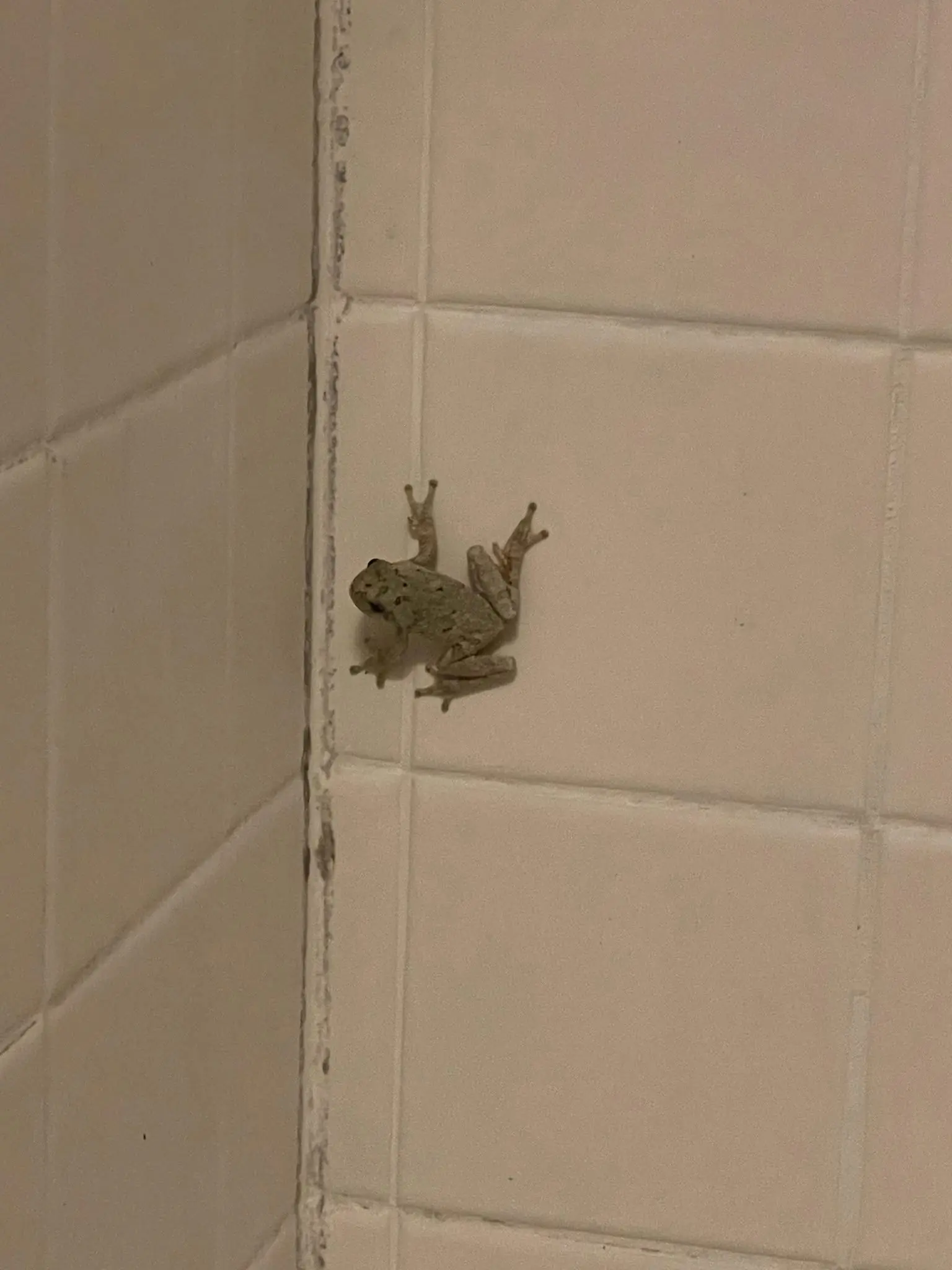
Chapter 1: Why Would a Frog Appear in Your Bathroom?
A bathroom may seem like an unlikely place for wildlife, but from a frog's perspective, it can offer several attractive conditions.
Frogs are amphibians, and many species depend on moisture to prevent their bodies from drying out. Unlike animals with thick, relatively waterproof skin, frogs generally have permeable skin through which water and certain substances can pass. This makes their relationship with their surroundings especially important.
A damp bathroom may provide temporary shelter when outdoor conditions are hot, dry, or otherwise uncomfortable.
Moisture is one of the biggest attractions
Frogs are particularly sensitive to water loss. Many species remain active in humid conditions and seek cool, moist places when the environment becomes too dry.
A bathroom can contain damp floor tiles, wet corners, condensation, water around plumbing fixtures, and spaces beneath sinks. Even after a shower has ended, some areas may remain humid for a considerable time.
To a small frog moving through a residential area, these conditions can offer a temporary refuge.
This does not mean every bathroom is suitable habitat. Frogs still need appropriate temperatures, access to food, and a way to avoid dangerous chemicals and other threats. But a damp room can sometimes provide enough shelter for a brief visit.
Bathrooms may attract insects
Another possible attraction is food.
Many frogs feed on insects and other small invertebrates. Depending on the species, their diet may include flies, mosquitoes, moths, beetles, spiders, and other small creatures.
Bathrooms can occasionally attract insects, especially when windows are left open, outdoor lights draw flying insects toward the building, or standing water and damp conditions encourage certain pests.
A frog that finds insects near a window, drain area, or light source may remain nearby while searching for food.
This is one reason an unexpected frog sighting may be connected to other environmental conditions around the home. The animal may not be attracted to the bathroom itself so much as to the insects and moisture available there.
Cool, sheltered corners offer protection
Frogs do not always remain in open areas. Many species hide beneath leaves, stones, logs, vegetation, or other objects that provide protection from predators and extreme temperatures.
A bathroom can contain similar hiding opportunities on a much smaller scale.
The space behind a toilet, the gap beneath a cabinet, a dark corner beside a bathtub, or an opening around a pipe may provide shelter.
These places can be difficult for homeowners to notice, which explains why a frog may seem to appear suddenly. It may have entered earlier and remained hidden until someone switched on the light or moved an object.
A frog may simply be passing through
Not every indoor sighting means that an animal has settled inside the house.
A frog may enter through an open door, a damaged window screen, a ventilation opening, or a gap around plumbing. It may then move through the home while searching for a way back outside.
In some cases, it may have followed insects or moved away from an area exposed to heat, sunlight, or heavy rain.
The appearance of one frog does not automatically mean there is an infestation or a hidden nest inside the building.
It may be an isolated encounter.
Why the bathroom rather than another room?
The bathroom often has a combination of conditions that other rooms do not.
A bedroom may be dry and carpeted. A living room may have little standing moisture. A kitchen may contain food, but its surfaces and temperatures may not provide the same kind of temporary refuge.
A bathroom, by contrast, can remain humid and cool, with water sources and small gaps around fixtures.
For a frog that has accidentally entered a home, these conditions may make the bathroom a convenient place to stop.
The practical explanation is therefore relatively simple: the frog is probably responding to its environment, not delivering a mysterious message to the homeowner.
Chapter 2: What Frogs Symbolize in Different Cultures
Although biology explains why a frog may enter a bathroom, people have interpreted encounters with frogs in many different ways.
Across different societies, frogs have been connected with water, rain, fertility, renewal, prosperity, and the changing seasons. These associations developed partly because frogs are closely linked to wet environments and because their life cycle is one of the most visible transformations in nature.
The symbolism varies considerably from one culture to another. There is no single universal meaning, and beliefs should not be confused with scientific evidence.
Frogs and the promise of rain
In agricultural communities, rain has traditionally represented survival and prosperity.
Crops need water to grow. Livestock need reliable water sources. Families depend on successful harvests for food and income. In places where rainfall is seasonal or unpredictable, signs of approaching rain can carry enormous significance.
Frogs are often heard calling during wet weather or around breeding periods. Their sudden appearance and increased activity after rainfall may have made them natural symbols of changing weather and renewed water supplies.
Over time, these associations helped connect frogs with abundance and good fortune.
A frog appearing near a home may therefore remind someone of the relationship between water, agriculture, and the conditions that support life.
Frogs as symbols of fertility
Frogs reproduce in or near water, and many species lay large numbers of eggs.
Their breeding activity is often associated with ponds, wetlands, and rainy seasons. In cultures that closely observed natural cycles, this behavior could become a symbol of fertility and the continuation of life.
The connection is symbolic rather than a prediction about an individual's future.
Nevertheless, it helps explain why frogs have sometimes appeared in art, stories, decorations, and traditional beliefs connected with family growth and abundance.
Transformation and renewal
One of the most recognizable features of a frog's life cycle is its transformation.
A typical frog begins life as an egg, develops into a tadpole, and gradually changes as it grows limbs and develops the body of an adult amphibian.