Walk through almost any supermarket produce section and you'll probably notice several green, slender herbs that look remarkably similar. Green onions, scallions, spring onions, and chives all have a fresh green appearance and are commonly used to add flavor to meals.
Because of their similar appearance, it's easy to assume they're all the same thing.
They're not.
Although these ingredients belong to the same botanical family—the Allium family, which also includes garlic, leeks, shallots, and bulb onions—they differ in appearance, flavor, texture, growing habits, and culinary uses.
The confusion becomes even greater because the names aren't always used consistently. In some countries, green onion and scallion mean essentially the same thing. In other places, "spring onion" refers to a plant with a more developed bulb.
Chives are somewhat easier to distinguish botanically, but they can still be confused with very young green onions because of their thin green leaves.
Understanding these differences can make shopping and cooking much easier.
First: Why Are They So Similar?
Green onions, scallions, spring onions, and chives are all members of the Allium genus or closely related Allium group.
This family is known for plants containing sulfur-containing compounds that produce their characteristic onion-like aromas and flavors.
That's why these plants share certain characteristics:
-
Fresh, savory aromas
-
Mild to moderately pungent flavors
-
Green leaves
-
Similar culinary uses
-
A natural affinity for soups, salads, sauces, and savory dishes
However, the plants don't all develop in exactly the same way.
Some are harvested very young.
Others are allowed to develop a small bulb.
Chives are a distinct perennial herb with much thinner leaves.
Those differences become important once you know what to look for.
1. What Are Green Onions?
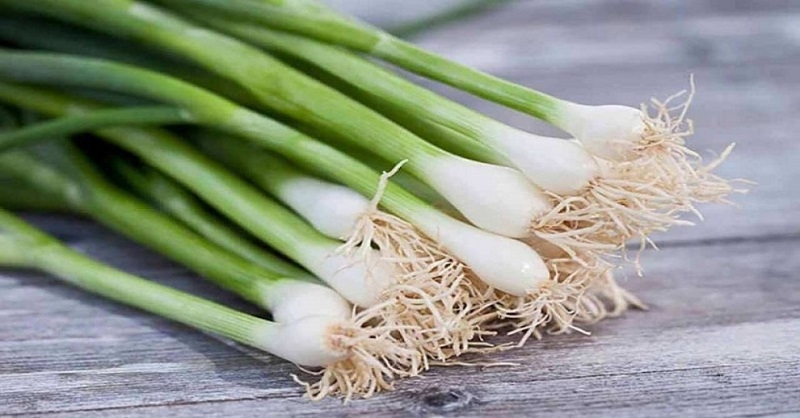
Green onions are onions harvested while the plant is still young.
They typically have:
-
Long green leaves
-
A slender white lower portion
-
A very small or barely developed bulb
-
A mild onion flavor
The entire plant is generally edible.
You can use both the white and green portions in cooking.
The white section tends to have a slightly stronger onion flavor, while the green tops are fresher and milder.
Green onions are extremely versatile and appear in cuisines around the world.
They're commonly used in:
-
Stir-fries
-
Soups
-
Noodle dishes
-
Fried rice
-
Salads
-
Dips
-
Garnishes
-
Sauces
-
Omelets
2. Are Green Onions and Scallions the Same?
This is where the terminology gets confusing.
In many places, green onion and scallion are essentially interchangeable names.
Both generally refer to young onions harvested before they develop a large mature bulb.
In botanical terms, however, different varieties may be sold under these names.
Some scallion varieties are specifically bred to produce very little bulb development.
So when you see "scallions" at a grocery store, you can generally expect something very similar to what is sold as green onions.
For everyday cooking, the distinction often doesn't matter much.
If a recipe calls for scallions and you have green onions, they're usually an easy substitute.
3. What Are Spring Onions?
Spring onions are where things become more interesting.
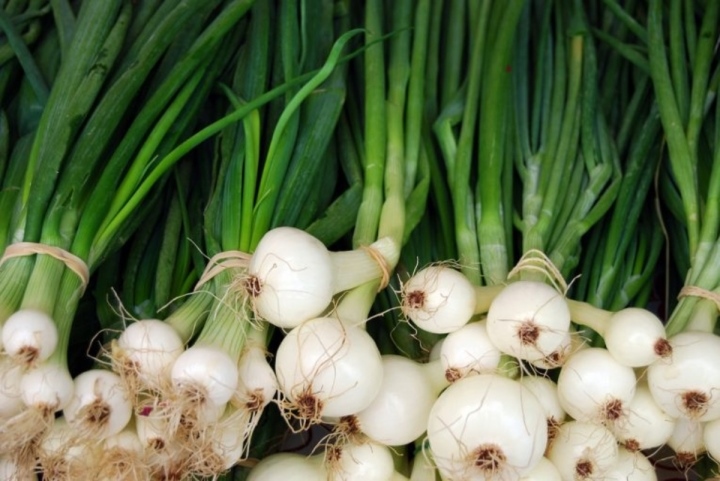
A spring onion is generally allowed to develop a more noticeable bulb before harvesting.
The bulb can be:
-
White
-
Pale yellow
-
Slightly reddish or purple depending on variety
The green leaves remain attached.
Because the plant has had longer to mature, spring onions typically have a stronger and more pronounced onion flavor than young scallions.
However, the exact appearance and terminology can vary significantly by region.
In some countries, the term "spring onion" is used for young onions that look almost identical to scallions.
That's why names alone can sometimes be unreliable.
4. What Makes Spring Onions Different From Green Onions?
The easiest visual clue is usually the bulb.
Green onions/scallions:
Small or barely developed bulb
Spring onions:
More noticeable, rounded bulb
Spring onions may also have a stronger flavor.
That makes them particularly useful when you want onion flavor without using a fully mature storage onion.
The bulb can be sliced, grilled, roasted, pickled, or cooked into sauces.
The green leaves can also be used much like green onions.
5. What Are Chives?
Chives are different from the other three.
They are a perennial herb with very slender, hollow green leaves.
Instead of looking like miniature onions, chives tend to resemble thin blades of grass.
Their flavor is usually:
-
Mild
-
Fresh
-
Delicately onion-like
-
Slightly garlicky in some varieties
Chives are generally used as an herb rather than as a vegetable.
They are particularly popular as a finishing ingredient.
You might find chopped chives sprinkled over:
-
Baked potatoes
-
Soups
-
Eggs
-
Cream cheese
-
Salads
-
Fish
-
Sauces
-
Dips
6. Chives Don't Usually Have a Large Bulb
This is one of the easiest ways to distinguish chives from green onions.
A typical bunch of chives consists primarily of thin green stems.
There isn't a large white section comparable to the lower portion of a green onion.
The leaves are also considerably narrower.
If you're holding two bunches and one looks like miniature green grass while the other has thicker leaves and a white base, you're probably looking at chives and green onions.
7. How Do Their Flavors Compare?
Flavor is another major difference.
Chives
Very mild and delicate.
They're excellent when you want a subtle onion flavor without overpowering the dish.
Green onions/scallions
Mild to moderately oniony.
The white portion is stronger than the green portion.
Spring onions
Usually stronger and more mature-tasting than scallions.
The bulb can provide a noticeable onion flavor.
The flavor also changes depending on whether they're eaten raw or cooked.
8. Which One Is Best for Salads?
All four can work in salads, but they produce different results.
For a delicate salad, chives can add a subtle onion note without dominating other ingredients.
Green onions are better when you want a more noticeable crunch and fresh onion flavor.
Spring onions can provide stronger flavor and a slightly more substantial texture.
The best choice depends on what you're making.
9. Which One Is Best for Stir-Frying?
Green onions and scallions are particularly useful in stir-fries.
They can be added at different stages depending on the desired result.
The white portion can be cooked early with garlic, ginger, or other aromatics.
The green portion can be added near the end to preserve its fresh flavor and color.
Spring onions can also work well, especially when sliced into larger pieces.
Chives are generally better used as a finishing herb rather than as a main stir-fry vegetable.
10. Which One Works Best as a Garnish?
This is where chives shine.
Their delicate appearance makes them an attractive finishing ingredient.
Finely chopped chives can add:
-
Freshness
-
Color
-
Mild onion flavor
without overwhelming the dish.
Green onion tops can also make an excellent garnish, especially when sliced into thin rounds or strips.
11. Can You Substitute One for Another?
Usually, yes—but the results won't be identical.
If a recipe calls for scallions:
Use green onions.
If it calls for green onions:
Scallions are generally fine.
If it calls for spring onions:
Green onions can work, but you may need to use more if you want a similar onion intensity.
If it calls for chives:
Green onion tops can be used in some dishes, but their flavor and texture will be stronger.
Substitution depends on the recipe.
A delicate cream sauce may benefit from chives, while a stir-fry may be better with green onions.
12. Green Onions Have Two Distinct Flavor Zones
One reason green onions are so useful is that the different parts of the plant behave differently.
The white portion tends to be more pungent and onion-like.
The green portion is usually milder and fresher.
This means you can use the same vegetable in two different ways.
For example:
White section: cook with garlic and ginger.
Green section: sprinkle over the finished dish.
This technique is especially common in Asian cooking.
13. Spring Onion Bulbs Can Be Used Like Small Onions
Because spring onions develop a more substantial bulb, you can use them in ways that resemble mature onions.
Try:
-
Grilling
-
Roasting
-
Sautéing
-
Pickling
-
Chopping into salsa
-
Adding to soups
Their flavor tends to be fresher and less intense than a fully mature onion.
14. Chives Are Better Added Toward the End
Chives have a delicate flavor that can disappear with prolonged cooking.
For that reason, they're often added near the end of preparation.
Try sprinkling fresh chives over a dish immediately before serving.
They're particularly good with foods that already have rich flavors, such as:
-
Potatoes
-
Eggs
-
Cheese
-
Cream sauces
-
Fish
Their mild flavor provides contrast rather than dominating the dish.
15. What About Nutritional Differences?
All four can contribute useful nutrients to the diet.
As members of the Allium family, they provide various plant compounds along with vitamins and minerals.
Depending on the variety and serving size, they can contribute:
-
Vitamin C
-
Vitamin K
-
Folate
-
Fiber
-
Antioxidant compounds
However, it's important not to exaggerate the health effects of any single herb or vegetable.
Eating a variety of vegetables is much more meaningful than relying on one particular ingredient.
16. Alliums Contain Sulfur Compounds
Onions, garlic, scallions, and related plants contain sulfur-containing compounds responsible for much of their characteristic aroma.
These compounds are also one reason cutting onions can make your eyes water.
The intensity varies among species and varieties.
Generally, more mature or pungent onions produce a stronger sensory experience.
Chives are usually much gentler.
17. Are They Good for Your Digestive System?
These plants can contribute fiber and plant compounds to the diet.
However, some people may experience digestive discomfort after eating large amounts of onions or other Allium vegetables.
This can be particularly relevant for people who are sensitive to certain fermentable carbohydrates.
Symptoms may include:
-
Bloating
-
Gas
-
Abdominal discomfort
If you notice these symptoms consistently, consider discussing your diet with a qualified healthcare professional or registered dietitian.
18. How Should You Store Green Onions?
Green onions are best kept refrigerated.
You can store them in a breathable bag or container to help prevent excessive moisture buildup.
Some people place the roots in a small amount of water and loosely cover the tops.
The goal is to keep the leaves crisp without allowing them to become overly wet.
Before storing, avoid washing them unless you're going to dry them thoroughly.
Excess moisture can encourage spoilage.
19. How Should You Store Chives?
Chives are delicate.
They can wilt relatively quickly if improperly stored.
Refrigeration is generally best.
Wrap them loosely in a slightly damp paper towel or store them in an appropriate container designed to retain freshness.
Fresh chives are usually best used relatively quickly because their delicate leaves can lose quality over time.
20. Can You Freeze Them?
Yes.
Green onions can be frozen, especially if you plan to use them in cooked dishes.
Chives can also be frozen.
However, freezing can affect texture.
Frozen herbs are usually better for:
-
Soups
-
Sauces
-
Stir-fries
-
Cooked dishes
rather than recipes where you want the crisp texture of fresh herbs.
21. How to Tell Them Apart at the Grocery Store
Here's a simple visual guide.
Green onions/scallions
Look for:
-
Long green leaves
-
White lower section
-
Very small bulb
-
Medium-thin stalks
Spring onions
Look for:
-
Green leaves
-
Noticeable rounded bulb
-
Stronger onion appearance
Chives
Look for:
-
Very thin green stems
-
No substantial white base
-
Grass-like appearance
-
Small diameter
If you're unsure, check the label because regional naming can differ.
22. Why the Names Are So Confusing
The biggest problem is that common names aren't standardized internationally.
One country's "spring onion" may look almost identical to another country's "green onion."
A grocery store may even use "scallion" and "green onion" interchangeably.
That's why botanical definitions can sometimes be less useful to home cooks than simply looking at the plant's physical characteristics.
When shopping, focus on:
How thick are the leaves?
Is there a bulb?
How developed is the bulb?
How strong is the aroma?
Those clues are often more practical.
23. A Quick Comparison
Ingredient Appearance Flavor Typical Use Green onionLong green leaves, white base Mild onion Stir-fries, soups, salads ScallionSimilar to green onion Mild, fresh Garnish, cooking Spring onionMore developed bulb Stronger onion flavor Grilling, cooking, salads ChivesVery thin green stems Delicate onion flavor Garnish, sauces, eggsKeep in mind that terminology can vary by region.
24. Which One Should You Choose?
It depends on the dish.
Want a fresh onion crunch?
Choose green onions or scallions.
Want stronger onion flavor?
Try spring onions.
Want a subtle finishing touch?
Choose chives.
Making Asian-style dishes?
Green onions and scallions are especially versatile.
Making a creamy potato dish?
Chives are an excellent choice.
Grilling vegetables?
Spring onions can be particularly delicious.
25. Try Using the Whole Green Onion
One common mistake is throwing away the green tops.
They're completely usable.
The white part can be cooked into the base of a dish, while the green portion can be used as a garnish.
This helps reduce food waste and gives you two different flavor profiles from the same vegetable.
You can also use the roots for certain culinary or growing experiments, although they should be handled hygienically.
26. Don't Confuse Chives With Garlic Chives
There's another source of confusion.
Garlic chives are related to regular chives but have broader, flat leaves and a stronger garlic-like flavor.
Regular chives have thin, tubular leaves.
Garlic chives are commonly used in Asian cuisine and are particularly popular in dumplings, stir-fries, and noodle dishes.
So even within the "chive" category, there are meaningful differences.
27. What About Leeks?
Leeks are also part of the Allium family.
They look somewhat like enormous green onions but are much larger and have a thicker white shaft.
Their flavor is mild and sweet when cooked.
Leeks are commonly used in:
-
Soups
-
Stews
-
Roasted dishes
-
Pies
-
Sauces
They're another example of how many plants in the onion family can look similar while behaving differently in the kitchen.
28. A Simple Way to Remember the Difference
Think about the progression:
Chives → thin green herb
Scallions/green onions → young onion with little bulb
Spring onions → young onion with a more noticeable bulb
That simple mental picture will help you distinguish most of them.
29. Don't Worry Too Much About the Names
If you accidentally call scallions "green onions," you're unlikely to cause a culinary disaster.
In many recipes, the terms are used interchangeably.
The important thing is understanding how the ingredient tastes and how it behaves when cooked.
If a recipe needs a delicate herb, use chives.
If it needs a fresh onion bite, use scallions or green onions.
If it needs a more substantial onion flavor, consider spring onions.
Final Thoughts
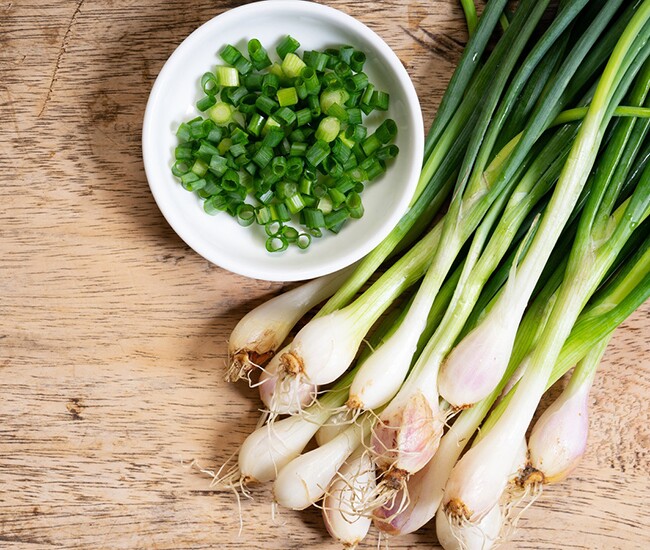
Green onions, scallions, spring onions, and chives may look similar, but they aren't exactly the same.
Green onions and scallions are generally very closely related in everyday culinary use and are often interchangeable.
Spring onions typically have a more developed bulb and a stronger onion flavor, although the name varies by region.
Chives are much thinner and more delicate, making them especially useful as a finishing herb.
The easiest way to tell them apart is to look at the bulb, thickness, texture, and overall shape rather than relying entirely on the name printed on the package.
And once you understand the differences, you'll start noticing that each one has its own place in the kitchen.
Use green onions or scallions for stir-fries, soups, noodles, and fresh garnishes.
Choose spring onions when you want a little more onion character and a substantial bulb.
Reach for chives when you want a delicate, fresh finish without overwhelming the dish.
Ultimately, there isn't one "best" choice.
They're simply different ingredients with different strengths.
The next time you see a bunch of thin green stalks at the market, take a closer look—you may be looking at a scallion, a spring onion, or chives, and knowing the difference can make your next meal even better.