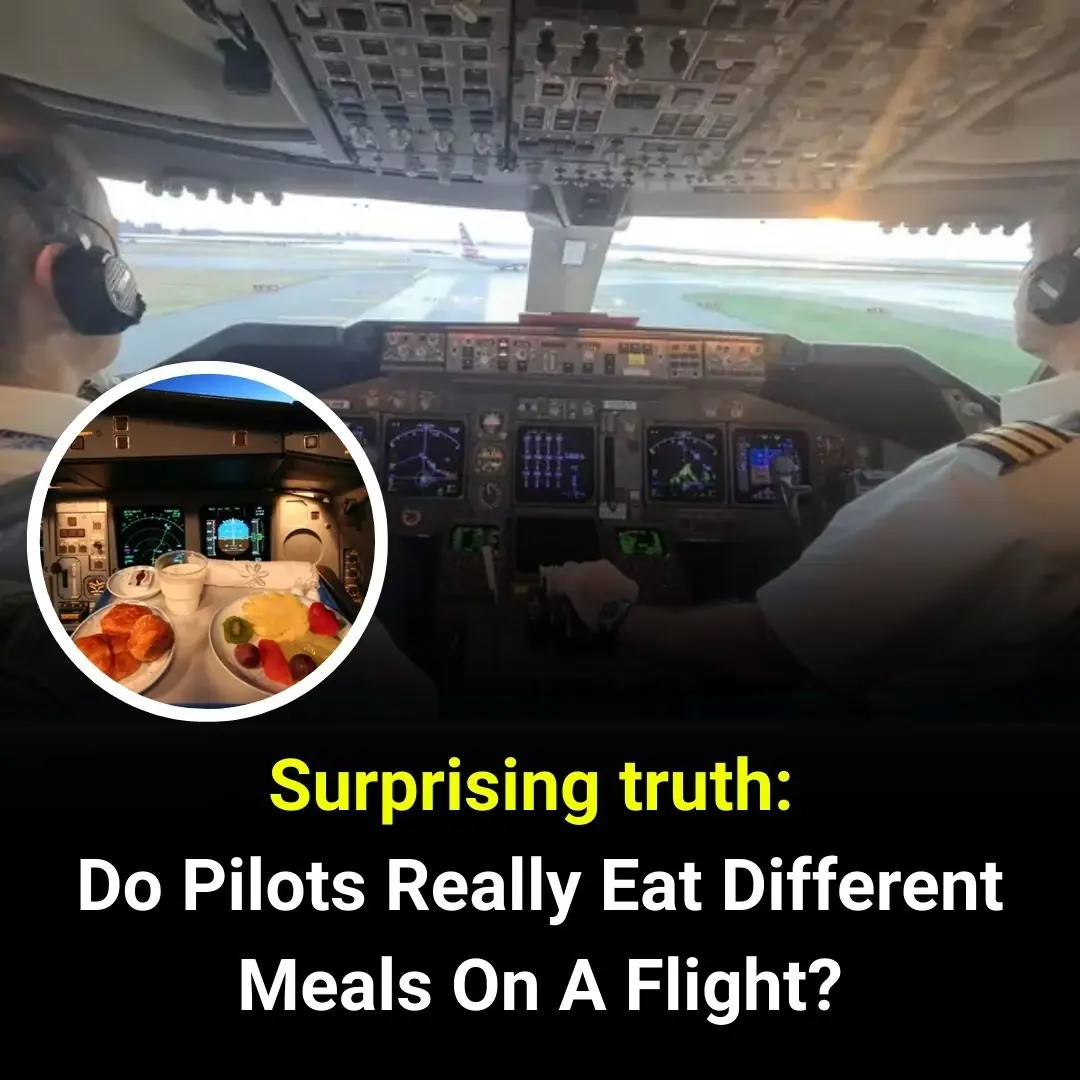
One of the most widespread stories among travelers is that aircraft pilots eat different meals to avoid an entire flight crew suffering from food poisoning, effectively rendering the flight pilotless. But is this really the case?
Do pilots have different meals to avoid food poisoning?
Food poisoning is the last thing anyone wants to be affected by onboard an aircraft. Fortunately, this is one of the rarest ailments often found in the airline industry, and only a handful of such events have occurred throughout history. For instance, 144 people needed hospitalization (197 people fell ill) in the largest food poisoning incident aboard a commercial airliner on February 3rd, 1975. This incident occurred onboard a Japan Air Lines flight between Anchorage, Alaska, and Copenhagen, Denmark.
But, besides this specific example and a few others, massive food poisoning is rare. Airlines work extensively to prevent this and sometimes take extreme measures, such as serving buckets of Kentucky Fried Chicken (KFC) to passengers due to catering issues; this incident took place earlier this year onboard a British Airways Nassau-London Heathrow flight.
“We have special crew meals loaded with different choices for different dietary needs, although we also get any meals leftovers from all three cabin classes. Upper Class is always a good choice, although I do love the curries offered in our Premium cabin. Just like the movies, we don’t both have the same meal for obvious reasons.”
Simple Flying reached out to other airlines for comment on the subject. Colombia’s avianca confirmed it is mandatory that their pilots have different meals when flying to avoid food poisoning events. Aerolíneas Argentinas has the same protocol.

How common is mass food poisoning on an airplane?
According to research by the Australian Transport Safety Bureau (ATSB), between 2010 and 2014, the country had an average of 23 pilot incapacitation occurrences reported per year. About 75% of the incapacitation occurrences happened in high-capacity air transport operations, with the leading cause being gastrointestinal illness. With multi-pilot crews in these operations, these occurrences had minimal effects on the flights, said the ATSB. It added,
“In high capacity air transport operations, the practice of ensuring all pilots on the same flight eat different meals prior to and during the flight has been an effective defense preventing all pilots on the same flight becoming incapacitated at the same time.”
Additionally, modern aircraft are technologically equipped to store the catering service in the best conditions. However, the cabin crew is responsible for protecting the catering containers, ensuring they are sealed, and protecting them against any hazards such as dust, temperatures, and bugs.