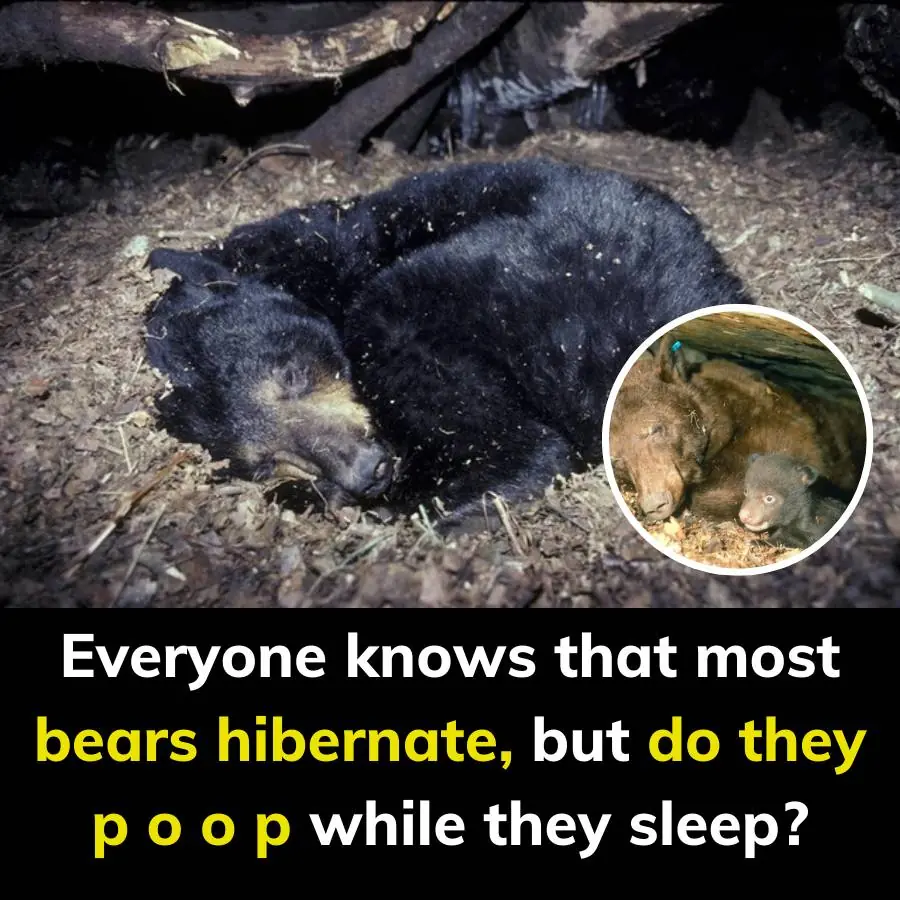
A bear's hibernation period can last up to nearly six months, and during this time, some species, such as the black bear (scientific name: Ursus americanus), can reduce its heart rate from 55 beats per minute to just nine beats per minute, reducing its metabolic rate by up to 53%. By the way, they don’t “poop” during hibernation
To understand what goes on inside bears’ bodies when they hibernate, we need to know what hibernation is, and why bear sleep isn’t really “hibernation.”
At its core, hibernation is when an animal enters a state of complete inactivity, with blood flow and metabolic rate reduced to levels that are almost unbearable for non-hibernating species, like us humans.
Some species, like arctic ground squirrels, are known as true hibernators because they can drop their body temperature below freezing, turning them into a living… popsicle that will “melt” come spring.
Bears, on the other hand, maintain a high body temperature during hibernation, both to keep their cubs warm and to keep an eye out for potential dangers.
Some researchers believe that bears are actually It turns out that bears don’t hibernate at all, but others think it’s a “super hibernation” state because being able to stay alert to their surroundings, maintain a high body temperature, and not need to eat, move, or poop is pretty amazing.
Long ago, when researchers first began studying how bears hibernate, they often found masses of unidentified material in their guts. At the time, they thought that this intestinal blockage was created by the plants they ate, and their own fur, which is generally indigestible.
At the time, it was thought that this strange diet was used by bears to clean out their digestive tracts and create a plug, preventing any new waste from moving through until spring.
But a recent study has shown that bears don’t actually “diet” to create the intestinal blockage. Instead, intestinal secretions and cells are constantly produced during hibernation, creating waste even when bears have nothing to eat.
“During the five to seven months they spend sleeping in their dens, bears accumulate waste near the end of their intestinal tracts to create a plug that is 1.5 to 2.5 inches (3.8 to 6.4 centimeters) in diameter,” explains the North American Bear Center.
“A waste plug is simply waste that has been stored in the intestines for so long that the intestinal walls have absorbed all the liquid out of it, leaving it dry and hard.”
Based on video footage from bear dens, researchers have shown that the reason why substances such as plant matter and hair are often found in waste plugs is because bears spend a lot of time licking themselves even while sleeping, causing leaves, hair, and other things to enter their intestines.
After hibernation, which lasts about seven months, bears “unplug” right outside the cave entrance. These plugs are usually very light in smell and not unpleasant.
So you know, bears do not poop when hibernating because their bodies are constantly creating cells, creating waste even when there is no food. These substances are stored to form a “plug”, so they do not need to “poop” when sleeping, after all, no animal wants to have their sleep disturbed by such an “unpleasant” reason, right?