The next time you finish charging your phone, take a second to look at the adapter and the outlet. That small check may be more valuable than worrying about the charger simply being plugged in.
Additional Things Every Household Should Know About Unplugged Phone Chargers
How Children and Pets Can Make Charger Safety More Important
A phone charger may look harmless, but its location can make a difference, especially in homes with young children or curious pets.
Children may pull on charging cables, tug adapters out of wall sockets, or place small accessories in their mouths. Dogs and cats may chew exposed cables or knock chargers onto the floor. These behaviors can damage electrical equipment and create avoidable hazards.
To reduce these risks, keep chargers and cables out of reach whenever possible. Use cable organizers to prevent loose wires from dangling near beds, desks, or play areas. Avoid leaving damaged cables where children or pets can access them.
When a charger is not needed, unplugging it and storing it in a safe location can help prevent accidental damage. However, unplugging alone does not eliminate every risk: damaged cables should still be replaced, and electrical outlets should remain appropriately protected.
Parents should also teach older children not to pull charging adapters from outlets by their cables. Instead, they should hold the plug itself when disconnecting equipment, provided the plug and outlet are safe to handle.
These small precautions can help create a safer charging environment without making everyday technology difficult to use.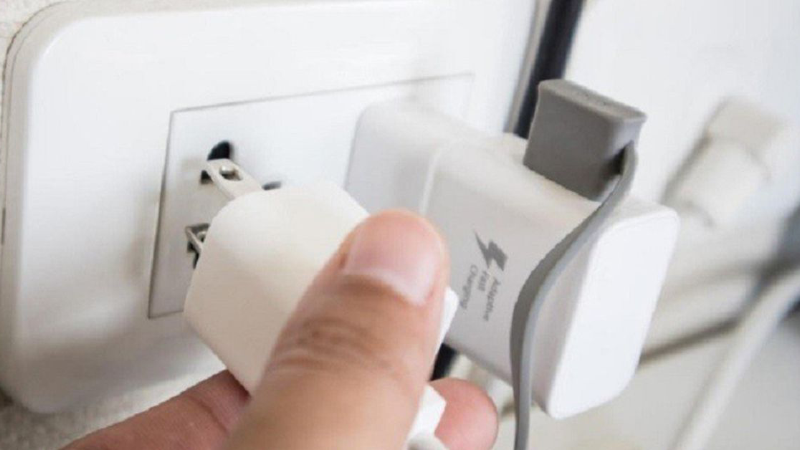
Are Smart Plugs a Good Alternative to Unplugging Chargers?
Some households use smart plugs or switched power strips to control electricity supplied to charging equipment.
Depending on the product, a smart plug can allow users to switch off an outlet remotely or establish a schedule. This may be convenient for people who regularly forget to disconnect unused electronics.
However, a smart plug is not automatically safer than a conventional outlet. Its safety depends on its quality, electrical rating, compatibility, and correct installation. Choose a reputable product that meets the relevant safety requirements and never exceed its rated load.
There is also a practical consideration: the smart plug itself may consume a small amount of standby electricity while remaining connected. Therefore, it may not eliminate all electricity use associated with the arrangement.
For a single phone charger, manually unplugging the adapter may be simpler. For several devices, a properly rated switched power strip may offer a convenient way to disconnect equipment when it is not in use.
Whatever option you choose, avoid inexpensive electrical accessories from unknown manufacturers and do not use them if they become unusually hot, smell burnt, or show visible damage.
What About Thunderstorms and Power Surges?
Another question concerns chargers left connected during thunderstorms.
Lightning can cause electrical surges that travel through power lines and potentially damage connected equipment. The likelihood and severity of damage depend on the circumstances, including the electrical installation and the effectiveness of any surge protection.
A charger left in an outlet without a phone may still be connected to the electrical supply, but this does not mean every thunderstorm will damage it.
If severe thunderstorms are expected and you want to protect sensitive electronics, disconnecting equipment from the mains before the storm arrives can reduce exposure to certain surge-related risks. Never attempt to unplug equipment during an active electrical hazard or when doing so would require approaching a sparking or damaged outlet.
Surge protectors can provide additional protection when appropriately selected, but they do not guarantee protection against every electrical event.
A Simple Rule for Everyday Charging
The best approach is to make charger safety part of your normal household routine rather than treating it as a reason for constant worry.
Use reliable equipment, keep adapters in dry and ventilated locations, inspect cables periodically, and replace damaged products promptly. If you do not need a charger, unplugging it is a reasonable choice that also eliminates its standby electricity consumption.
Most importantly, remember that an unused charger is not automatically dangerous. A good-quality adapter in sound condition is designed to operate safely under normal conditions. The greater concerns are defective equipment, poor electrical connections, excessive heat, and unsafe placement.
By paying attention to these factors, you can make informed decisions about your charging habits and reduce avoidable risks around your home.