Flushing the toilet is one of those everyday habits most people perform without giving it a second thought. You use the bathroom, press the handle or button, wash your hands, and move on.
But have you ever wondered whether you really need to flush after every single use?
The answer is more complicated than a simple yes or no.
For some situations, flushing immediately is clearly the most hygienic choice. In other circumstances—particularly when you're at home and the toilet has only been used for urine—some people choose to delay flushing to reduce water consumption. However, leaving waste sitting in the toilet for extended periods can create unpleasant odors, encourage bacterial growth, and make the bathroom less comfortable.
There is also an important distinction between urine, feces, and other substances that may enter the toilet. What is appropriate for one situation may not be appropriate for another.
So, what should you actually do?
Let's take a closer look at the science, hygiene considerations, water usage, and practical habits that can help you make a sensible decision.

Why Do We Flush the Toilet in the First Place?
The primary purpose of flushing is simple: to remove human waste from the toilet bowl and transport it into the wastewater system.
A toilet is designed to temporarily hold waste before water moves it through the drain and sewer or septic system.
Flushing accomplishes several things at once:
-
Removes feces and urine from the bowl
-
Reduces unpleasant odors
-
Keeps the toilet surface cleaner
-
Prevents visible waste from remaining in the bathroom
-
Helps maintain basic bathroom hygiene
-
Moves waste into the appropriate wastewater treatment system
For fecal waste, flushing promptly is generally the most practical and hygienic approach.
Unlike urine, feces can contain a wide variety of microorganisms, including bacteria, viruses, and parasites. Although simply seeing feces does not mean that you will automatically become sick, allowing fecal material to remain exposed in a bathroom is generally undesirable.
This is particularly important in households with young children, older adults, or people with weakened immune systems.
What About Urine?
This is where the question becomes more interesting.
Urine from a healthy person is primarily water, along with dissolved waste products such as urea, electrolytes, and other compounds.
Because urine is liquid and usually contains fewer microorganisms than feces, some households choose not to flush the toilet immediately after every urination.
You may have heard the phrase:
“If it's yellow, let it mellow.”
The idea is to reduce unnecessary flushing and conserve water.
Whether this makes sense depends on the circumstances.
If you are at home, the toilet has only been used for urine, and there is no strong odor or hygiene concern, waiting until later to flush may reduce the number of flushes.
But that doesn't mean you should leave urine in the toilet indefinitely.
Does Not Flushing Urine Save Water?
Potentially, yes.
Every toilet flush uses water, although the amount varies considerably depending on the toilet's design.
Older toilets can use substantially more water per flush than modern high-efficiency models. Newer toilets are generally designed to accomplish the same job using less water.
If a person flushes after every urination, those individual flushes can add up over the course of a day.
For example, imagine someone urinates five times during the day and flushes after every use. That's five flushes.
If the same person waits and flushes only after several uses, the total number of flushes could be lower.
For households trying to reduce water consumption, this may make a small difference.
However, the actual savings depend on:
-
The type of toilet
-
How much water each flush uses
-
How frequently the toilet is used
-
How many people live in the household
-
Whether the toilet is flushed for urine only or for feces as well
Modern low-flow toilets can significantly reduce water consumption without requiring people to avoid flushing altogether.
So if water conservation is your goal, using an efficient toilet and fixing leaks may be more important than simply avoiding every urine flush.
What Happens When Urine Sits in the Toilet?
Urine doesn't remain chemically unchanged forever.
When urine sits in a toilet bowl, bacteria can break down urea into compounds that contribute to the characteristic smell associated with old urine.
One important result is the formation of ammonia, which has a sharp, unpleasant odor.
This is one reason a bathroom can begin smelling unpleasant if urine is repeatedly left in the toilet.
Over time, urine can also contribute to mineral deposits and staining, particularly when the water contains high levels of minerals.
If urine remains in the bowl repeatedly without regular cleaning, you may eventually notice:
-
Yellow or brown discoloration
-
Mineral buildup
-
Stronger odors
-
A dirty-looking bowl
-
Deposits around the waterline
This doesn't necessarily mean the toilet has become dangerously contaminated, but it can make maintaining a clean bathroom much more difficult.
What About Feces? Should You Always Flush?
For feces, the answer is much clearer:
Flushing promptly is generally the best practice.
Fecal matter can contain microorganisms capable of causing illness. Leaving it sitting in an open toilet bowl provides no meaningful hygiene benefit.
It can also create:
-
Strong odors
-
Visible contamination
-
An unpleasant bathroom environment
-
Greater opportunity for contact with contaminated surfaces
If you're sharing a bathroom with other people, flushing after defecation is especially important.
There is generally little reason to deliberately leave fecal waste sitting in a toilet.
Can Flushing Spread Germs?
Yes, and this is an important part of toilet hygiene.
When a toilet is flushed, the movement of water can generate droplets and aerosols. Depending on the toilet design and other conditions, some microscopic particles can become airborne.
This phenomenon is sometimes called a toilet plume.
It doesn't mean that every toilet flush creates a dangerous cloud of disease-causing germs. The real-world health significance depends on many factors, including the microorganisms present, ventilation, toilet design, cleaning practices, and how people interact with the bathroom.
Nevertheless, it is one reason why basic bathroom hygiene matters.
A simple habit can help:
Close the toilet lid before flushing when a lid is available.
This may reduce the amount of material dispersed into the surrounding environment, although closing the lid does not create a completely sealed system.
And remember that many toilets don't have lids, particularly in public restrooms.
In those situations, good hand hygiene remains one of the most important defenses.

The Most Important Habit: Wash Your Hands
Whether you flush immediately or later, handwashing is one of the most important things you can do after using the bathroom.
Your hands can come into contact with:
-
Toilet handles
-
Flush buttons
-
Door handles
-
Faucets
-
Bathroom surfaces
-
Your own skin
-
Potentially contaminated areas
Even when you don't see anything on your hands, microorganisms can still be present.
A thorough handwashing routine should involve:
-
Wet your hands with clean running water.
-
Apply soap.
-
Rub your hands together thoroughly.
-
Clean the palms, backs of the hands, fingers, and areas around the nails.
-
Continue scrubbing for about 20 seconds.
-
Rinse thoroughly.
-
Dry with a clean towel or appropriate hand-drying method.
This habit is far more important than obsessing over whether you flushed a few seconds earlier or later.
Should You Flush Immediately in a Public Bathroom?
Generally, yes.
Public bathrooms are different from private bathrooms.
You don't know:
-
Who used the toilet before you
-
Whether the toilet was cleaned recently
-
Whether someone in the facility has an infectious illness
-
How frequently the bathroom is disinfected
-
Whether other people will need to use the toilet immediately afterward
For these reasons, leaving urine or feces behind in a public restroom is inconsiderate and unhygienic.
Flush after use.
In a public setting, water conservation should not come at the expense of basic sanitation.
What About Shared Bathrooms at Home?
Shared household bathrooms require a little more consideration.
If several people use the same toilet, regularly leaving urine in the bowl may create odor and cleanliness problems.
For example, imagine a family of four sharing one bathroom. If everyone avoids flushing after urination, the toilet may be used several times before it is flushed.
The result could be:
-
Stronger odor
-
More visible discoloration
-
More frequent cleaning requirements
-
A less pleasant bathroom environment
In such situations, flushing more frequently may simply be the more practical choice.
Is It Better to Flush With the Lid Closed?
If your toilet has a lid, closing it before flushing is a reasonable hygiene habit.
It can potentially reduce the amount of droplets and particles escaping directly into the surrounding air.
However, don't assume that closing the lid eliminates toilet aerosols entirely.
The toilet is not an airtight container, and particles can still escape through gaps and other pathways.
The bigger picture is therefore:
Close the lid if you have one, flush appropriately, clean the toilet regularly, and wash your hands.
There's no need to become overly anxious about ordinary toilet use.
Could Not Flushing Damage the Toilet?
Leaving urine in the toilet occasionally is unlikely to damage a properly functioning toilet.
The bigger concern is long-term accumulation.
Urine contains minerals and compounds that can contribute to deposits. If a toilet is repeatedly exposed to urine without regular flushing and cleaning, buildup may become more noticeable.
Hard-water areas can make this problem worse.
Eventually, you may see deposits around:
-
The waterline
-
The bowl
-
Under the rim
-
Drain openings
These deposits can become increasingly difficult to remove.
Regular cleaning is therefore important regardless of how frequently you flush.
What About Toilet Cleaners?
Some people try to compensate for infrequent flushing by using strong toilet-cleaning chemicals.
This isn't necessarily a good solution.
Using excessive amounts of cleaning chemicals can create unnecessary exposure to irritating substances. More importantly, cleaning products should never be mixed together unless the product instructions explicitly say it is safe.
For example, combining products containing bleach with certain acidic or ammonia-containing cleaners can produce dangerous gases.
A better approach is simple:
-
Clean the toilet regularly.
-
Follow product instructions.
-
Use appropriate ventilation.
-
Don't mix cleaning chemicals.
-
Keep cleaning products away from children and pets.
Good maintenance is more useful than trying to disinfect everything constantly.
What If the Toilet Smells Bad Even After Flushing?
A persistent toilet odor doesn't always mean you're not flushing enough.
There could be another problem.
Potential causes include:
1. Mineral buildup
Hard water can leave deposits that trap odors and make the toilet look dirty.
2. Dirty areas under the rim
The underside of the toilet rim can accumulate bacteria, mineral deposits, and other residue that aren't immediately visible.
3. Drain or sewer problems
A persistent sewage smell may sometimes indicate an issue with the plumbing system, drain trap, venting, or sewer connection.
4. Leaks
A hidden leak around the toilet base can cause unpleasant smells and potentially damage flooring.
5. Poor ventilation
Even a clean bathroom can smell unpleasant when moisture and odors have nowhere to escape.
If a strong sewage odor persists despite normal cleaning, the issue may require inspection by a qualified plumber.
What About Water Conservation?
There is an important balance here.
Water is a valuable resource, and reducing unnecessary consumption is worthwhile.
But you don't need to choose between environmental responsibility and basic hygiene.
Instead, consider practical improvements.
Use a water-efficient toilet
If your toilet is very old and uses a large amount of water per flush, replacing it with a modern efficient model can reduce consumption.
Fix leaks
A leaking toilet can waste surprisingly large amounts of water over time.
Sometimes you can hear a faint running sound even when nobody has used the toilet.
Don't flush unnecessarily
Don't use the toilet as a trash can for tissues, wipes, paper towels, or other objects that shouldn't enter the plumbing system.
Use appropriate flushing habits
Avoiding unnecessary flushes after every small amount of urine may save some water in a private household, provided the bathroom remains clean and odor-free.
What About “Double Flushing”?
Some people flush twice because they worry that the first flush didn't remove everything.
Occasional double flushing isn't necessarily a problem, but if you consistently need to flush twice, something may be wrong.
Possible explanations include:
-
Low water level in the tank
-
A weak flush mechanism
-
Partial blockage
-
Poor toilet design
-
Problems with the plumbing
-
Excessive toilet paper
Instead of simply using more water, consider investigating the cause.
A properly functioning toilet should generally remove its contents effectively with the intended flush.
Should You Flush Toilet Paper?
In many plumbing systems, toilet paper is designed to be flushed.
However, local plumbing conditions can vary.
Some older plumbing systems, septic systems, or buildings with known drainage limitations may have different recommendations.
Other materials should generally not be flushed simply because they fit through the toilet.
This includes many products marketed as “flushable,” which may not break down as readily as ordinary toilet paper.
Items such as wipes, paper towels, cotton products, sanitary products, and other household waste can contribute to blockages.
When in doubt, follow your local wastewater or plumbing guidance.
A Simple Toilet-Hygiene Routine
You don't need an elaborate routine to keep your toilet clean.
A practical approach is:
After urination
In a private home, you may choose to flush immediately or wait briefly if you're trying to conserve water. Don't allow urine to sit long enough to create persistent odors or buildup.
After defecation
Flush promptly.
Before flushing
If the toilet has a lid, close it.
After using the toilet
Wash your hands thoroughly with soap and water.
Regularly
Clean the bowl, seat, lid, flush handle, and surrounding surfaces.
Periodically
Check for leaks, unusual odors, weak flushing, or slow drainage.
This approach provides a reasonable balance between hygiene, convenience, and water conservation.
Common Toilet Myths
Myth 1: “You must flush after every drop of urine.”
Not necessarily.
In a private household, temporarily delaying a urine flush can be a reasonable water-saving practice if it doesn't create odor or hygiene problems.
Myth 2: “Never flushing urine is completely harmless.”
That's also an oversimplification.
Long periods of accumulated urine can create odor and mineral deposits and make the bathroom less pleasant.
Myth 3: “The toilet lid completely prevents germs from spreading.”
No.
Closing the lid may reduce some dispersal, but it doesn't create an airtight barrier.
Myth 4: “If the toilet looks clean, there are no germs.”
Not necessarily.
Microorganisms are often invisible. That's why handwashing and routine cleaning remain important.
Myth 5: “More toilet cleaner means a cleaner toilet.”
Not necessarily.
Using excessive chemicals doesn't automatically produce better hygiene and can create unnecessary risks if products are misused or mixed.
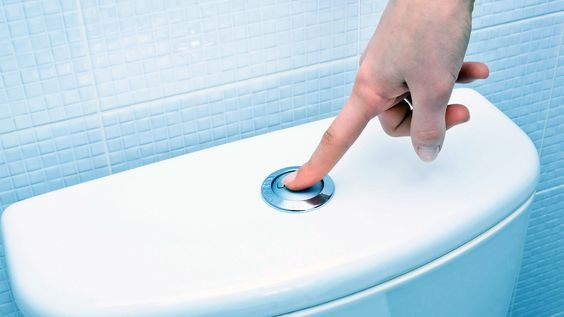
So, Do You Really Need to Flush After Every Use?
The most practical answer is:
It depends on what was left in the toilet and where you are.
For feces, flushing promptly is the sensible choice.
For urine, a short delay in a private household may be reasonable if you're trying to conserve water, provided the toilet doesn't become smelly or visibly dirty.
In public or shared facilities, flushing after use is generally the better choice.
The goal isn't to follow an extreme rule such as “always flush immediately” or “never flush urine.”
Instead, think about the bigger picture:
Hygiene + water conservation + cleanliness + consideration for other people.
A modern, well-maintained toilet combined with good bathroom hygiene can give you the best of both worlds.
The Bottom Line
Flushing the toilet is a basic part of maintaining a sanitary bathroom, but not every toilet use requires exactly the same approach.
Fecal waste should generally be flushed promptly. Urine can sometimes be left temporarily in a private home as a water-saving measure, but allowing it to accumulate for long periods can lead to odors, staining, and mineral buildup.
If you're concerned about water usage, consider a water-efficient toilet, fix leaks, and avoid unnecessary flushing rather than compromising basic sanitation.
And regardless of how frequently you flush, one habit should never be skipped:
Wash your hands thoroughly after using the bathroom.
In the end, good toilet hygiene isn't about following one rigid rule. It's about using common sense, keeping the bathroom clean, conserving resources where practical, and making choices that protect both your household and the people who share the space.