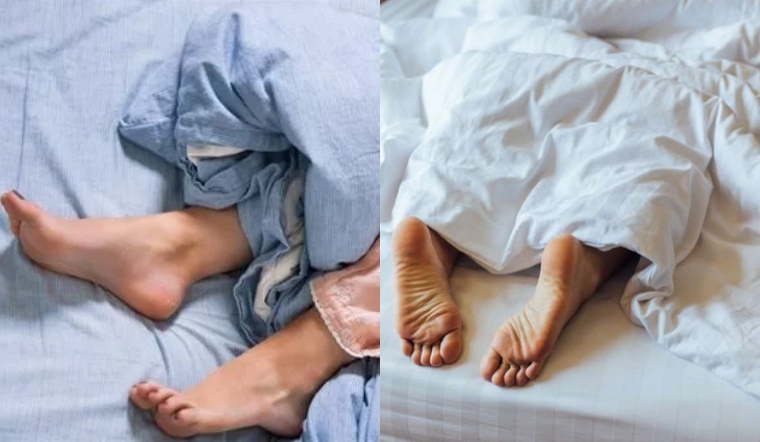
Have you ever climbed into bed, pulled the blanket over yourself, and then—almost without thinking—stuck one leg outside the covers?
For some people, this is such a familiar sleeping habit that they barely notice it anymore. One foot or leg remains exposed while the rest of the body stays comfortably tucked underneath the blanket.
It may seem like a strange habit, but there is actually a simple explanation for why it can feel so comfortable.
In many cases, temperature regulation is the main reason.
Your body works continuously to maintain a relatively stable internal temperature. During sleep, body temperature naturally changes, and the way you position yourself under the covers can influence how comfortable you feel.
Keeping one leg outside the blanket may simply help your body find that "just right" temperature.
But temperature isn't the only possible explanation.
Your sleep environment, personal preferences, circulation, habits, sensory comfort, and even the type of blanket you use can all influence how you sleep.
Let's take a closer look at why this habit is so common.
1. Your Body Naturally Changes Temperature During Sleep
One of the most interesting things about sleep is that your body doesn't maintain exactly the same temperature throughout the night.
As you prepare for sleep, your core body temperature tends to decrease.
This is part of the body's natural sleep process.
At the same time, blood flow to areas near the skin can change, helping the body release heat.
That's one reason your hands and feet may sometimes feel warmer when you're getting sleepy.
Once you're under a thick blanket, however, you may begin to feel too warm.
That's where the exposed leg comes in.
By leaving one leg outside the blanket, you create an easy way to release some heat without completely uncovering yourself.
2. Your Feet and Legs Can Help Release Heat
Your hands, feet, and other peripheral areas of the body play an important role in heat exchange with the environment.
When blood vessels near the skin widen, more warm blood can reach the body's surface.
This allows heat to move from the body into the surrounding environment.
That's why sticking one foot or leg outside the blanket can sometimes feel surprisingly effective.
You're not necessarily trying to "cool your whole body."
You're making a small adjustment that can help you avoid feeling overheated.
3. Why Does One Leg Feel Better Than Both?
You might wonder:
If you're hot, why not just throw off the entire blanket?
Because sometimes you aren't actually that hot.
You may simply be slightly too warm.
Removing the entire blanket could make you cold.
Keeping one leg outside creates a middle ground.
Your torso remains covered and cozy while one leg provides additional exposure to cooler air.
It's essentially a built-in temperature adjustment.
That's why many people instinctively return to the same position night after night.
4. Your Brain May Simply Associate the Position With Comfort
Not every sleeping habit has a complicated physiological explanation.
Sometimes you do something because it feels good.
If you've slept with one leg outside the blanket for years, your brain may associate that position with relaxation and bedtime.
Over time, it becomes part of your sleep routine.
The same thing happens with other habits.
Some people:
-
Sleep on their side
-
Hug a pillow
-
Curl their knees toward their chest
-
Put one foot outside the blanket
-
Sleep with their arms above their head
-
Need a particular pillow
-
Prefer sleeping with a fan running
These behaviors can become strongly associated with falling asleep.
5. The Habit May Help Prevent Overheating
Being too warm can make it harder to sleep comfortably.
You may toss and turn.
You may wake up sweaty.
You may throw the covers off and then pull them back on repeatedly.
An exposed leg can provide a simple solution.
Instead of constantly changing your sleeping position, you can maintain a comfortable balance:
Warm enough to feel cozy, but cool enough to avoid overheating.
This may be particularly noticeable during warmer months or in rooms without strong temperature control.
6. Your Bedroom Temperature Matters
The same person may sleep differently depending on the season.
During winter, you might want your entire body under a thick blanket.
During summer, you may barely use a sheet.
The one-leg-out position can be especially appealing when the room is moderately warm.
If your bedroom is too hot, however, sticking one leg outside may not be enough.
In that situation, improving the overall sleep environment may be more effective.
Consider:
-
Lowering the room temperature
-
Using breathable bedding
-
Wearing lighter sleepwear
-
Improving air circulation
-
Using a fan if appropriate
-
Choosing moisture-wicking sheets
7. Your Blanket May Be the Real Reason
Sometimes the problem isn't your body.
It's your blanket.
Heavy comforters can trap a significant amount of heat.
If you love the feeling of being covered but don't like becoming too warm, sticking one leg outside may be the easiest solution.
The same principle applies to weighted blankets.
Some people find them comforting, while others find them too warm.
If you're constantly sticking a leg out, your bedding may simply be warmer than you need.
8. Why Your Feet Can Feel Hot at Night
Some people experience unusually warm feet at bedtime.
This can happen because blood flow changes as your body prepares for sleep.
But hot or burning feet can also have other causes.
For example:
-
Warm bedroom temperatures
-
Thick socks
-
Tight footwear during the day
-
Exercise
-
Certain medications
-
Nerve irritation
-
Some medical conditions
If your feet simply feel warm under the covers, that's usually not unusual.
But if you experience persistent burning, tingling, numbness, or pain, especially at night, it is worth discussing with a healthcare professional.
9. It May Be a Sensory Preference
Some people simply dislike having their feet covered.
They may find the pressure of a blanket uncomfortable.
Others prefer the sensation of cool air against their skin.
This can be particularly noticeable around the feet because they contain many sensory receptors.
A small change in exposure can therefore make a surprisingly large difference in how comfortable you feel.
There's nothing inherently strange about having this preference.
10. Your Sleeping Position Can Encourage It
Your sleeping position can also influence whether one leg naturally escapes from the blanket.
For example, side sleepers may naturally bend one knee forward.
That movement can pull the blanket away from the lower leg.
Once the leg is exposed, the position may actually feel more comfortable, so you leave it there.
Over time, it becomes habitual.
11. Some People Use It as a "Temperature Switch"
Think of your exposed leg like a tiny thermostat.
Too warm?
Leave the leg outside.
Too cold?
Pull it back underneath.
You can make small temperature adjustments without waking yourself fully.
This may be one reason the habit feels almost automatic.
Your body and brain are constantly responding to environmental signals—even while you're asleep.
12. Why Being Too Hot Can Interfere With Sleep
Temperature is an important part of sleep comfort.
If your body becomes excessively warm, you may experience:
-
Restlessness
-
Sweating
-
More frequent awakenings
-
Difficulty falling asleep
-
General discomfort
This doesn't mean everyone needs to sleep in a cold room.
The ideal temperature varies from person to person.
But a bedroom that's comfortable enough for you to sleep without repeatedly overheating can make a significant difference.
13. One Leg Out Doesn't Mean Something Is Wrong
This is worth emphasizing.
If you naturally sleep with one leg outside the blanket and otherwise feel healthy, there's usually no reason to worry.
It doesn't automatically indicate:
-
Poor circulation
-
A vitamin deficiency
-
A neurological disorder
-
A hormonal problem
-
A serious sleep disorder
Sometimes a sleeping habit is simply a sleeping habit.
Not every unusual position is a hidden health warning.
14. But Pay Attention to Other Symptoms
The position itself usually isn't concerning.
The symptoms accompanying it may be more important.
For example, if you frequently keep your leg outside because your feet feel intensely hot or burning, that's different.
If you also experience:
-
Numbness
-
Tingling
-
Persistent pain
-
Swelling
-
Skin color changes
-
Severe cramps
-
Weakness
it may be worth discussing the symptoms with a healthcare professional.
The key is distinguishing preference from a physical symptom.
15. What If Your Feet Are Always Cold?
The opposite can also happen.
Some people keep one foot outside the blanket but complain that their feet are constantly cold.
Cold feet can have many explanations, including:
-
Cold room temperature
-
Normal individual differences
-
Reduced circulation
-
Certain medications
-
Nerve problems
-
Thyroid problems
-
Anemia
-
Other medical conditions
If your feet are persistently cold even in a warm environment, especially if one foot is significantly colder than the other, consider getting it evaluated.
16. Does Sleeping With One Leg Out Improve Sleep?
It can if it makes you more comfortable.
There isn't a universal rule saying that sleeping with one leg outside the blanket improves sleep for everyone.
But if the position helps you maintain a comfortable temperature, it may make falling asleep or staying asleep easier.
Sleep is highly individual.
What works perfectly for one person may be uncomfortable for another.

17. Could It Help With Night Sweats?
If you're simply getting slightly too warm under the covers, exposing one leg may help reduce discomfort.
However, persistent night sweats are different.
If you regularly wake up with your pajamas or bedding soaked even though the room is cool, don't assume the solution is simply to sleep with one leg outside.
Persistent night sweating can have many causes and may warrant medical evaluation, especially if accompanied by fever, unexplained weight loss, persistent cough, or other symptoms.
18. Why Your Body Likes Small Adjustments
Your body doesn't always need dramatic changes.
Sometimes a tiny adjustment is enough.
You might:
-
Move your pillow
-
Turn onto your side
-
Stick one foot outside the covers
-
Open a window
-
Remove a layer of clothing
-
Pull the blanket down slightly
These small changes can help you find a comfortable environment.
Your brain is constantly receiving information about temperature, pressure, noise, light, and body position.
It responds by encouraging small movements.
19. The Psychology of Sleep Rituals
Sleep habits can become powerful routines.
If you always:
-
Get into bed
-
Pull the blanket up
-
Stick one leg out
-
Turn onto your side
-
Close your eyes
your brain may begin associating that sequence with sleep.
Eventually, you may perform the entire routine without consciously thinking about it.
This is one reason consistent bedtime routines can be helpful.
Your brain learns:
"This is what we do before sleeping."
20. Why You May Not Remember Doing It
You might get into bed with both legs under the blanket and wake up with one leg completely exposed.
What happened?
You probably moved during sleep.
People naturally change positions throughout the night.
You may unconsciously adjust your arms, legs, head, or blanket in response to temperature or discomfort.
You don't necessarily remember these movements because you remain asleep.
So if you repeatedly wake up with one leg outside the covers, you may simply be adjusting your position automatically.
21. Does the Habit Have Anything to Do With Your Personality?
You may see claims online that sleeping with one leg outside the blanket reveals specific personality traits.
For example, some articles claim that people who sleep this way are independent, adventurous, relaxed, or creative.
These claims are fun to read, but there isn't strong scientific evidence that a specific sleeping position can reliably reveal personality.
Your sleeping position is much more likely to reflect:
-
Comfort
-
Temperature
-
Habit
-
Mattress characteristics
-
Bedding
-
Body position
So don't take personality interpretations too seriously.
22. Does It Mean You Have Poor Circulation?
Not necessarily.
A common internet myth is that sleeping with one leg outside the blanket indicates circulation problems.
There is no reason to assume this simply from the sleeping position.
Circulation problems are more likely to involve symptoms such as:
-
Persistent coldness
-
Significant swelling
-
Skin color changes
-
Pain with walking
-
Numbness
-
Weakness
-
Slow-healing wounds
If those symptoms occur, they deserve attention.
But simply preferring one leg outside the blanket isn't evidence of poor circulation.
23. What About Blood Sugar?
You may also encounter claims that sleeping with one leg outside the blanket is a sign of diabetes.
That's misleading.
The sleeping position itself is not a recognized diagnostic sign of diabetes.
However, persistent burning, tingling, or numbness in the feet can occur with diabetic nerve damage.
So the distinction is important:
Leg outside the blanket = usually a comfort preference.
Persistent burning or tingling feet = potentially worth medical evaluation.
Don't confuse the two.
24. Could It Be Related to Restless Legs?
Restless legs syndrome causes an uncomfortable urge to move the legs, often accompanied by unusual sensations.
People may describe:
-
Crawling
-
Pulling
-
Tingling
-
Aching
-
Restlessness
Symptoms typically become more noticeable during periods of rest and may be worse at night.
If you simply enjoy having one leg outside the blanket, that doesn't mean you have restless legs syndrome.
But if you're constantly moving your legs because they feel uncomfortable, that's a different situation.
25. Your Mattress and Bedding Can Influence the Habit
Don't overlook the physical environment.
A mattress that traps heat may make you more likely to expose your leg.
So can:
-
Synthetic sheets
-
Thick comforters
-
Heavy pajamas
-
Waterproof mattress protectors
-
Poor airflow
If you frequently wake up too warm, experimenting with breathable bedding may help.
Cotton, linen, and other breathable materials may feel more comfortable for some sleepers.
26. What Is the Best Bedroom Temperature?
There isn't one perfect temperature for everyone.
Many sleep experts recommend keeping the bedroom relatively cool because excessive heat can interfere with sleep.
But individual preferences matter.
If you're constantly sweating, your room may be too warm.
If you're shivering, it's too cold.
The goal is not to find a magical number.
The goal is to create an environment where your body can remain comfortably cool without becoming cold.
27. Should You Stop Sleeping With One Leg Outside?
No.
If the position is comfortable and you're sleeping well, there's generally no reason to force yourself to change it.
You don't need to sleep with both legs covered simply because someone online says it's healthier.
Comfort matters.
Good sleep matters.
Your body naturally finds positions that feel appropriate for you.
28. When Should You Pay Attention?
The sleeping position itself isn't usually a concern.
But consider talking to a healthcare professional if you also have:
-
Persistent burning feet
-
Numbness or tingling
-
Significant swelling
-
Persistent leg pain
-
One leg consistently colder than the other
-
Skin color changes
-
Severe nighttime cramps
-
Unexplained weakness
-
Repeated nighttime sweating
-
Significant sleep disruption
These symptoms may have nothing to do with your sleeping position, but they can sometimes point toward an underlying issue.
29. A Simple Experiment You Can Try
If you suspect your bedding is causing the habit, try changing one thing at a time.
For example:
Night 1
Use a lighter blanket.
Night 2
Keep the same blanket but lower the room temperature slightly.
Night 3
Try breathable sleepwear.
Night 4
Use lighter sheets.
Notice whether you still automatically stick one leg out.
You may discover that the habit disappears simply because your body no longer feels overheated.
30. Your Body May Simply Be Finding Its Comfort Zone
Ultimately, the most likely explanation is surprisingly simple.
Your body wants to be comfortable.
If one leg outside the blanket helps you achieve the right balance between warmth and coolness, your brain may naturally keep returning to that position.
It's not necessarily a mysterious health signal.
It's not proof of a medical condition.
And it doesn't mean something is wrong with you.
Sometimes the body simply finds a small trick that works.
Common Myths About Sleeping With One Leg Outside the Blanket
Myth 1: It Means You Have Diabetes
Not true.
The sleeping position itself isn't a sign of diabetes.
Myth 2: It Means You Have Poor Circulation
Not necessarily.
Without other symptoms, it's usually just a comfort preference.
Myth 3: It Means You're Trying to Cool Your Blood
That's an oversimplification.
The body is adjusting heat exchange, not deliberately "cooling the blood" through one particular leg.
Myth 4: It Reveals Your Personality
There isn't strong scientific evidence that a sleeping position can accurately predict personality.
Myth 5: You Should Always Keep Your Feet Covered
There's no universal rule requiring this.
If you sleep comfortably with one leg outside, that's generally fine.
How to Get Better Sleep Regardless of Your Position
If you want to improve your sleep, focus on the fundamentals.
Keep a Consistent Schedule
Go to bed and wake up at roughly the same times each day.
Keep the Bedroom Comfortable
Avoid excessive heat, bright light, and unnecessary noise.
Limit Caffeine Late in the Day
Caffeine can remain active in the body for hours.
Reduce Screen Exposure Before Bed
Give your brain time to transition into a calmer state.
Exercise Regularly
Physical activity can support better sleep, although intense exercise immediately before bed may bother some people.
Avoid Heavy Meals Right Before Bed
Eating very large meals immediately before sleeping can cause discomfort for some people.
Create a Relaxing Routine
Reading, stretching, taking a warm shower, or practicing relaxation techniques can help signal that it's time to sleep.
The Bottom Line
If you regularly sleep with one leg outside the blanket, you're probably not doing anything strange.
In many cases, the simplest explanation is temperature regulation and personal comfort.
Your body naturally changes temperature during the night, and exposing a leg or foot can provide a small amount of additional heat exchange while allowing you to keep the rest of your body comfortably covered.
The habit can also be influenced by your sleeping position, bedding, bedroom temperature, sensory preferences, and simple conditioning from years of sleeping the same way.
Most importantly, the position itself isn't considered a reliable sign of diabetes, poor circulation, or another disease.
However, if you expose your leg because your feet are persistently burning, numb, tingling, painful, swollen, or unusually cold, that's a different matter. Those symptoms deserve attention, particularly if they are new or getting worse.
So the next time you wake up and realize that one leg has escaped from the blanket, you probably don't need to worry.
Your body may simply be saying:
"This is the temperature that feels right."
And honestly, sometimes the weirdest sleeping habits are just the body's surprisingly practical way of getting comfortable.