Some older adults experience dysphagia, a condition that makes swallowing difficult.
A ripe banana is soft, but its texture may still be unsuitable for someone with particular swallowing difficulties.
People with dysphagia may need foods with carefully controlled consistency.
A speech and language therapist or healthcare professional can recommend suitable textures.
Do not assume that every soft food is safe for every person with swallowing problems.
How Many Bananas Should Someone Over 70 Eat Each Day?
There is no universal recommendation that every person over 70 must eat one, two, or three bananas daily.
A reasonable portion for many healthy adults is one medium banana, but the appropriate amount depends on individual nutritional needs.
Someone who eats plenty of other potassium-rich foods may not need additional bananas.
Someone with chronic kidney disease may need a smaller portion or a different fruit altogether.
People with diabetes should also consider the carbohydrate content.
The important principle is dietary variety.
Instead of eating several bananas every day, older adults can rotate different fruits.
For example:
-
Monday: Banana.
-
Tuesday: Apple.
-
Wednesday: Orange.
-
Thursday: Pear.
-
Friday: Berries.
-
Saturday: Kiwi.
-
Sunday: Banana.
This approach provides a wider range of nutrients and flavors.
The goal is not to make bananas the center of every meal.
It is to include them as one part of a balanced eating pattern.
7 Healthy Ways for Seniors to Eat Bananas
For people who enjoy bananas but want more variety, there are several easy ways to prepare them.
These ideas require minimal cooking and can be adapted to different appetites.
1. Banana With Plain Yogurt
Slice one small banana and add it to a bowl of plain yogurt.
This combination provides carbohydrates, potassium, fiber, and protein.
Choose unsweetened yogurt if you want to avoid unnecessary added sugar.
2. Banana and Oatmeal
Add sliced banana to warm oatmeal.
Oats provide additional fiber, while bananas contribute natural sweetness.
This can be a satisfying breakfast for people who prefer warm, soft foods.
3. Mashed Banana on Whole-Grain Toast
Mash a ripe banana and spread it over whole-grain toast.
This creates a simple breakfast or snack.
Choose bread that fits your dietary needs, especially if you have diabetes or need to monitor carbohydrate intake.
4. Banana and Milk Smoothie
Blend a banana with milk or an appropriate fortified alternative.
This can be convenient for people who struggle to eat solid food.
However, anyone with swallowing difficulties should follow professional advice before consuming smoothies or other blended foods.
5. Banana With Unsalted Nut Butter
A small portion of nut butter can add protein and healthy fats.
This combination may make a more filling snack.
Choose products without excessive added sugar or salt.
6. Frozen Banana Pieces
Slice ripe bananas and freeze them in a suitable container.
They can later be added to smoothies or blended into a soft frozen dessert.
This is a useful way to prevent ripe bananas from being wasted.
7. Banana With Cottage Cheese
Combine sliced banana with cottage cheese for a snack containing both carbohydrates and protein.
This may be especially useful for older adults who need to pay attention to protein intake.
However, people with kidney disease may need individualized advice about potassium, phosphorus, sodium, and protein.
5 Common Myths About Eating Bananas After Age 70
Bananas are often surrounded by health claims that sound convincing but are not always supported by scientific evidence.
Some people believe eating one every morning prevents heart disease. Others claim bananas eliminate leg cramps or guarantee better sleep.
Let's separate reasonable nutritional advice from exaggerated promises.
Myth 1: Eating a Banana Every Day Prevents Heart Attacks
Bananas contain potassium, which supports normal cardiovascular and muscle function.
A diet that includes sufficient potassium may help support healthy blood pressure.
However, eating bananas does not guarantee protection against heart attacks.
Heart health depends on many factors, including blood pressure, cholesterol, smoking, physical activity, diabetes, genetics, and overall dietary habits.
Bananas can contribute to a healthy eating pattern, but they are not a substitute for medical care.
Myth 2: Bananas Can Eliminate Nighttime Leg Cramps
Because potassium is involved in muscle contraction, bananas are frequently recommended online for people who experience leg cramps.
However, not every cramp is caused by potassium deficiency.
Muscle cramps may be associated with dehydration, muscle fatigue, certain medications, circulation problems, or other medical conditions.
There is insufficient evidence that eating a banana immediately stops ordinary nighttime leg cramps.
If cramps are frequent, severe, or accompanied by swelling or weakness, discuss them with a healthcare professional.
Myth 3: Bananas Are Too Sweet for Older Adults
Bananas contain natural sugars, but that does not automatically make them unhealthy.
They also provide fiber, potassium, and other nutrients.
People with diabetes need to account for their carbohydrate intake, but they do not necessarily need to eliminate bananas.
Portion size and individual blood glucose responses are more useful considerations than simply avoiding all naturally sweet fruit.
Myth 4: Eating Bananas at Night Causes Weight Gain
No particular time of day automatically makes a banana cause weight gain.
Body weight is influenced by overall energy intake, activity, metabolism, and other factors.
A banana eaten in the evening contains approximately the same energy as a banana eaten in the morning.
What matters is the person's overall eating pattern.
Myth 5: The More Bananas You Eat, the Healthier You Become
This is perhaps the most important misunderstanding.
Bananas are nutritious, but they do not provide every nutrient the body needs.
Eating large quantities can displace other foods that provide protein, calcium, vitamin D, vitamin B12, healthy fats, and other important nutrients.
For older adults, dietary variety is essential.
One banana can be a useful addition to a meal.
It does not need to become the main component of the diet.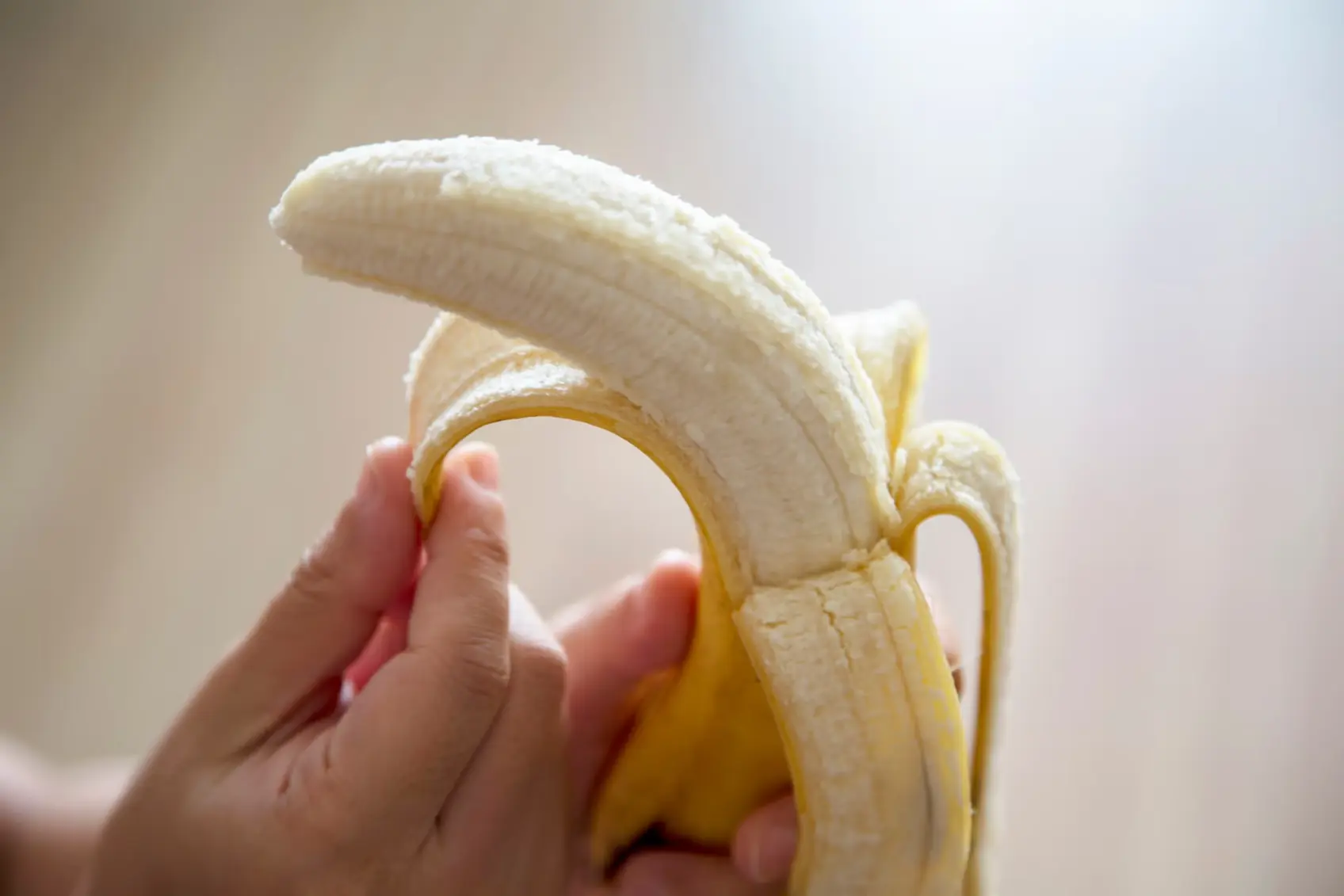
What Should Older Adults Eat Alongside Bananas to Protect Their Muscles?
There is one nutritional issue that deserves particular attention after age 70: maintaining muscle.
Bananas provide carbohydrates and potassium, but they contain only around 1 gram of protein per medium fruit.
That is not enough to support the body's protein needs on its own.
Older adults should make an effort to include suitable protein sources throughout the day.
Eggs
Eggs provide high-quality protein and several important nutrients.
They can be boiled, scrambled, or added to a soft breakfast.
Fish
Fish provides protein and, depending on the type, omega-3 fatty acids.
Salmon, sardines, and other oily fish can be useful components of a balanced diet.
Yogurt and Milk
Dairy products provide protein and calcium.
Fortified alternatives may also provide useful nutrients, depending on their composition.
Beans and Lentils
Beans and lentils provide plant-based protein and fiber.
They can be added to soups, stews, and soft meals.
Nuts and Seeds
Nuts and seeds provide healthy fats, protein, and other nutrients.